
Remember me



 Syrian army reinforcements arrive via the international M4 highway to the Dayr Hafir area, east of Aleppo. Photo / Bakr Alkasem, AFP
Mahmud al-Mussa, 30, said “thousands of people have not left”, accusing the US-backed, Kurdish-led Syrian Democratic Forces (SDF) of not letting them leave.
“They want to use civilians as human shields,” he said.
The area being targeted extends from near Deir Hafer, about 50km from Aleppo, to the Euphrates River about 30km further east, as well as towards the south.
The Syrian Government in Damascus also accused Kurdish forces of barring civilians from leaving.
However, Farhad Shami, a spokesman for the SDF, told AFP the accusations were “unfounded”.
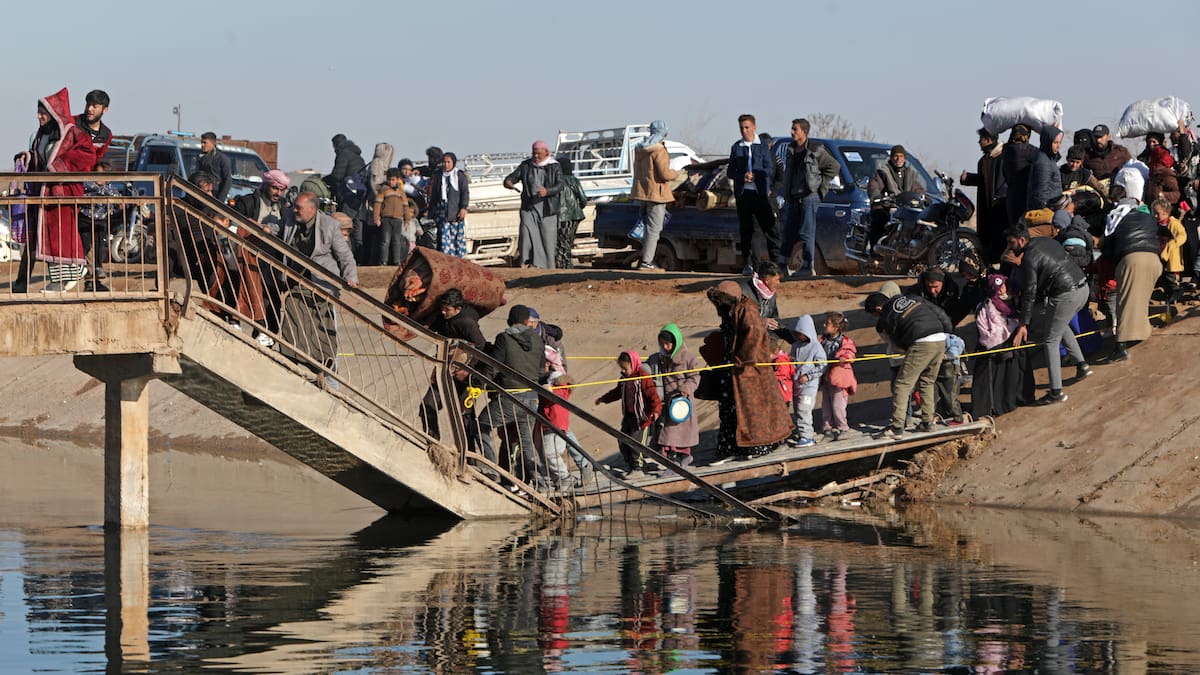
Nadima al-Wayss, 54, said she, her brother and her niece had to cross a damaged bridge to leave Deir Hafer through a different road.
“Good people helped me cross the bridge ... I was afraid I would fall.”
The SDF controls parts of Syria’s oil-rich north and northeast, much of which it captured during the country’s civil war and the fight against the Islamic State group over the past decade.
In a statement yesterday, the Kurdish-led autonomous administration said it remained open to dialogue with Damascus and called on the international community to prevent a new civil war.
The SDF warned that the escalation “could lead to general instability, posing a real threat to the security of prisons holding Isis members”, referring to the Islamic State (IS) group.
Camps and prisons in Syria’s Kurdish-administered northeast hold tens of thousands of people, many with alleged or perceived links to IS, more than six years after the group’s territorial defeat in the country.
Syrian President Ahmed al-Sharaa said “the ball is in [the SDF’s] court”, calling on the group to “join hands with us ... and begin the reconstruction process in Syria”.
 Syrian President Ahmed al-Sharaa. Photo / Getty Images
He made his remarks in an interview with Iraqi Kurdish channel Al Shams, which then decided not to air it.
Syrian state television and other regional channels have since aired excerpts.
“The agreement signed by Mazlum Abdi does not include federalism, self-administration ... it includes a unified Syria,” Sharaa said, referring to the SDF leader.
The Kurds have called for a decentralised federal system as part of their integration process into the Syrian state, but Sharaa has rejected their demands.
Syria’s Kurds faced decades of oppression under former President Assad and his father, Hafez, who preached a Baathist brand of Arab nationalism.
They fear Syria’s new Islamist rulers may take away from them the autonomy they carved out during the civil war that erupted with Assad’s 2011 crackdown on nationwide democracy protests.
- Agence France-Presse