Hospital CEO apologises for not using public tender process, but says the hospital needed to ‘balance the need for public procurement with the need to respond immediately to urgent demand’
St James’s Hospital paid €4.7 million to a private company for diagnostic scans over an eight-year period without a proper procurement process being in place.
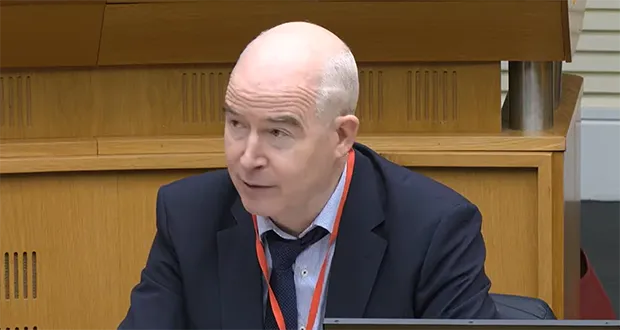
The hospital’s CEO yesterday apologised for not adhering to proper guidelines in the procurement of these services, which included expenditure of €1.4 million in 2024.
A total of 18 consultants employed by St James’s also act as directors of the company which received these payments.
However, the consultants did not disclose their connection to the company when it agreed to provide services for the hospital. This was later corrected through St James’s HR department.
The 2024 expenditure was revealed in a report from the Comptroller and Auditor General published last year.
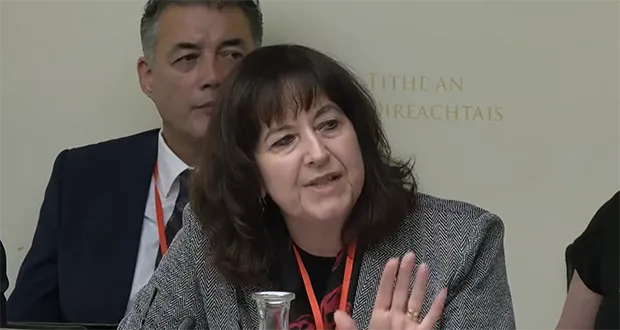
However, under questions by Fine Gael TD James Geoghegan in a meeting of the Oireachtas Public Accounts Committee yesterday, St James’s CEO Mary Day revealed that the company had actually received €4.7 million between 2017 and 2024 from the hospital.
The payments were for a total of 35,000 scans. The scans were completed in a private clinic located on the top floor of St James’s Hospital. Work carried out between 2017 and 2019 related to mammography.
“I was not in the hospital at that time but the hospital had experienced severe pressure in relation to meeting the urgent need to see breast cancer patients within 10 days,” said Ms Day.
“That pressure was so intense that the hospital was escalated to the national oversight performance system between the HSE and the Department of Health. It was then that this vendor was allocated a very limited volume of work.”
Further work carried out by the company in later years included MRI and CT scanning, and non-cancer related ultrasounds. The work was carried out through a mixture of outsourcing, whereby the company used their own equipment, and insourcing, where the hospital’s own machines were used.
In her opening statement to the committee, Ms Day apologised ‘for the fact that some radiology services in 2024 were not procured through a public tender process. We did not meet the standards expected of us’.
She said the action was due to ‘urgent patient needs’ in cancer services ‘to prevent delayed diagnosis’.
“Occasionally, due to unforeseen or unpredictable circumstances, we in the hospital have to balance the need for public procurement with the need to respond immediately to urgent demand for scans in order to avoid potentially harmful delays in the diagnosis and treatment of our patients,” she told the committee.
“For example, in 2024, there were 28 adverse incident reports at St James’s Hospital related to delayed diagnosis associated with constrained access to diagnostic imaging.
“To give you a sense of the time involved in procuring projects, the procurement of in-sourced MRI services took 12 months to finalise. Once this procurement was finalised, the procurement of CT and Ultrasound commenced, but regrettably it was not finalised.”
Insourcing is an initiative which utilises spare capacity in public hospitals over and above core hospital activity, in order to get public patients treated faster. This typically involves evening or weekend work and the use of additional theatre capacity.
Last year the HSE announced that insourcing will be phased out, and is due to end in all hospitals by this June.
This came after a number of controversies around how insourcing payments were being made. The insourcing budget was managed and administered by the National Treatment Purchase Fund (NTPF).
Issues with insourcing first came arose after reports that a consultant in a Children’s Health Ireland (CHI) hospital potentially abused the NTPF insourcing system for personal benefit.
This was followed by the NTPF suspending insourcing activities for a time in Beaumont Hospital after identifying ‘potential financial irregularities’.
Later, a nationwide review of the practice found that three further sites – Naas, Kerry, and St Michael’s Hospital in Dun Laoghaire – were using funds provided for insourcing solely to pay consultants, despite the money being provided to cover all costs associated with the work.






Comments (0)