MINNEAPOLIS, Minnesota – When Ms Fabiola, a single mother and naturalised US citizen from Latin America, first learnt of the fatal shooting of Ms Renee Good
by an Immigration and Customs Enforcement (ICE) agent, she said she was heartbroken and terrified.
Then she joined the thousands of other Minnesotans who have volunteered to track ICE agents since Ms Good was killed – despite her fears for herself and her son Asher, who is seven.
“I do feel scared, but at the same time, I know I have to take care of my people too,” she said.
Activists say they have been overwhelmed by new volunteers – despite the potential for violence – since Ms Good was killed by ICE agent Jonathan Ross.
Federal agents on Jan 24 shot dead a Minneapolis resident
, the second person to be killed since the Trump administration surged 3,000 immigration enforcement officials to the city.
Ms Fabiola, who has lived in the US for 20 years and owns a construction company, never knew Ms Good.
The mother of three was fatally shot when she stopped her car during an immigration enforcement action, just blocks from Ms Fabiola’s home.
The US Department of Homeland Security (DHS) did not respond to requests for comment on the risks to observers in Minnesota, but officials say federal agents respond with gunfire when they fear for their lives.
Homeland Security Secretary Kristi Noem and other Trump administration officials have described the protesters and observers as “anti-ICE” and “far left” agitators.
Ms Fabiola and Asher now blow their whistles when they spot immigration agents on their way to school.
She taught Asher how to identify federal agents by their uniforms, and made him memorise his grandparents’ phone numbers in case she is detained.
Ms Fabiola, who declined to give her last name for fear of retribution, has also started delivering food to people afraid to leave their homes.
And she regularly stops by the makeshift memorial to Ms Good.
“She’s got kids, and her kids don’t have their mum now,” Ms Fabiola said. “If something happened to me, where is my boy going to go?”
Vice-President J.D. Vance said during a visit to Minneapolis on Jan 22 that Ms Good was trying to ram Mr Ross with her car.
Analyses of bystander video footage by Reuters and other outlets show Ms Good’s wheels were turned away from Mr Ross, and that his legs were clear of the vehicle when he shot her.
At least five organisations offer training on how to monitor ICE actions, warn immigrants of their presence and document the use of force against detainees and protesters.
Online training for one of those groups has been hitting maximum capacity of 1,000 within hours, said Ms Kate Wegener, an immigration attorney who leads the trainings.
“We were fearful that attendance would be lower after her death, but it was the complete opposite,” she said, referring to Ms Good.
The sessions typically offer safety tips: Stay at least 2.4m from federal agents, follow orders given by officers and keep one’s distance when driving behind convoys of agents.
Some of the observers are hyper-aware of the risks.
Ms Janet, a resident of a Minneapolis suburb who declined to give her last name out of fear of doxing, said she has written letters to friends and family to be opened if she’s killed.
Minnesota authorities at state and local levels have encouraged the observers.
Governor Tim Walz has urged residents to take out their phones and document federal agents.
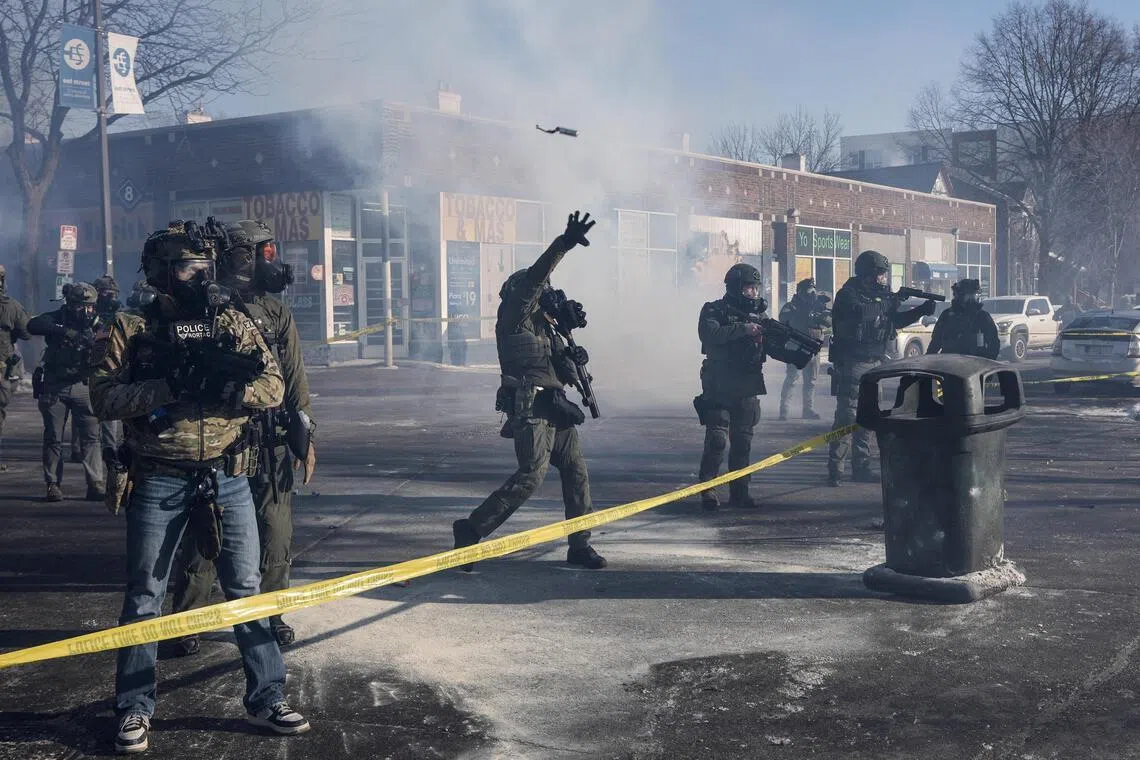
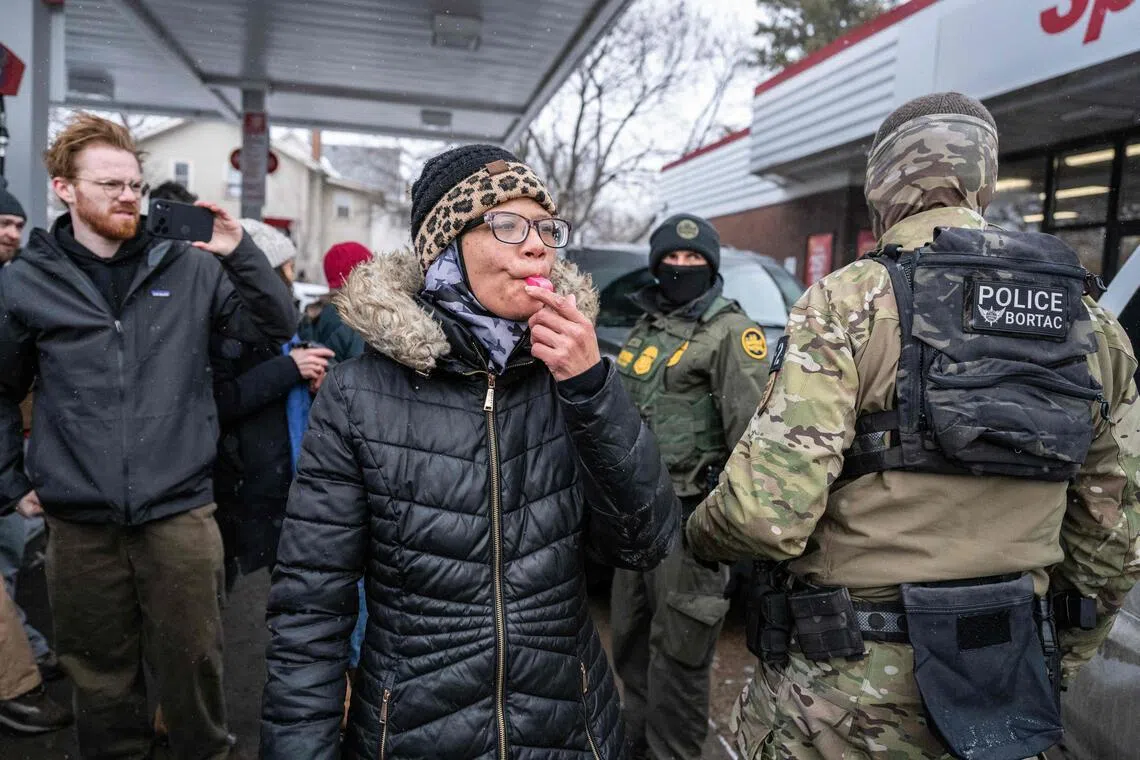
The observers, often identified by their fluorescent green vests and whistles looped around their necks, are now an increasingly common sight along busy roads and residential neighbourhoods when the heavily armed, masked federal agents dressed in tactical gear are deployed.
The community pushback has had some effect.
Border Patrol chief Gregory Bovino on Jan 21 said the city presented a “difficult operating environment” for enforcement agents.
Organisers compared the level of engagement to the surge of activism following the police killing of Mr George Floyd in 2020.
On a recent day, two new volunteers, a married couple, straddled their bikes next to a busy intersection on the lookout for ICE agents.
Snow gathered on their jackets and frost clung to their eyelashes.
“I kind of woke up to what was happening when Renee Good was killed – I knew bad things were happening, but hadn’t realised quite how bad it was yet,” said Mr Aaron, who is 41 and works in marketing.
He declined to give his last name out of fear of retribution. “And then when that happened, it was like, it’s time to start doing something.”
Earlier that day, he said he had adjusted his 9.7km run to cover neighbourhoods where residents had reported ICE sightings near schools.
Pushing back against immigration enforcement carries risk.
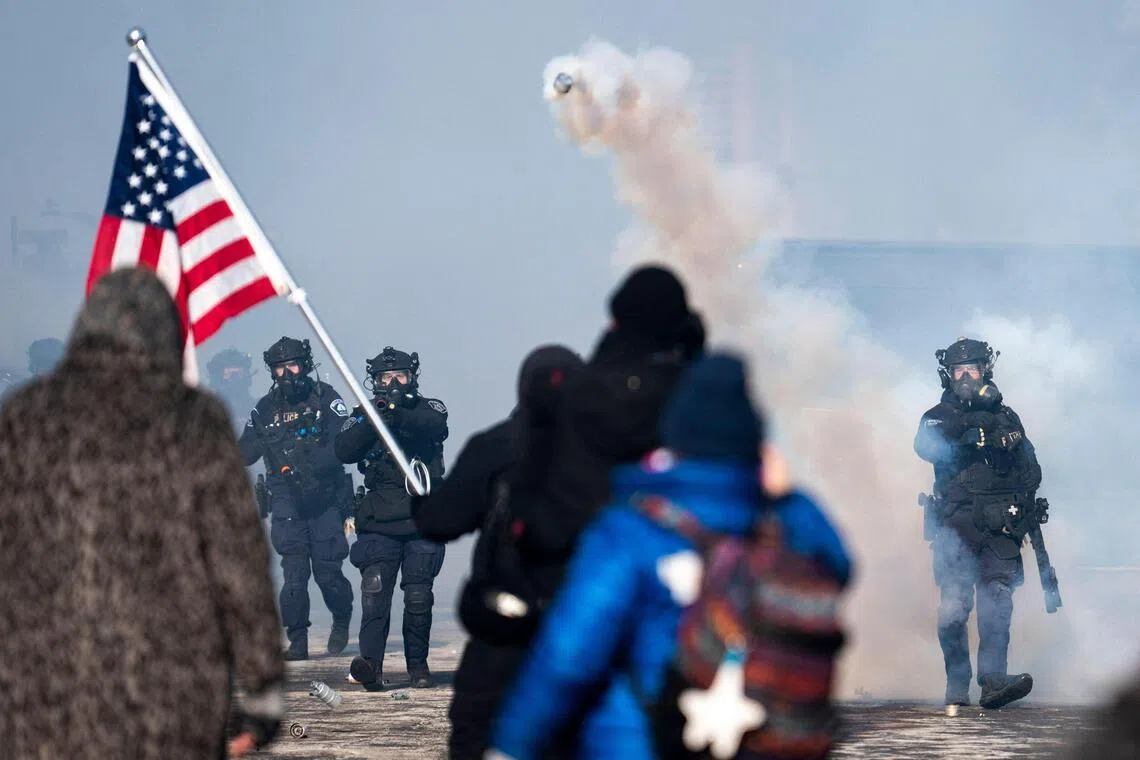
The immigration observers have been tear-gassed and arrested.
State authorities said on Jan 23 they were compiling data on arrests but it was not immediately available.
For Ms Patty O’Keefe, a 36-year-old non-profit worker, those risks underline the importance of the observers.
“They wouldn’t be working so hard to intimidate us and utilising all those resources if we weren’t actually being successful in gumming up the works of their operation or slowing them down,” Ms O’Keefe said.
Earlier in January, as she was following ICE agents in her car, she said five federal agents shattered her car window, handcuffed her and put her in an unmarked sport utility vehicle.
She said ICE agents photographed her, insulted her and held her for eight hours in a Minneapolis detention centre before she was released without charge.
DHS did not respond to a request for comment on Ms O’Keefe’s account of the incident, and Reuters was unable to determine independently what occurred.
She said she now struggles with anxiety – but will continue volunteering.
“I’m just stubborn, and I’m not wanting to give in to the fear.”
Many residents speak about Ms Good with a sense of reverence, describing her as an inspiration.
On the street where she was killed, dozens of people defied dangerously cold weather to add to the mounds of bouquets, stuffed animals and electric candles glowing through the snow at a makeshift memorial.
“She gave her life for us,” Ms Fabiola said. “Her soul is in heaven, and she protects us.” REUTERS