
Remember me








You often don’t recognise a good thing when you’ve got it. In the case of Kansas guitarist Kerry Livgren, idly strumming a melody he’d come up with at home in the summer of 1977, it took his wife to point out its potential.
“It began as an exercise that Kerry was doing, to learn how to fingerpick the acoustic guitar,” explains Kansas drummer and percussionist Phil Ehart. “He had the chords, and his wife, Vicci, kept walking by him and saying: ‘Y’know, you ought to make that into a song. It could be a great one.’ He kinda brushed her off, but she was persistent.”
After picking up a book of Native American poetry, Livgren came across a line that resonated strongly on a very personal level: “All we are is dust in the wind.”
You may like How Queen, The Who and Star Wars inspired the greatest power ballad about alien abduction ever written
 The story of the Kiss classic Kiss didn't actually write
 How Rush ditched the prog epics, discovered The Police and reggae, and wrote the hit that reinvented them
This reminded him of the biblical passage from Ecclesiastes that states: “All is vanity,” which in turn led him to write a lyric that addressed the ephemeral nature of life.
Dust In The Wind was duly finished in just 15 minutes. Livgren put the song down as a demo on a tiny four-track tape machine and took it with him to the next band rehearsal.

Even then, perhaps due to its lilting, acoustic tone – not something with which the hard-driving Kansas were overly familiar – Livgren was slightly reluctant to share the song with his bandmates. It was only when producer Jeff Glixman asked if they had anything new that Livgren piped up and said he had something.
A few years earlier we’d been a club band in Topeka, playing biker bars, rodeos and high-school dances.
Phil Ehart“We were working on the songs for Point Of Know Return,” Ehart explains, “and he said: ‘Guys, I’ve brought a song and it’s kind of different. It doesn’t have any drums or bass.’ He had this little reel-to-reel that he’d recorded it on. We listened to it and all of us were just blown away. Kerry goes: ‘You mean you guys like it?’
“I remember either Rich [Williams, guitarist] or Steve [Walsh, lead singer/organist] going: ‘Man, that’s a hit! That’s the kind of song you’d hear on the radio.’ I’ll never forget how surprised Kerry was by the reaction.”
“We just knew it was a one-listen song,” continues Ehart. “It was only three-and-a-half minutes, and the melody was so beautiful. Then when Steve started singing, it was like: ‘Oh God, this is incredible!’ So we had to get it arranged, with the middle section and the violins and everything.”
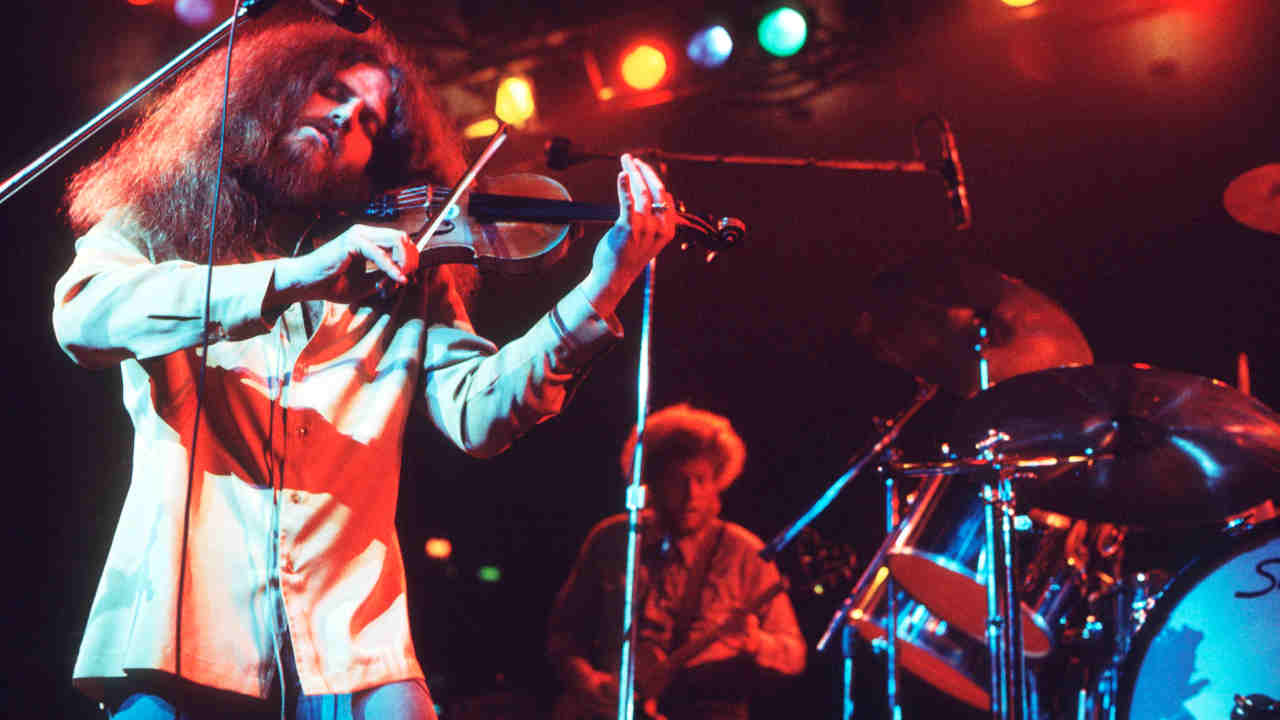
The result was one of Kansas’s most delicate tracks, a rumination on the vacuity of fame from a band who had risen from small-town hopefuls to one of America’s biggest new attractions. Over the softly chiming guitars of Livgren and Williams, Walsh’s vocals inhabit the ballad with a rare vulnerability, while Robby Steinhardt’s violin brings an extra strand of emotion.
You may like
How Queen, The Who and Star Wars inspired the greatest power ballad about alien abduction ever written
The story of the Kiss classic Kiss didn't actually write
How Rush ditched the prog epics, discovered The Police and reggae, and wrote the hit that reinvented them
Loaded with biblical allusions, Dust In The Wind was something of a pre-echo of Livgren’s conversion to Christianity two years later.
“Kerry was always searching and writing about stuff,” says Ehart. “We’d kind of look at the lyrics and go: ‘Okay, I have no idea what this is about, so let’s just go ahead and do it.’

“You have to remember that we went to high school with Kerry and we were in college together too. He was from Topeka, like we were. It’s a small town, and we were all such good friends. Whatever any one of us wanted to do, then that was fine. We had that openness in the band, so it was a logical place for him to end up.”
It was only three-and-a-half minutes, and the melody was so beautiful.
Phil EhartLivgren would concentrate on issues of faith after he quit the band in 1983 and began a career as a solo artist. For the time being, though, Kansas were peaking as a commercial proposition. Released in early ’78, Dust In The Wind was an even bigger hit (reaching No.6 in the US) than the previous year’s Carry On Wayward Son.
“It was a fantastic song to work on,” Ehart recalls. “But what we didn’t realise was that it was going to go across so many different radio formats – they played it on FM, rock, AM and country music radio. We didn’t realise it was going to be a smash hit around the world.”
The song’s parent album achieved huge sales too. Like its predecessor Leftoverture, Point Of Know Return went multi-platinum in the States. Before long, Kansas were filling the largest arenas in North America, including a sell-out show at New York’s Madison Square Garden.
“A few years earlier we’d been a club band in Topeka, playing biker bars, rodeos and high-school dances,” Ehart says. “Then all of a sudden, boom, we’re headlining stadiums. It happened with such force that you get swept along with it.
“There was huge momentum at that point. It was because of radio, which was very influential back then. Journey, Rush, Styx, Foreigner, Boston, Chicago, Santana, they were all there. It was an incredible time to be a musician.”
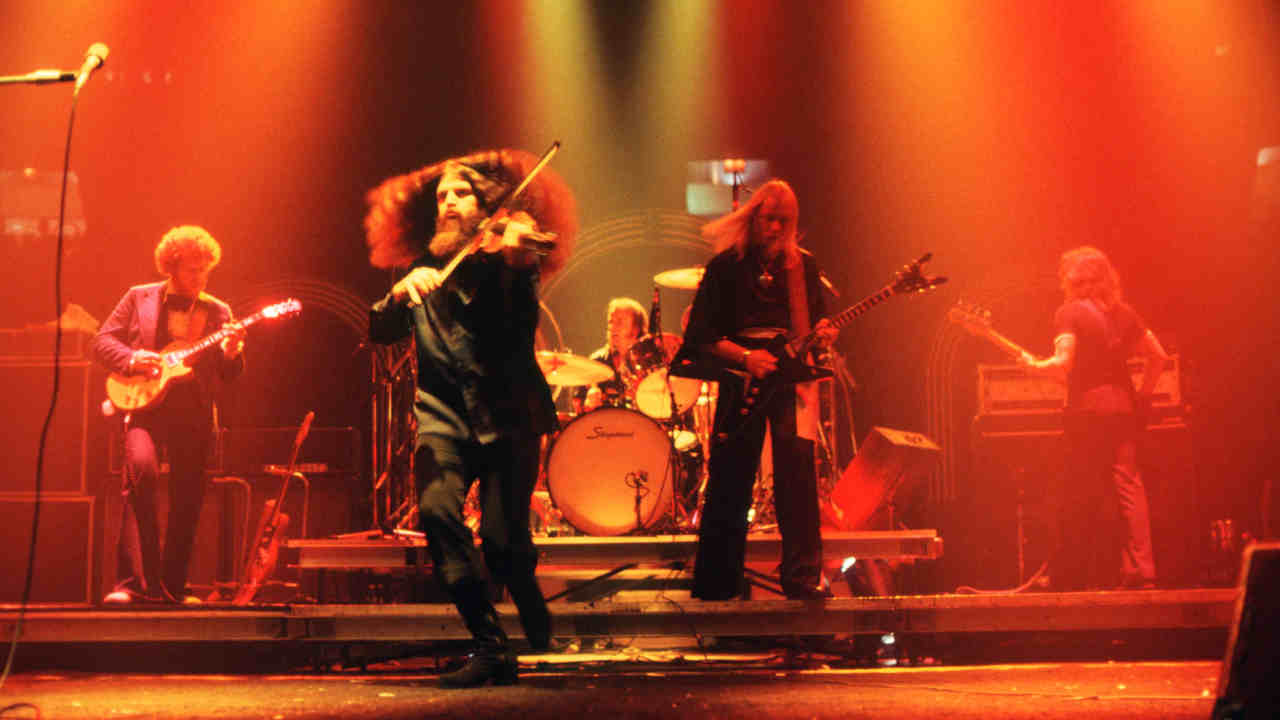
Dust In The Wind has since been covered by such disparate artists as Brian May, Sarah Brightman and the Scorpions. For Ehart, the song continues to hold an enduring appeal.
“It means so much to so many people. Before email came along, we used to get so many fan letters about that song. We still get requests all the time, like: ‘Will you guys come and sing Dust In The Wind at my dad’s funeral?’ or whatever. We have to politely turn them down, of course. We’re not really a funeral band.”
Ehart adds: “If you think about the two songs that Kansas are best known for, Carry On Wayward Son and Dust In The Wind, both of which Kerry wrote, they’re timeless. They just seem to stick around. Which is good for us. They still get a huge reception every night at our shows.
“Those big songs come along only once in a while. I’d put Dust In The Wind up there with any of the greatest ballads that have ever been written. You can’t replicate it. It happens in that moment in time and you capture that magic, then it’s gone.”
Originally published in Classic Rock magazine issue 248 (August 2018)
Comments (0)