
Remember me

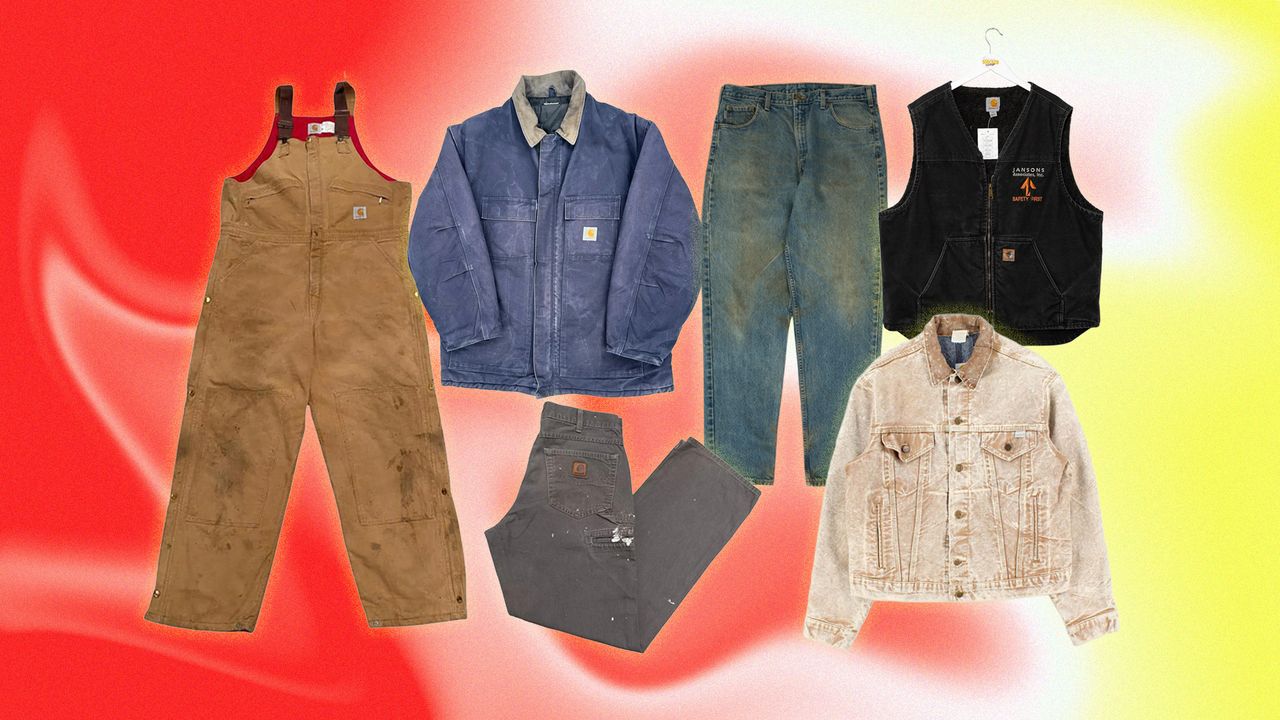




Carhartt is an adaptable brand. It looks good on guys in East London trucking down the footpath. It’s equally good when it’s on a dude driving a tractor through a field. One side wants form, the other wants function, so they happily meet in the middle, which is Carhartt.
In recent years, Carhartt has become a vintage grail for fashion fanatics to, well, nerd out. There’s been an uptick in people buying Detroit jackets, queuing at European Carhartt Work in Progress stores, and getting down to the nitty-gritty of style numbers. Don't get me wrong, the modern stuff is still good. It's essentially the same cuts and materials. But guys are going vintage, so they can skip out on the manual labour and skill get the worn-in look. Stolen valour, and all that.
With that comes two opportunities. The less sinister, but still dangerous, is splashing out on pieces that cost an arm and a leg. The other is a massive bootleg operation that could catch out the keenest of collectors. GQ has collated a giant guide to vintage Carhartt and Carhartt WIP, letting you know what to buy and how to avoid getting scammed when you do find that holy grail.
Brand history
Carhartt was founded in 1889 and was known as Hamilton Carhartt & Company. Abbreviated affectionately as HAM, the first piece of clothing they made was a pair of overalls. These weren't your WIP releases of today. They were gritty, built to stand the test of time, and pure function over fashion. Around the beginning, that's exactly what Carhartt was: A brand built by the workers, for the workers.
When World War II began, the company expanded into what we know them for today. New US factories began working on more performance-driven pieces. Coveralls went to soldiers and support personnel, jungle suits made a splash in the Pacific, and workwear was offered to women joining the local factories. To this day, the clothes they designed are worn by collectors from all over. Just for a different purpose.

MEGA
It wasn't until the 1970s that Carhartt would hit pop culture. They made big deals with department stores like JCPenney and Sears, turning the heads of Hip-Hop legends like 2Pac and the Beastie Boys. This sudden boom of regular people doing regular people shit in Carhartt gave them an idea. Work in Progress, or WIP, is their diffusion line that is more fashion-forward, taking workwear silhouettes and crafting them in materials suited for walking around with an iced coffee.
Both Carhartt and WIP are critical in this fashion movement. They sell around similar price points in the vintage market, and are both susceptible to being faked. Thankfully, we’ve spoken to real guys who buy Carhartt to ensure you won’t get caught out.
Beginner ways of avoiding scams
There are a lot of ways of getting scammed. Some fakes are so subtle that even the experts are fooled; others are more obvious. The first and easiest to catch are pieces that aren’t necessarily fake, but are extremely difficult to authenticate. Enter the patchwork Detroit jackets that you see at London markets.