Palestine: Peace de Resistance review – A tricky attempt to extract laughs from bleak material
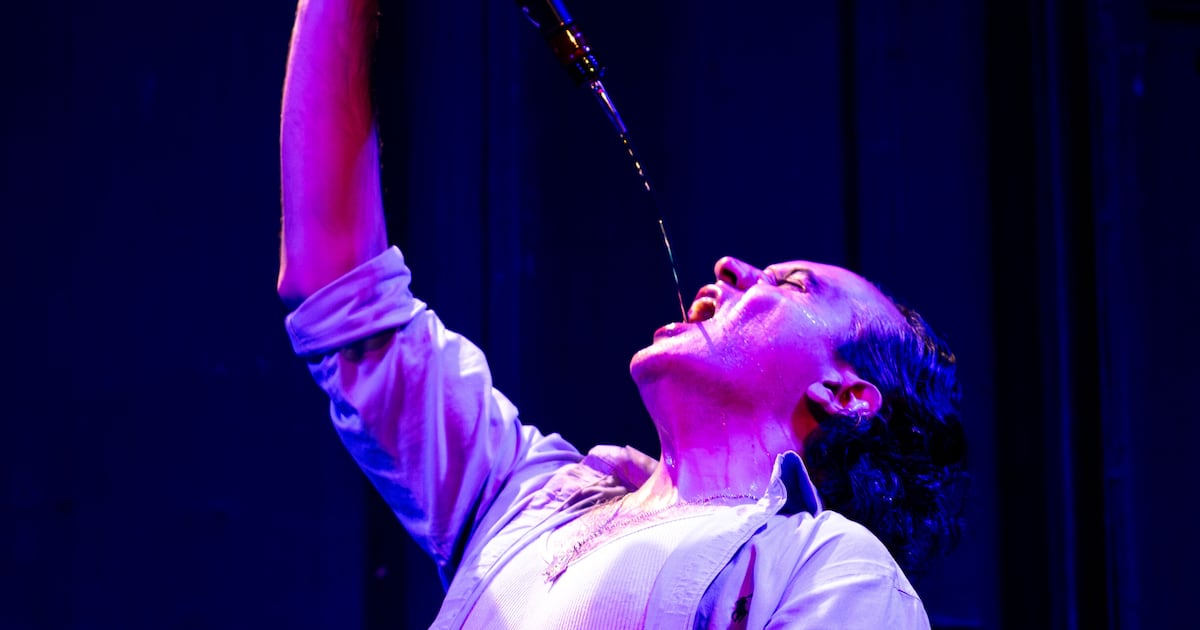
Palestine: Peace de ResistanceProject Arts Centre, Dublin★★★☆☆“It can be difficult to make colonial violence funny, but I’m going to try,” Sami Abu Wardeh says early in Palestine: Peace de Resistance. That difficulty has both comedic and structural dimensions in the Palestinian-British performer’s hour-long one-man show, which is staged at Project Arts Centre as part of Seachtain Saoirse don Phalaistín, or Palestine Freedom Week.At the most basic level, Abu Wardeh sets out to extract laughs from bleak material. But he also seems caught up in a more complex effort to find elliptical ways of telling a story of ongoing slaughter that is perhaps too raw to confront directly.Peace de Resistance blends politically themed bar jokes and personal anecdotes with an episodic love story and some light clowning. The gags generally pit an Irishman and Palestinian, united in oppression, against a haughty English antagonist. These are well-timed and droll without being particularly revelatory. “How do you take your tea? Violently, from India!” is one I might dine out on.More poignant and left field are the performer’s excursions into family lore and his own past. In the 1960s his father set off to fight the Israelis but was stopped at the Jordanian border. Later he returns there with his son, born in Kuwait, to gaze across the Jordan river from a mountaintop (triggering a faintly Beckettian exchange about which of the many mountains actually lies in Palestine).READ MOREGloria Osteria review: Luscious Italian eatery in former AIB bank oozes glamourMatt Cooper defends Ozempic users: ‘I was one of the very early adopters’The Irishman who became Excel world champion: ‘People go crazy’‘I’m the most Irish person you will meet with an English accent’Peace de Resistance: Sami Abu Wardeh in his one-man show. Photograph: Zoë Birkbeck And when Abu Wardeh finally makes it to Jerusalem, in his late 20s, he is initially bamboozled by an Israeli soldier’s demand to know whether he is Muslim (and hence authorised to visit Al-Aqsa Mosque). What we glimpse here is the struggle of an exile to comprehend a homeland of which he has little first-hand experience.These memories are interspersed with the story of another Palestinian, who drifts around the Mediterranean and becomes romantically involved with an Algerian revolutionary during the early 1960s. Both characters remain thinly sketched, and their relationship serves primarily as a symbol of solidarity among colonised peoples.In a similar vein, Abu Wardeh leans heavily on a presumed anti-British affinity with the audience. Early on, he disclaims his own Britishness while proudly emphasising the Irish identity he inherited from his Liverpool-born mother. Later he even sings a ballad about an IRA sniper shooting a British soldier. A more searching approach might have confronted the many Irish contributions to British imperialism. The English – variously portrayed as quinoa-munching toffs, boors and racists – weren’t the only ones taking their tea with violence.Peace de Resistance is haunted by a striking absence: the war in Gaza. Abu Wardeh refers to an incident when an Israeli soldier kicked down his grandmother’s door 25 years ago. But recent violence against the Palestinians is evoked only by implication. We hear Abu Wardeh make a series of bird calls (summoning the dove of peace?). Towards the end, he also silently produces some lewd doodles. What is a cock and balls doing in a show about Palestine? Perhaps the true obscenity of genocide remains inexpressible.Palestine: Peace de Resistance is at Project Arts Centre, Dublin, until Tuesday, January 27th. Seachtain Saoirse don Phalaistín continues until Saturday, January 31st