
Remember me
Turkey is planning to establish a buffer zone on the Iranian side of the border if a worst-case scenario unfolds and the government in Tehran collapses, Middle East Eye understands.
Top Turkish foreign ministry officials on Thursday briefed lawmakers in a closed-door meeting at parliament, telling them that Ankara is preparing for several potential scenarios regarding Iran, according to two participants who spoke to MEE.
One participant in the briefing said Turkish officials used the term “buffer zone” to describe Ankara’s intention to do everything possible to prevent another wave of refugees entering the country.
However, a second participant said the officials did not explicitly use the phrase “buffer zone”, though they expressed a willingness to go beyond the usual measures.
“Essentially, they said they believe everything possible should be done on the Iranian side to ensure that those who might come in the event of a migration remain there,” the second source said.
The Turkish defence ministry earlier this month said that Ankara has strengthened security along its 560km border with Iran through a technologically enhanced physical barrier system.
The measures include 203 electro‑optical towers and 43 elevator‑equipped towers, a 380km modular concrete wall, and 553km of defensive ditches.
The ministry added that the border areas are monitored around the clock by reconnaissance and surveillance systems, including drones and aircraft.
Sign up to get the latest insights and analysis on Israel-Palestine, alongside Turkey Unpacked and other MEE newslettersA Turkish media report said that during the same briefing, Turkish officials also told lawmakers that around 4,000 Iranians had been killed and 20,000 wounded during the bloody protests against the government earlier this month.
Triggered by rapid inflation and the sharp depreciation of Iran’s currency, the protests quickly spread throughout the country. Although there were incidents of violence by some protesters, several investigations and pieces of footage indicate that Tehran used disproportionate force to suppress the demonstrations. It has also imposed an internet blackout.
US military build-upTurkish Foreign Minister Hakan Fidan said on Friday in televised remarks that Ankara is opposed to any foreign intervention in Iran and called on the US government to use diplomatic channels to resolve the crisis.
US President Donald Trump initially threatened Tehran during the violent crackdown but later said he was open to talks with Iran’s leadership.

US weighs 'precision strikes' on Iranian officials as military build-up surges, sources say
Read More »However, Washington has since been weighing precision strikes on “high-value” Iranian officials and commanders it deems responsible for the deaths of protesters, a Gulf official familiar with the discussions told MEE.
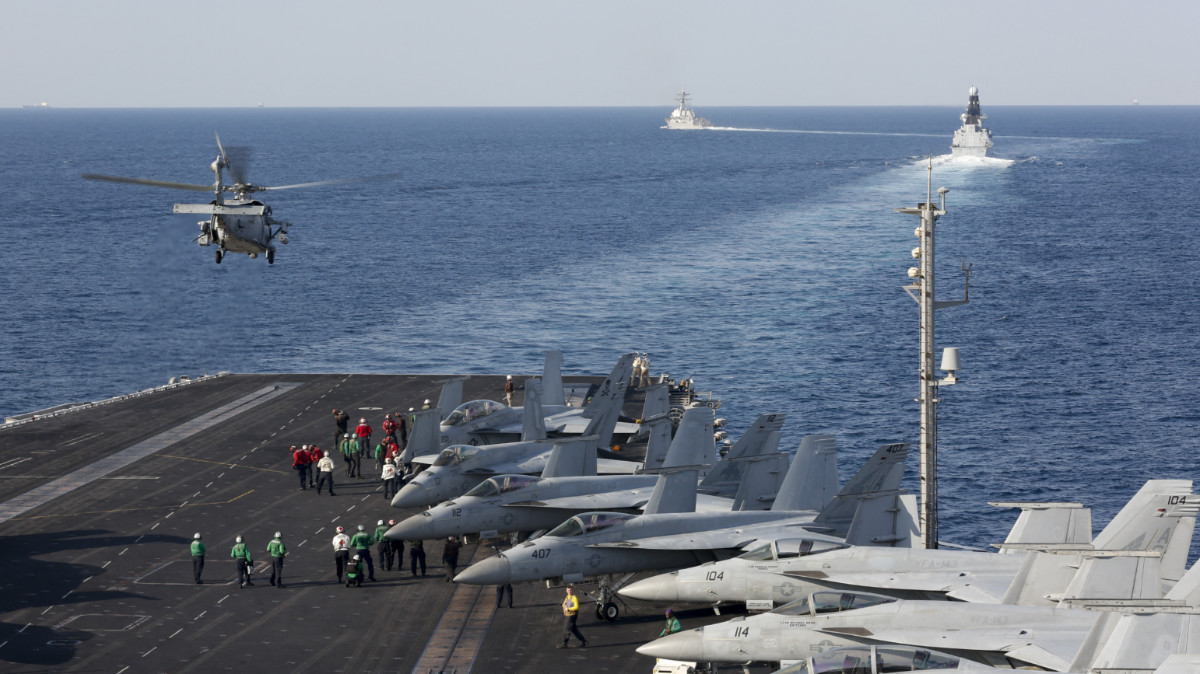
In recent days, the US has deployed warplanes, air defence systems and battleships to the Mena region, giving Trump the option to target senior Iranian officials.
The build-up appears to be reaching a peak. On Monday, the USS Abraham Lincoln aircraft carrier arrived in Middle Eastern waters.
The Turkish government is acutely aware of the repercussions of regime-change operations and wars, having experienced the destabilising effects of the 2003 US-led invasion of Iraq and, more recently, the 2011–24 Syrian civil war.
These conflicts have resulted in hundreds of thousands of refugees crossing into Turkey and straining key sectors such as energy and trade.
Turkish society remains highly sensitive about the presence of refugees, notably the 2.7 million Syrians, many of whom are now returning to Syria following the fall of Bashar al-Assad's government.
MEE reported in June that Turkish officials estimated a full-scale war between Israel and Iran could push up to one million Iranian refugees toward the Turkish border.
Sources told MEE at the time that Ankara was unlikely to accept any refugees except those in urgent need of emergency assistance.
MEE also reported that Turkey would no longer apply an “open-door” policy toward any neighbouring country in the event of a refugee wave. Iranians can currently enter Turkey without a visa.
However, one issue complicating these plans is the presence of Azerbaijani Turks in Iran, who number at least 12 million.
It remains unclear how Turkey would respond if members of the group were to arrive en masse at the border, potentially triggering domestic pressure to admit them into the country.