
Remember me



The Israeli government on Monday approved orders to block access to the websites and YouTube channels of Qatar-based Al Jazeera and the Lebanese Al Mayadeen networks for 90 days.
The measures extend the existing restrictions that ban the networks' television broadcasts within Israel.
In a statement, Israel's Communications Minister Shlomo Karhi said that he would "continue to remove the enemies of Israel from here".
In May 2024, the Israeli parliament approved the emergency law, known as the Al Jazeera Law, allowing the temporary closure of foreign broadcasters considered to be a "threat to national security".
In December, the Knesset approved the law’s conversion into permanent legislation, extending the restrictions for an additional two years.
The law grants the communications minister and the prime minister the power to shut down foreign channels and confiscate their equipment without a court order, regardless of whether a state of emergency has been declared.
Sign up to get the latest insights and analysis on Israel-Palestine, alongside Turkey Unpacked and other MEE newslettersIn September, Israeli forces stormed Al Jazeera’s offices in the occupied West Bank city of Ramallah, confiscating equipment and documents and shutting down the network’s office.
In a statement, the network said: "Al Jazeera reiterates that such slanderous accusations will not deter us from continuing our bold and professional coverage, and reserves the right to pursue every legal step."
The head of the international Committee to Protect Journalists (CPJ), Jodie Ginsberg, in a statement accused Israel of silencing voices to cover up the genocide it is committing in Gaza, by banning the press and killing journalists.
She said the level of restrictions imposed by Israel was unprecedented, adding that the CPJ was in talks with Israeli authorities to find a way for international journalists to access Gaza.
'Deadliest place'The head of the United Nations agency for Palestinian refugees, Unrwa, on Sunday said that Gaza is the deadliest place in the world for journalists and humanitarian workers.
Calling for an end to Israel’s ban on international media access to the enclave, Philippe Lazzarini, commissioner-general of Unrwa, said more than 230 journalists had been killed since Israel’s war on Gaza began, describing Palestinian reporters as "our eyes and ears".
"They have worked heroically and against all odds," Lazzarini said in a post on X, adding that they have paid the ultimate price for their bravery.

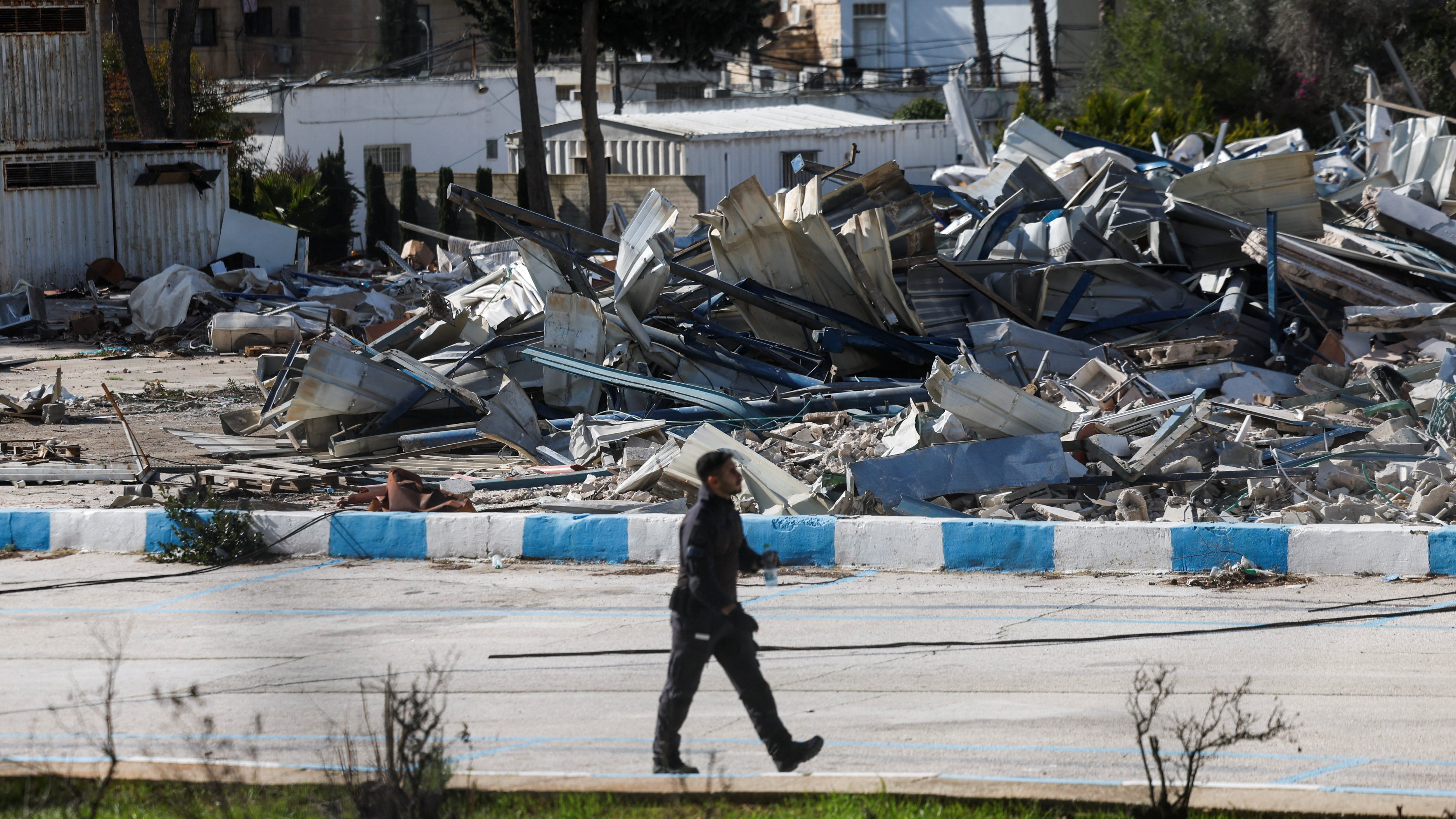
Israel's Ben Gvir leads demolition of Unrwa headquarters in Jerusalem
Read More »Earlier this month, Israel rejected a petition by the Foreign Press Association, an organisation representing international media outlets in Israel and Palestine, demanding independent access for journalists to Gaza.
Since October 2023, Israeli authorities have prevented foreign journalists from entering the devastated territory.
Lazzarini warned that the media isolation of Gaza has also impacted humanitarian workers, as the enclave has become the most dangerous place for aid workers.
According to Unrwa’s latest report, 382 colleagues linked to its humanitarian operations, including 309 staff members, have been killed in Gaza since the start of the war.
In 2024, Israel’s parliament passed a law banning the organisation from operating in Israel and the occupied Palestinian territories.
In December, Israel also announced a ban on 37 humanitarian NGOs operating in Palestine for failure to meet "registration requirements".
Under pressure from Israel, Doctors Without Borders has agreed to provide Israel with a full list of its Palestinian and international staff in a bid to resume operations in Gaza and the West Bank.
The decision raised concerns over the safety of the organisation's Palestinian workers.
At least 15 Palestinian staff of the organisation have been killed by Israel since October 2023.
Ceasefire violationsIn October, Israel and Hamas reached an agreement to end the Israeli war on Gaza and ease restrictions, but the UN aid coordination office said "the humanitarian situation and crisis in Gaza is far from being over".

Israeli soldier’s videos show continued demolitions in Gaza after ceasefire
Read More »According to Gaza’s Government Media Office, Israeli forces have committed at least 1,300 violations of the ceasefire.
These include around 200 incidents involving the demolition of homes and other structures, 430 cases of gunfire directed at civilians, 66 incursions into residential areas, and more than 600 strikes.
Israeli forces have killed more than 484 Palestinians since the ceasefire began, while the total number of wounded has reached 1,321, according to the health ministry in Gaza. Medical teams have also recovered 713 bodies during the same period.
During the same period, the UN recorded the killing of at least 216 Palestinians, including at least 46 children and 28 women, in Israeli attacks far from the so-called "yellow line", mainly targeting shelters for internally displaced persons and residential buildings.
The Palestinian health ministry said on Sunday that the number of Palestinians killed by Israel in Gaza since 7 October 2023 has risen to 71,657, with 171,399 others wounded. Thousands more are missing and presumed dead.