Remember me










This content contains affiliate links. When you buy through these links, we may earn an affiliate commission.
One of the great joys of being a romance reader is discovering your favorite tropes—and realizing other people love them just as much as you do. Of course, there are the classics: only one bed, fake dating, enemies to lovers. Recently, though, romance readers have leaned hard into increasingly specific tropes, often called microtropes. The podcast Fated Mates, for example, curates recommendation collections built entirely around them—everything from kidnapping is for lovers to cozy historicals.
With that in mind, I want to offer a few romance tropes and subtropes that tend to especially resonate with neurodivergent readers. In a genre built on desire, these small moments suggest that being understood might be the most romantic thing of all.
Neurodivergent disabilities are often invisible, in the same way chronic illness can be. Many traits associated with neurodivergence—forgetfulness, difficulty starting tasks, intense interests—are things neurotypical people experience too, which means they’re often dismissed. The difference is scale and impact. Yes, everyone forgets things sometimes. But do you forget to take a new box of pens to work five days in a row, even after setting reminders, putting them by the door, and knowing the inconvenience will derail your day? If not, then you don’t understand how inadequate the descriptor “forgetful” actually is for us.
These aren’t quirks. They’re symptoms that make daily life harder in a world not designed for our brains. Finding a partner who believes you is hard enough. Finding one who believes you and actively accommodates your needs? That’s where the swoon comes in.
Here are some romance subtropes that make neurodivergent readers feel seen and understood—plus, recommendations of romance books that celebrate neurodivergent love like this.
Kissing Books
Sign up for Kissing Books to receive news, book recommendations, and more for residents of Romancelandia.
Subscribe to Selected No Thanks
Support Without Fixing: Knowing When Their Partner Is OverstimulatedExisting in a world that constantly demands regulation means overstimulation is never far away. It might be harsh lighting, loud environments, too many questions in a row, or the effort of maintaining a social mask. What feels neutral to others can be overwhelming to us.
Here’s what the Support Without Fixing subtrope can look like:
The love interest quietly takes over the chores that the neurodivergent partner struggles to start due to executive dysfunction. It shows intimacy built on pattern recognition, not grand gestures. One partner lets the other wear noise-canceling headphones in the car on the way home after visiting family. They notice when pets or children are becoming overstimulating and step in to redirect them. They bring a snack and a drink when they can see a meltdown approaching. At social gatherings, they let their partner do dishes or clear the table—not as labor, but as a socially acceptable escape to regulate. It communicates safety without interrupting agency: “I see you” without “I’ll fix you.” Gentle Communication: Rejection SensitivityMany neurodivergent people experience rejection sensitive dysphoria, which is an intense emotional pain triggered by criticism, disapproval, or rejection. Neurodivergent children receive exponentially more negative interactions than their neurotypical peers. That history shapes how criticism and conflict land.
Here’s what the Gentle Communication subtrope can look like:
Requests are framed gently. Instead of “we need to talk,” a partner says, “everything’s okay—I just want to talk about something.” Gentle framing reads as emotional fluency, which is a major modern romance fantasy. Questions are specific. “How was your day?” can feel overwhelming, especially for someone with alexithymia, which is the inability to name their emotions. Instead, “Did anything notable happen today?” gives a clear entry point. Specific questions feel like intentional curiosity, not emotional laziness. Choices are narrowed. Rather than “What do you want for dinner?”, try “Mexican or Thai—or neither?” Patient Pacing: TransitionsTransitions are hard. Full stop. Moving from one activity to another takes time and energy.
Here’s what the Patient Pacing subtrope can look like:
A partner gives a few minutes to decompress after arriving somewhere—or after someone arrives—before expecting conversation or affection. It shows patience as attraction; the partner is not only happy to wait but also wants a connection that lasts rather than rushing their love interest. A partner gives a heads-up before changing plans. Not a justification, just information. “In ten minutes, we’re heading out,” or “After this episode, I need to talk to you about something logistical.” The romance isn’t the warning—it’s the respect for mental pacing. The love interest takes over logistics during transitions. They handle tickets, directions, timing, or checkout while their partner mentally moves from one context to another. The romance here is competence plus care. Low Demand Love: Object PermanenceThis one is uncomfortable but real: if you’re not in front of us or actively interacting with us, we neurodivergent people may forget you exist. This isn’t about love or care; it’s how our brains work.
Here’s what the Low Demand Love subtrope can look like:
Gentle reminders, offered without judgment, to help us stay connected without triggering guilt or defensiveness. Honoring time apart allows us to regulate and fully engage with our interests, which makes us more present and grounded when we’re together. It affirms love that doesn’t require constant proof or attention. Parallel play offers a romantic compromise: being in the same space while doing different things. One partner reads while the other watches football, for example, or building LEGO sets side by side. Together, without pressure to perform connection.These moments aren’t hypothetical, either. Romance authors have already been writing neurodivergent love in ways that prioritize understanding, accommodation, and mutual care—often without making those moments feel instructional or heavy-handed. Here are a few books where you can see these subtropes in action, expressed through how the characters show up for each other on the page.
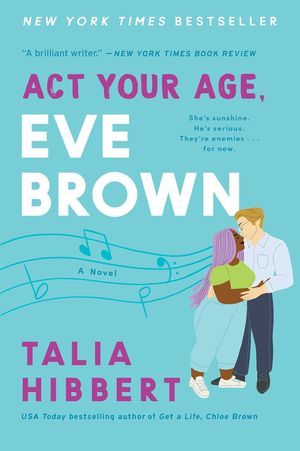
Act Your Age, Eve Brown by Talia HibbertJacob shows love by providing clear structure instead of vague expectations—laying out routines, responsibilities, and boundaries so Eve (who has ASD) doesn’t have to guess what’s required of her. His consistency and follow-through create safety, allowing Eve to relax into herself rather than masking or apologizing for how her brain works. Love arrives not as correction or rescue, but as alignment: a relationship that adapts to Eve instead of demanding she become someone else to be worthy of care.
What Is Love? by Jen ComfortJo’s ADHD is met with flexibility instead of frustration, particularly around timing, focus, and emotional processing. The hero adjusts expectations when Jo needs space, distraction, or delayed clarity, accepting her nonlinear way of arriving at understanding without taking it personally. Her enthusiasm and intensity are treated as sources of joy rather than chaos, reinforcing the idea that love doesn’t require emotional smoothness to be sincere.
 The Kiss Quotient by Helen Hoang
Stella, who is autistic, sets clear sensory boundaries—especially around touch—and Michael follows her lead without treating those limits as obstacles to intimacy. He listens and remembers, adjusting his behavior without complaint or negotiation. What makes this romantic is that consent and accommodation aren’t framed as sacrifices, but as expressions of desire. Stella isn’t loved despite her needs; she’s loved in ways that actively respect them.
 The Charm Offensive by Alison Cochrun
When Charlie’s OCD manifests as intrusive thoughts, panic, and spiraling self-doubt, Dev responds with steadiness rather than solutions. He stays present without minimizing Charlie’s fears or reinforcing compulsions, offering reassurance that grounds rather than overwhelms. Importantly, Dev separates Charlie’s worth from performance—on the show and in life—loving him not for how charming or functional he can be, but for who he is beneath the anxiety.
Duke the Halls by Felicity NivenThe autistic hero repeatedly labels himself an “asshole,” having internalized years of being misread and socially punished for his bluntness. The heroine, however, consistently responds to his intent rather than his delivery, hearing honesty where others hear rudeness. She adapts to his need for routine and solitude without framing it as rejection, showing love through continued choice, trust, and presence rather than reassurance or attempts to soften him into acceptability.
Lizzie Blake’s Best Mistake by Mazey EddingsWhen ADHD Lizzie spirals into self-blame—about her career, her choices, or her identity as a mother—Rake listens without rushing to fix or contradict her. He accepts delayed emotional processing and adjusts expectations around timing, allowing Lizzie to arrive at clarity on her own terms. His patience communicates trust, reinforcing that love doesn’t require constant emotional regulation or neat self-understanding to be real.
 Margo Zimmerman Gets the Girl by Brianna R. Shrum and Sara Waxelbaum
This YA queer romance centers on Margo, who is autistic, and treats her intensity, blunt honesty, and deep fixations as strengths rather than social failures. The love interest responds to Margo’s communication style with patience and curiosity, listening without embarrassment or pressure to soften herself. That combination of autistic and queer representation matters: for many neurodivergent teens, queerness and neurodivergence are intertwined experiences, and seeing a character who is allowed to be openly both—and still deeply desired—offers a powerful counter-narrative to stories that frame difference as something to outgrow.
A Duke by Default by Alyssa ColePortia’s ADHD shows up in impulsivity, unfinished projects, and a long history of being dismissed as unserious. Tavish responds by taking her curiosity and passion seriously, even when her execution falters. He listens when she jumps between ideas and believes in her intelligence before she fully believes in herself. Love here looks like steadiness without control—a partner who doesn’t try to organize Portia’s life, but trusts her to grow in her own way.
Taken together, these stories show that romance doesn’t lose its magic when it slows down or gets specific—it deepens it.
Romance has always been about fantasy—but for neurodivergent readers, these small moments of accommodation and understanding can feel just as powerful as grand gestures or dramatic declarations of love. They remind us that being truly seen, believed, and supported isn’t a compromise of romance—it’s often the most romantic thing of all.
For even more neurodivergent romances, check out: