
Remember me








We’re only a month into 2026, and already the world feels like it’s about to blow up.
While governments and experts continue debating whether we’ll see a peace agreement signed between Russia and Ukraine, NATO and Europe are panicking about whether they should take US President Donald Trump’s threats to seize Greenland seriously, while planning what they’ll do as part of the new world order, if it turns out they have to defend democracy without the help of America.
Meanwhile, there are tensions in America itself, such as in Minneapolis, where we have watched the murder of two protesters by federal agents.
The situation in the Middle East also looks ready to bubble up again, and although protests in Iran have stopped, they could flare up again at any moment.
However, if you are living any where on the island of Ireland, it appears that despite moving ever closer towards a major international conflict of some sort, politicians are doing zero planning for how they will protect people in the scenario of war, not least disabled people, who account for 34.7% of the population in Northern Ireland, and 21.5% in the south.
This is particularly scary for me, as a physically disabled journalist who is paralysed from the neck down, ventilator and wheelchair-dependent, and requires 24/7 care, because as we witness politicians in the British government, Stormont and the Dáil shouting from the rooftops about how they want to defend democracy, they are forgetting about the safety of those who will need to be kept safe the most.
Over the last year, citizens across the British Isles have watched politicians in London, Stormont and Dublin promise that they’re making plans for how they will be ready for a war with Russia, or a new world order that may or may not include America, while being criticised – perhaps justly – that they have no plans beyond talking points.
 Do NATO countries need to plan for a new world order without America? (Leon Neal/PA)
 While the British government did promise they’d raise defence spending at the beginning of last year, it wasn’t included in Labour’s autumn budget.
And despite the odd mention of bomb shelter and siren planning in the media, none of that work seems to be happening by government officials.
Meanwhile, when it comes to the two governments on the island of Ireland, neither has plans to build new bomb shelters, with proposals only to refurbish old ones, with the result that they’ll only be useful for a climate emergency rather than an airborne attack.
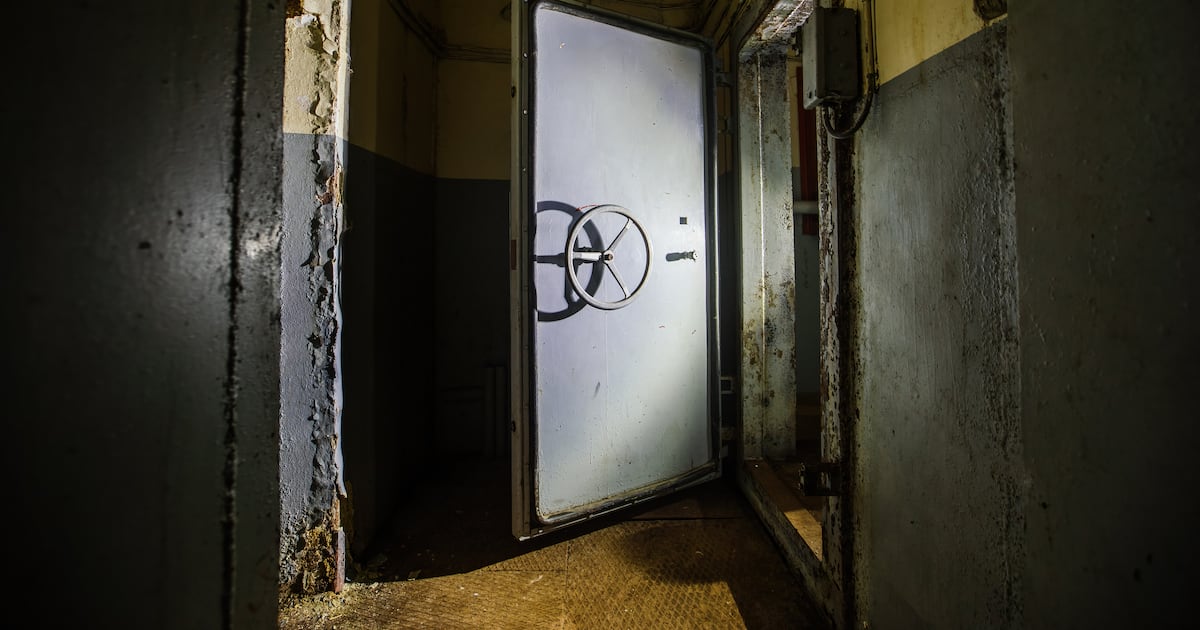
And yet, Stormont still thinks it’s a perfectly reasonable time to continue selling off Cold War bunkers, even as the world feels like it’s spinning further and further towards catastrophe.
At the moment, it seems like the only advice that is being offered for disabled individuals, should a foreign enemy choose to attack us, is to find a basement, a tunnel or maybe a closet.
But how can this be reassuring to someone who is wheelchair-dependent and lives in an adapted bungalow?
Perhaps I can persuade my parents to build a wheelchair-accessible shelter under the garden shed.
The thing is, however, that Northern Ireland has been here before, as was the case between April and May 1941 during the Belfast Blitz.
 The Belfast Blitz, when the Luftwaffe carried out bombing raids in April and May 1941, left more than 1,000 dead, 1,500 injured and up to 50,000 homes damaged
 As a result of the government of the time failing to plan for air-raid shelters that could fit more than 50 people at a time, 900 people lost their lives, 1,500 were injured, half of Belfast’s buildings were either damaged or destroyed, and up to 100,000 people were left temporarily homeless.
So while we all hope that all the conflicts of today won’t turn into global wars, and that just and peaceful solutions will be agreed, it’s clear that there needs to be more planning.
Accessible bomb shelters, if you want to only count the physically disabled folk, will have to include ramps, flat entrances, hospital beds and generators, while if you consider the visually impaired and hearing impaired, they will need to include audible and visual cues – and that’s without even mentioning the disabled people with learning or mental disabilities.
But at this stage, it looks like all three governments have more plans and eagerness to discuss what to do in the event of a united Ireland than what to have in place if there’s a third world war.
I’ll leave it to the reader – based off the events of the first few weeks of the new year – to decide which of these you think will be happening first.
If you have an opinion on the issues raised in this article and would like to submit a Letter to the Editor to be considered for publication, please click hereLetters to the Editor are invited on any subject. They should be authenticated with a full name, address and a daytime telephone number. Pen names are not allowed.