In Switzerland, an ill-prepared army faces the new global disorder
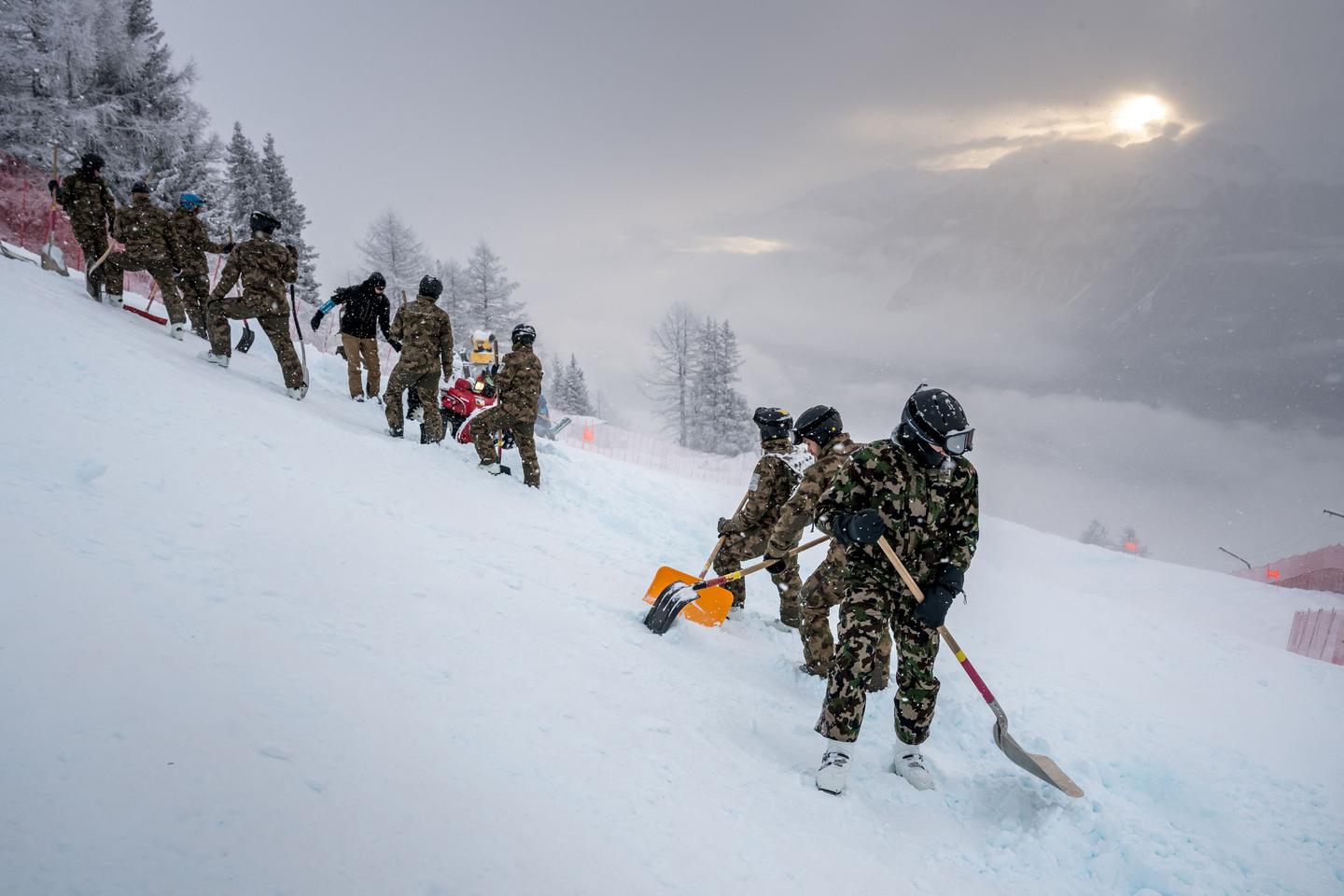
Letter from Geneva Swiss army soldiers prepare a ski slope ahead of the final training session for a women's Alpine Ski World Cup downhill race in Crans-Montana, Switzerland, on January 29, 2026. FABRICE COFFRINI/AFP Among Swiss rituals, one in particular may surprise outsiders. Every weekend, at train stations across the country, it is common to see men in camouflage uniforms, green or red berets fixed on their heads and SIG-550 assault rifles slung over their shoulders. In the Swiss Confederation, where compulsory military service was not abolished after the end of the Cold War – as was the case in many European countries – weekly troop rotations on leave remain a fixture of national life and are part of the landscape. This routine of recruit school and annual refresher courses (three weeks per year for the 10 years following initial service), often considered a form of folklore, has the advantage of bringing together young men from French-speaking, German-speaking and Italian-speaking regions, thus fostering a sense of national cohesion. On Monday, January 12, 12,500 recruits born in 2006 and 2007 began their training under the red flag with a white cross. The current climate of global geopolitical disorder has not escaped the attention of the officers training them. "They told us: 'You may be the first generation in this country to do your military service and actually have to fight on the ground,'" said Victor, a 19-year-old from Geneva, somewhat taken aback. Switzerland's last war abroad dates back to the Franche-Comté campaign in 1815. That operation, officially conducted in response to the bombing of Basel by French forces, was the last Swiss military action overseas. Since then, the Confederation has adhered to its neutrality, recognized at the Congress of Vienna in 1815, and has not participated in any conflict. You have 70.48% of this article left to read. The rest is for subscribers only.