
Remember me








According to the latest movement, AI could be more disruptive than we thought.
Not long after the AI boom kicked off, talk of a bubble ensued.
It makes sense. The similarities to the dot-com era are too hard to ignore. Stocks are soaring on the back of another revolutionary technology, and tens of billions are being invested in new infrastructure, though it's unclear if profits will emerge in time to pay for it.
The core tenet of the bubble narrative is that valuations and capital expenditures are getting ahead of where real-world adoption of AI is, and if that gap gets too wide, valuations will crash. Microsoft CEO Satya Nadella acknowledged as much at the World Economic Forum in January, saying that AI adoption needed to expand beyond the tech sector.
However, there's been a twist in the AI bubble narrative this year. Software stocks have plunged to start the year, with ETFs that track the sector like iShares Expanded Tech-Software Sector ETF (IGV 2.12%) down 16% to start the year. Sector leaders like Microsoft, ServiceNow, and SAP all fell double-digits last Thursday after reporting earnings, even though their results showed solid growth.
The culprit in the software bloodbath instead appears to be AI, as investors are beginning to fear that AI could disrupt enterprise software by allowing customers to build equivalent tools in-house. Similarly, it could also enable AI start-ups to compete with entrenched leaders like Salesforce and ServiceNow.

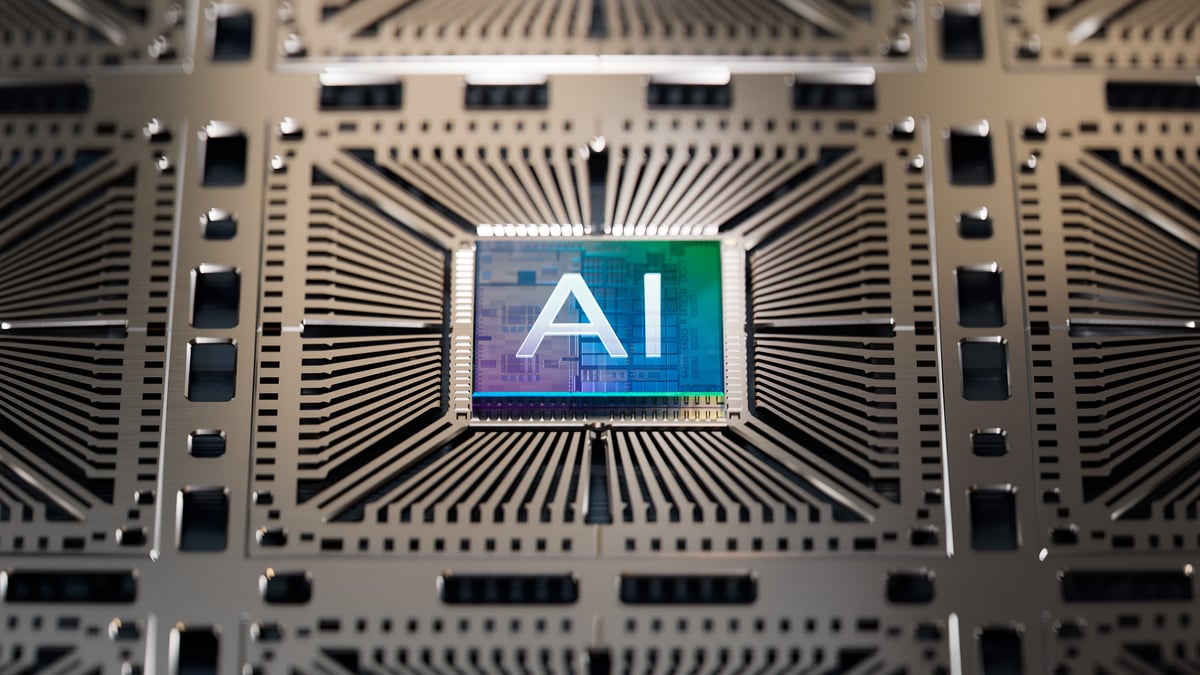
Image source: Getty Images.
The cognitive dissonance of the AI bubbleAI stocks pulled back late last year on concerns about a bubble. The murmurs were loud enough that Nvidia (NVDA 0.72%) CEO Jensen Huang pushed back on them unprompted on Nvidia's November earnings call, saying he sees the opposite happening.
Now, the software sell-off seems to imply that AI is so powerful or potentially powerful that it could upend a sector worth trillions of dollars.
But both of those bubble narratives can't be true. AI can't be so poorly monetized that companies like OpenAI are going to blow up, and simultaneously so much of a threat that bedrock software companies like Microsoft are falling by double-digits on fears that AI could disrupt them.
What's also notable is that the plunge in the software sector is coming at a time when big tech companies are pouring billions more into the two major AI start-ups, OpenAI and Anthropic.
Anthropic just hiked its fundraising target to $20 billion in a round expected to close soon, while Amazon is in talks to invest $50 billion in OpenAI, and Nvidia was considering a $100 billion investment in the ChatGPT creator.
These companies clearly have no fear of a bubble in AI right now, and it's worth noting that OpenAI and Anthropic are the same companies investors fear are threatening the enterprise software sector.
There's a clear winner hereWith software stocks tumbling and billions flowing into the AI start-ups, which are technically software companies, there's one sector that will come out on top.
That's semiconductor stocks, which have already been the big winners in the AI boom. The tens of billions of dollars that OpenAI and Anthropic are raising are likely to be spent on Nvidia GPUs and other such products, fueling more gains for those stocks. For investors looking to diversify across the chip sector, one option to consider is an ETF like the VanEck Semiconductor ETF (SMH 3.37%), which has trounced the S&P 500 over the last decade.

VanEck ETF Trust - VanEck Semiconductor ETF
Today's Change
(-3.37%) $-14.06
Current Price
$403.46
If anything, the sell-off in software stocks is good news for the chip sector, as it backs up the belief that AI truly is disruptive and that the massive infrastructure buildout will eventually pay for itself.
It's unclear how long the software pullback will last, but as long as money is flowing into OpenAI and Anthropic and their revenue is soaring, there's little reason to fear an AI bubble.
Comments (0)