Astronomer Royal defends decision to keep Elon Musk as Royal Society fellow
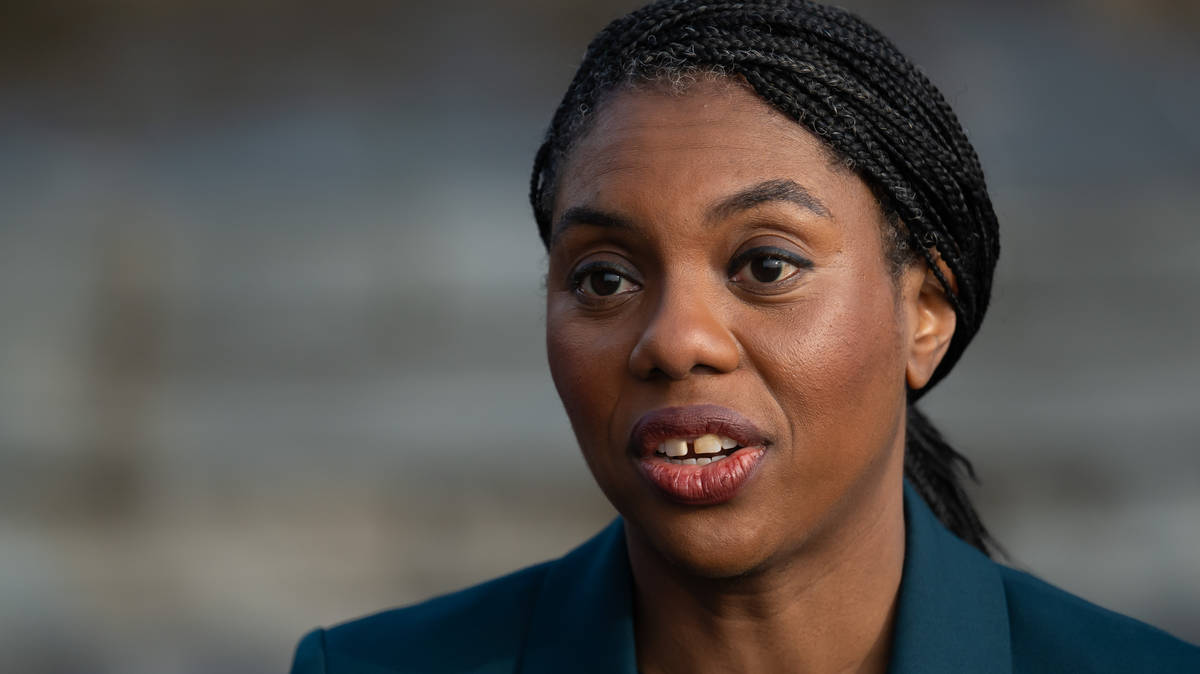
Professor Michele Dougherty, a leading space physicist who was a researcher for the Nasa Cassini mission, became the first woman to be awarded the 350-year-old Astronomer Royal title last year.The 64-year-old fellow of the Royal Society was asked about the controversy surrounding the tech billionaire after claims he violated its code of conduct by spreading misinformation.Asked if she supports Elon Musk’s membership, Prof Dougherty said: “I wasn’t involved in the discussions or in the decision that was made, but once I heard that they had decided not to take it away from him, on thinking about it, I think it was the right decision.“Because the reasons that he was awarded the fellowship, all that he had done for space launches and for spacecraft, those were still there.“You know, he’s done a lot for improving our ability to get into space, and so I think it was the right decision.”Read more: Brit implanted with Elon Musk's Neuralink brain chip praises 'magical' deviceRead more: EU opens investigation into Elon Musk's X over Grok AI sexual deepfakesThe London-based Royal Society is a fellowship of many of the world’s most eminent scientists and claims to be the oldest scientific academy in continuous existence.Mr Musk, who founded rocket company SpaceX, was elected a fellow in 2018 for his contributions to the space and electric vehicle industries.The SpaceX chief executive also owns electric car-maker Tesla and social media platform X, formerly Twitter, and was involved in the US Department of Government Efficiency (Doge) set up by Donald Trump in 2025 at the start of his second presidential term.In February last year, Nobel prize winners were among more than 2,400 people to sign an open letter that alleged Mr Musk had broken the society’s code of conduct by promoting “unfounded conspiracy theories”.Imperial College London emeritus professor of structural biology Stephen Curry wrote the open letter and told PA last year that Mr Musk is “widely reported to be one of the most active disseminators of misinformation on Twitter”.Fellows met in March to discuss “the principles around public pronouncements and behaviours of fellows”, according to a Royal Society statement.A decision was made not to take any action against the SpaceX founder, but in a statement dated October 2025 Sir Adrian Smith, president of the society, criticised Mr Musk’s appearance at a “Unite the Kingdom” rally as “an example of a growing tendency towards the use of the language of violence, and narratives of division and polarisation”.Prof Dougherty was also asked about her opinion of private space exploration companies, of which SpaceX is a leading example.She replied: “Positive in the main because it allows more launches to take place.“It enables the cost of launch to be cheaper, so it helps push the boundaries of what we launch and how we can launch.”However, she warned about the dangers of sending too many craft into space.“A concern that I have is there are so many spacecraft up there now that we might get to a position where seeing the night sky in all its glory is going to be difficult,” she said.“It’s getting really crowded up there.“There are old spacecraft which are no longer operating, but are up there.“And one has to be really careful that the spacecraft you launch don’t crash into these other spacecraft.“So I think we need to take a deep breath and think really carefully about how much is being put up into space.”As an investigator on two major space missions, Prof Dougherty has played a role in making discoveries in the solar system, including helping to uncover jets of water vapour shooting out of one of Saturn’s moons, Enceladus, revealing that it might be able to support life.The role of astronomer royal was created in 1675, with the aim of discovering how to determine longitude at sea when out of sight of land.It is now an honorary title and is awarded to a prominent astronomer who is expected to advise the King.