
Remember me






How a 1950s research program launched the country onto the global stage

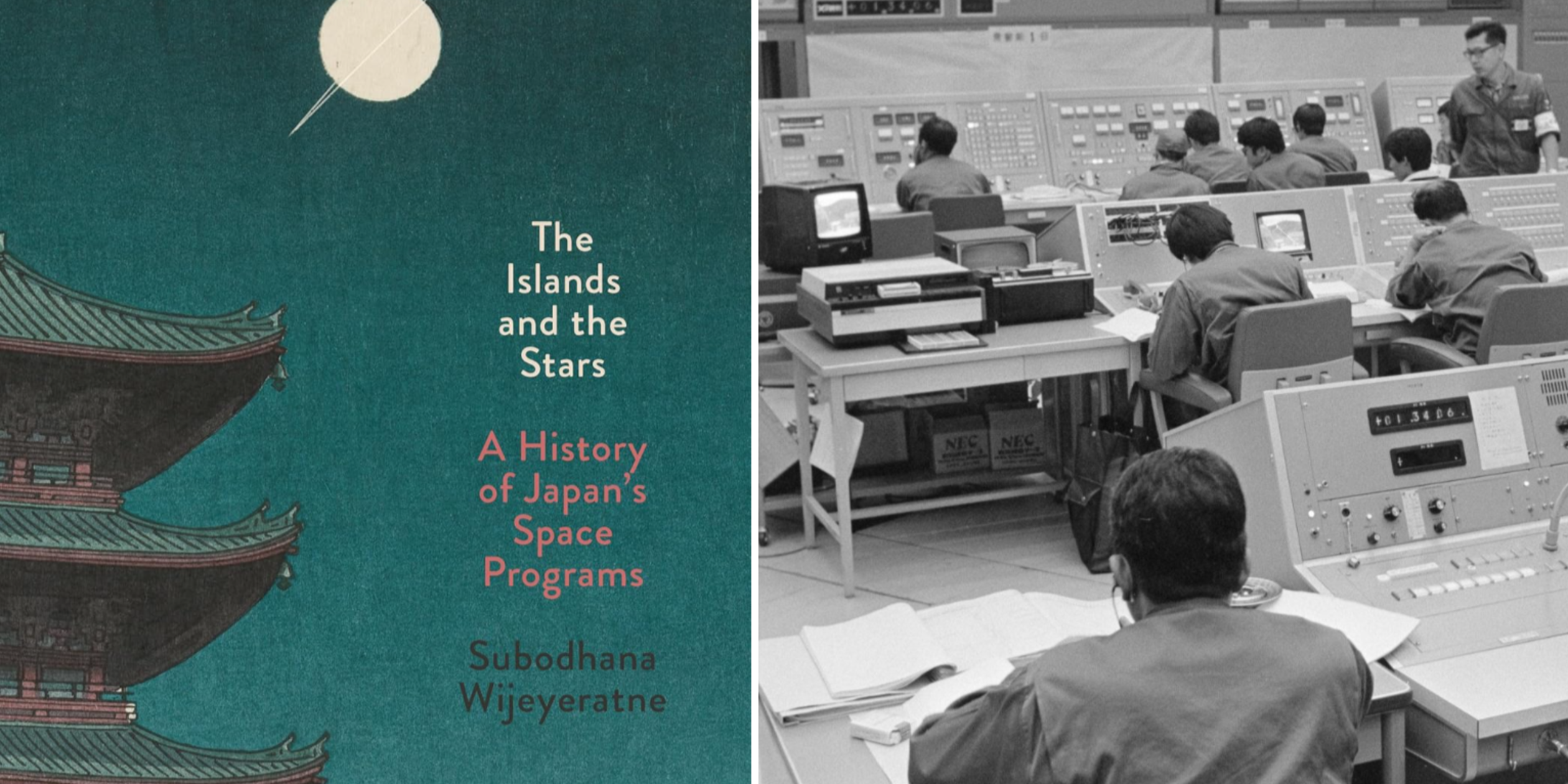
Author Subodhana Wijeyeratne chronicles the history of Japan’s space programs with academic rigor without sacrificing clarity. (Source photos by Stanford University Press, Getty Images)
MARTIN LAFLAMME
February 4, 2026 10:46 JST
In June 2010, a spacecraft entered the Earth's upper atmosphere at 43,200 kph. Within minutes, air friction forced a rapid deceleration, raising the temperature on the heat shield to a scorching 3,000 C. Approximately 5 kilometers above ground, a parachute opened, and the small capsule landed near Woomera, in the Australian outback. Its cargo was tiny -- less than a gram of dust that had been collected by Hayabusa, a Japanese probe, on a distant asteroid -- but its scientific value was immense. It held clues to the origins of our solar system.