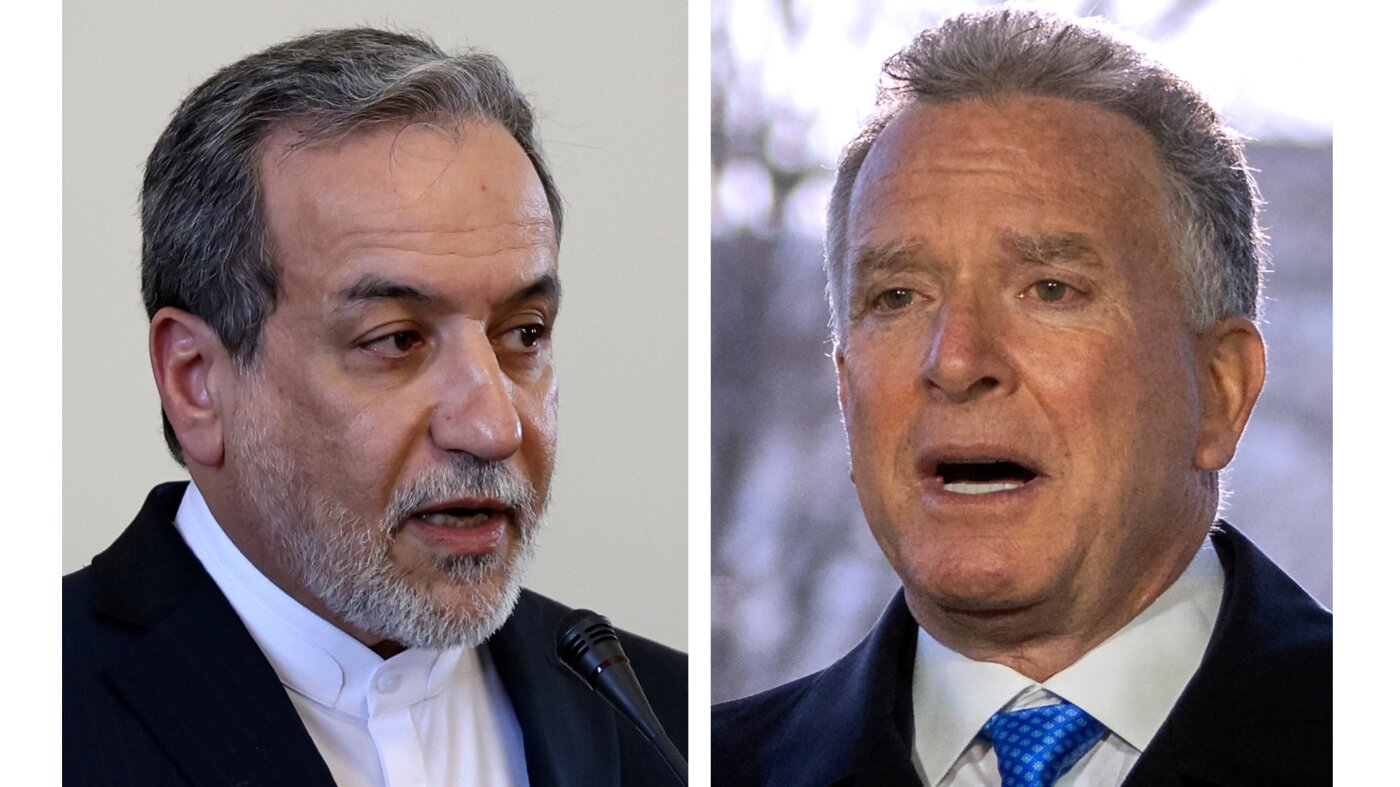
As the U.S. and Iran prepare to hold nuclear talks in Oman Friday, people in Iran are facing an intense crackdown as security forces track down anyone who was involved in the anti-government protests
LEILA FADEL, HOST:
As those nuclear talks are happening, people in Iran are facing an intense crackdown by security forces. NPR's Arezou Rezvani reports.
(SOUNDBITE OF ARCHIVED RECORDING)
UNIDENTIFIED PERSON #1: (Non-English language spoken).
AREZOU REZVANI, BYLINE: Iran's state TV and social media channels are full of forced confessions these days.
(SOUNDBITE OF ARCHIVED RECORDING)
UNIDENTIFIED PERSON #2: (Non-English language spoken).
REZVANI: Men and women, young and old, describe throwing Molotov cocktails...
(SOUNDBITE OF ARCHIVED RECORDING)
UNIDENTIFIED PERSON #3: (Non-English language spoken).
REZVANI: ...Taking up handmade arms...
(SOUNDBITE OF ARCHIVED RECORDING)
UNIDENTIFIED PERSON #4: (Non-English language spoken).
REZVANI: ...And unleashing chaos during nationwide anti-government demonstrations last month. Iran's security forces crushed those protests in just a couple of days, killing nearly 7,000 people, according to the human rights activist news agency, and it didn't stop there. Under a state-imposed internet blackout, security forces have been tracking down anyone involved in the protests. People inside Iran don't feel safe talking about this, but one 17-year-old girl in Tehran agreed to speak on the condition we withhold her name and distort her voice for fear of government reprisals. Through voice memos, she offers a glimpse into how security forces are rooting out protesters.
UNIDENTIFIED PERSON #5: (Through interpreter) We've been told female inspectors will soon visit our school. They're going to check our bodies for pellet wounds or scars from the protests. They're also going to confiscate our phones to look through our Instagram accounts and our camera rolls for any political content.
REZVANI: If anyone skips school, she says, they'll be arrested.
NASSIM PAPAYIANNI: I think everything that they're doing is to eradicate dissent.
REZVANI: That's Nassim Papayianni of Amnesty International. She says many groups are now under intense scrutiny.
PAPAYIANNI: The authorities have also been carrying out arrests of human rights defenders. There's medical workers who provided care to injured protesters, university students. And we have gathered evidence that the authorities have denied their families information about their fate and whereabouts.
REZVANI: The U.S.-based Center for Human Rights in Iran estimates 30,000 people have been detained. Many are being held in warehouses. The prisons are full. It's against this backdrop that the U.S. has held nuclear talks with Iran. The 17-year-old high school student who fears she'll soon be strip searched at school is devastated these talks are happening at all.
UNIDENTIFIED PERSON #5: (Through interpreter) Trump said that if Iran kills even one person, the U.S. would come to our aid. Well, thousands have been killed. If this government stays, if Supreme Leader Khamenei remains, things will get worse. I want the U.S. to strike Khamenei in such a way that he turns to dust.
REZVANI: If these talks do fail, President Trump has hinted at what might come next. In a post this week, he warned Supreme Leader Khamenei that he should be, quote, "very worried." Arezou Rezvani, NPR News.
Copyright © 2026 NPR. All rights reserved. Visit our website terms of use and permissions pages at www.npr.org for further information.
Accuracy and availability of NPR transcripts may vary. Transcript text may be revised to correct errors or match updates to audio. Audio on npr.org may be edited after its original broadcast or publication. The authoritative record of NPR’s programming is the audio record.