Remember me


New infrared observations reveal the rare interstellar visitor comet 3I/ATLAS dramatically brightening during its farewell tour of the solar system.
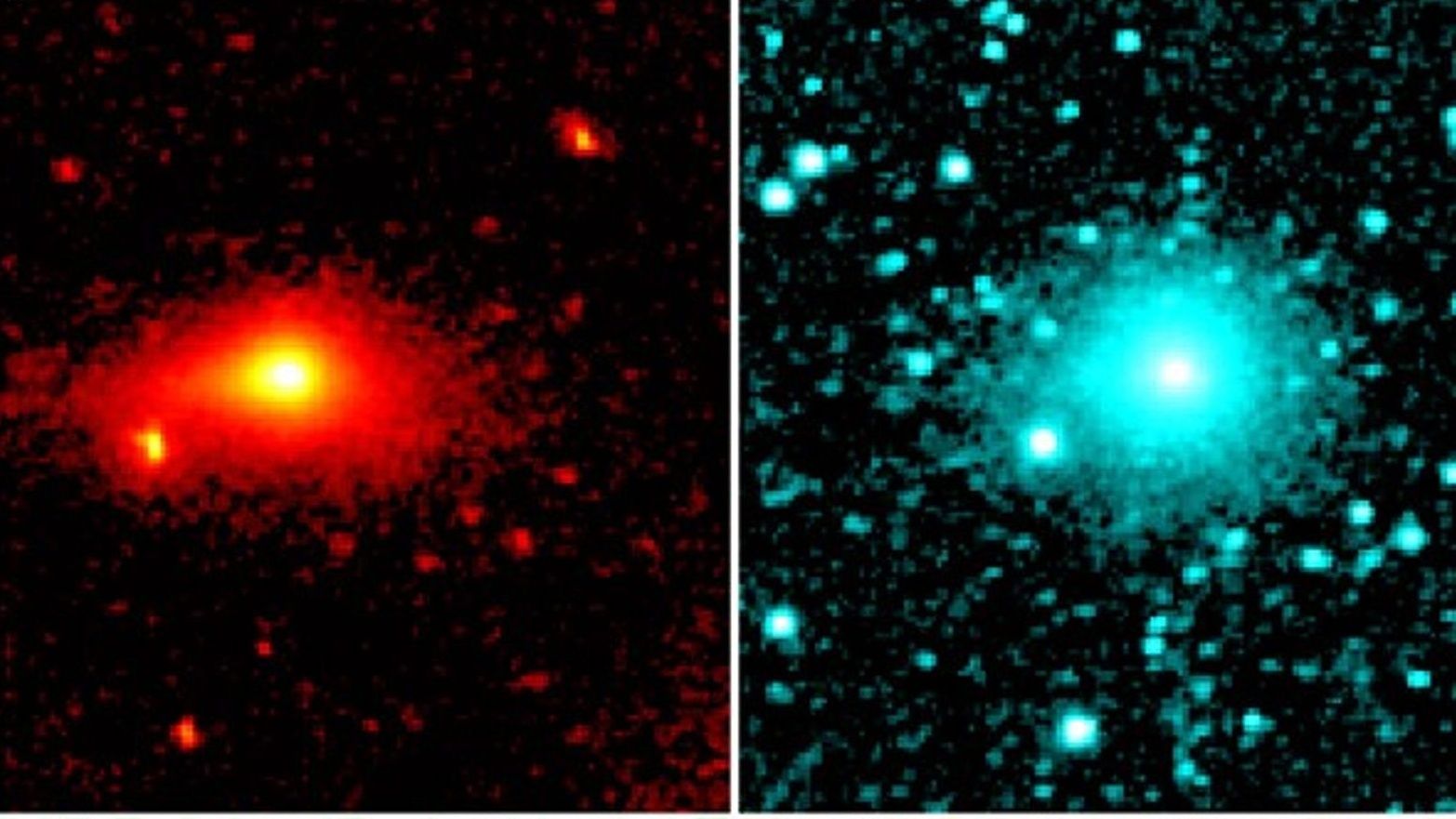
NASA's SPHEREx (Spectro-Photometer for the History of the Universe, Epoch of Reionization and Ices Explorer) space telescope captured views in December 2025 of the comet releasing a surge of gas, dust and complex molecules two months after the object's closest approach to the sun — a surprising outburst that's giving scientists their clearest chemical look yet at material formed around another star, according to a statement from NASA.
You may like Farewell, comet 3I/ATLAS! Interstellar visitor heads for the outer solar system after its closest approach to Earth
 Interstellar comet 3I/ATLAS caught on camera in new images from Hubble Space Telescope and JUICE Jupiter probe
 Scientists detect X-ray glow from interstellar comet 3I/ATLAS extending 250,000 miles into space
"Comet 3I/ATLAS was full-on erupting into space in December 2025, after its close flyby of the sun, causing it to significantly brighten," Carey Lisse, lead author of the study, said in the statement. "Even water ice was quickly sublimating into gas in interplanetary space."
Discovered in July 2025 by the ATLAS asteroid survey, 3I/ATLAS is only the third confirmed interstellar object ever spotted passing through our solar system, following 1I/'Oumuamua in 2017 and 2I/Borisov detected in 2019. Unlike its predecessors, however, 3I/ATLAS put on an extended chemical show that SPHEREx was uniquely equipped to observe.
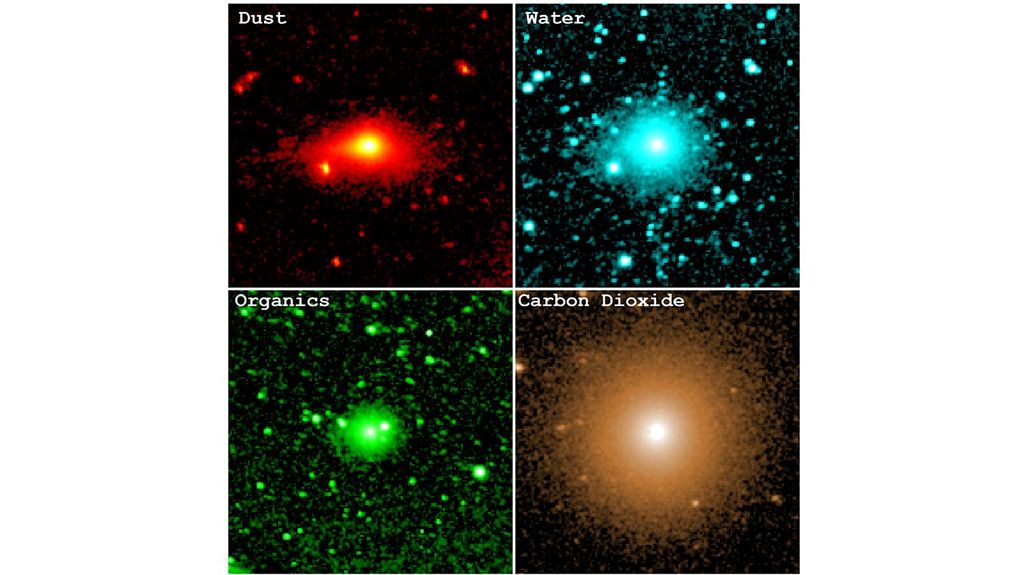
SPHEREx studies the universe in infrared light, allowing scientists to identify not just dust, but also a detailed mix of molecules streaming off the comet — including water ice, carbon dioxide, methane, methanol and cyanide, which are substances that serve as key ingredients in planetary formation.
While comets typically become most active near perihelion, when solar heat causes surface ices to vaporize, the SPHEREx data shows that 3I/ATLAS intensified well after that point. This suggests sunlight slowly penetrated beneath the comet's surface before triggering a delayed release of buried, ancient ices, according to the statement.
"Since comets consist of about one-third bulk water ice, it was releasing an abundance of new, carbon-rich material that had remained locked in ice deep below the surface," Lisse said in the statement. "We are now seeing the usual range of early solar system materials, including organic molecules, soot, and rock dust, that are typically emitted by a comet."
Because 3I/ATLAS originated beyond our solar system, its chemistry offers a rare chance to compare our local comets with icy bodies formed around other stars. The similarities and differences could help scientists determine whether the raw materials for planets and potentially life are common throughout the Milky Way.
These observations by NASA’s SPHEREx show the infrared light emitted by the dust, water, organic molecules, and carbon dioxide contained within comet 3I/ATLAS’s coma during the mission’s December 2025 campaign. (Image credit: NASA/JPL-Caltech)"The comet has spent ages traversing interstellar space, being bombarded by highly energetic cosmic rays, and has likely formed a crust that's been processed by that radiation," Phil Korngut, co-author of the study, said in the statement. "But now that the sun's energy has had time to penetrate deep into the comet, the pristine ices below the surface are warming up and erupting, releasing a cocktail of chemicals that haven't been exposed to space for billions of years."
Their findings were published February 2026 in the journal Research Notes of the AAS.