After years spent documenting state terror, I know it when I see it. And I see it now in the US and Israel
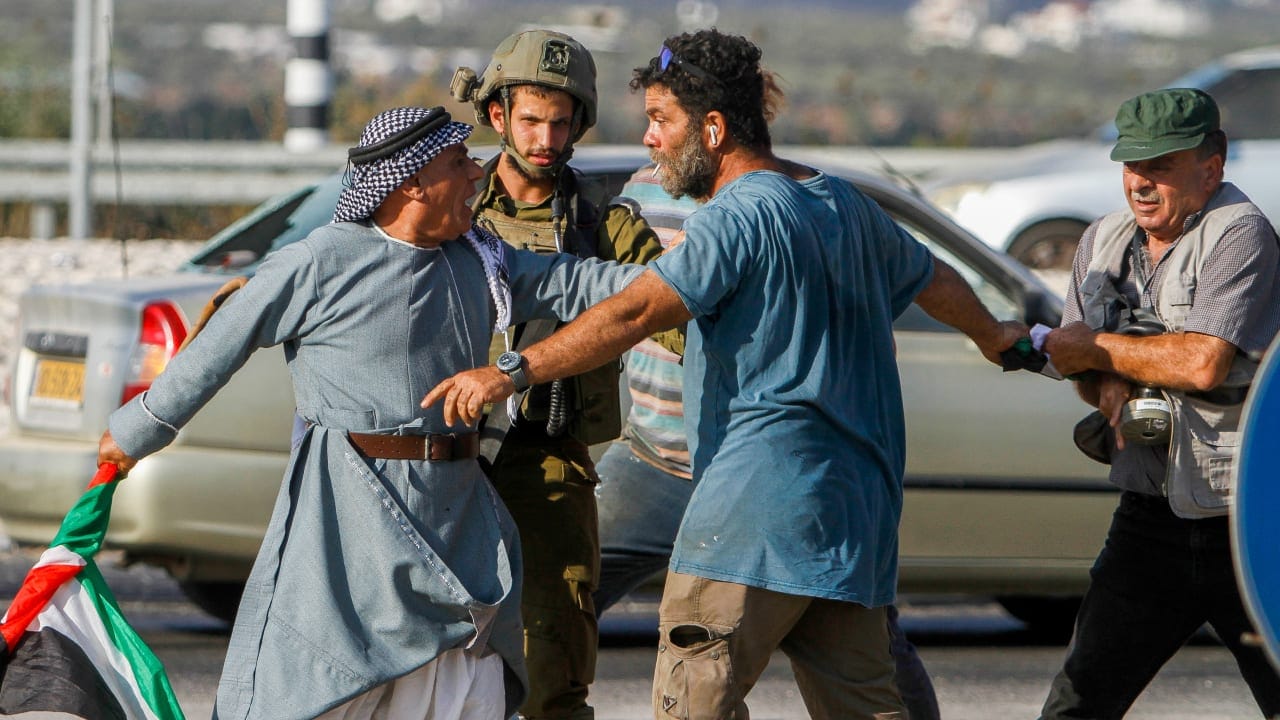
In Syria, where I worked during the years of Bashar al-Assad’s terror, people were often taken away to torture cells before dawn by masked men. The timing was deliberate. It disoriented them at their most vulnerable, ensuring the torture to come would be even more agonising. The testimonies I recorded from survivors almost always contained the same phrase: “The morning they came for me.” One young woman, shattered by rape and violence, later told me that her life had split in two – before and after the masked men came for her.In Iraq, those who spoke against Saddam Hussein – even abroad, even casually – were punished in cruel ways by a vengeful leader determined to crush any hint of dissent.In Egypt in 2016, Giulio Regeni, a 28-year-old Italian academic researching labour unions, was abducted, beaten and tortured to death, it is thought, by president Abdel Fatah al-Sisi’s security services. His own mother had difficulty recognising his mutilated body.During the second Chechen war, I met the journalist Anna Politkovskaya in Chechnya. She repeatedly attacked Vladimir Putin’s policies, documenting human rights abuses during Russia’s military campaigns. To punish her, a bullet was put in her brain on Putin’s birthday – a warning to other truth-seekers. Stay silent or die.In the West Bank and Gaza, Israeli soldiers, masked and unmasked, kill, torture and imprison Palestinian doctors, journalists, teachers, activists and scholars not for what they have done – but because of who they are.After decades of documenting state terror, I know how it starts. Governments begin to use words like security, order, deterrence. Every excuse for Benjamin Netanyahu’s conduct in Gaza is framed as “security”. ICE agents are trained in a language of order in which violence becomes procedure.What happens when democratic states adopt the methods of the regimes they once condemned? Terror is not only masked men and arbitrary detention. It also operates through fear. Policies are designed to make people more compliant, more submissive. As the historian Timothy Snyder warned in his 2017 book, On Tyranny, this is how societies slide into danger: people obey in advance.In Donald Trump’s US, I have watched CEOs, academics, journalists and government officials allow fear to override decency and moral authority. I have seen this pattern before. It begins with claims that certain people are dangerous. That ordinary legal safeguards should not apply to them. It ends with a society diminished – more compliant, more cynical, more brutal. State terror is rarely announced. In my experience, it becomes normalised. It seeps quietly into the machinery of government.Authoritarian regimes make no serious claim to moral legitimacy. Their violence is explicit. Saddam did not apologise when he killed 182,000 Kurds during the Anfal campaign. Sisi did not apologise when about 1,000 Muslim Brotherhood supporters were mowed down in Rabaa and al-Nahda squares in central Cairo. Hafez al-Assad never acknowledged the tens of thousands killed in Hama in 1982. (To this day, the exact numbers remain unknown and the disappeared unaccounted for. The regime cynically built hotels over mass graves).Democracies operate in an entirely different way. Their actions are often technically above the law. Constitutions are invoked and obscure laws brought back to defend aggressive policies. Governments talk of “necessary action”. They point to courts that still function, a press that is still somewhat free, elections that still take place – even as all of these institutions disintegrate. This is how democracies begin to resemble the regimes they once condemned. It is a subtle, devastating shift.The tools are familiar. A journalist whose reporting aligns closely with the political interests of the US president and the Israeli prime minister is installed to lead CBS, once one of the most respected networks in the US. On university campuses, surveillance now includes photographing students who attend or lead pro-Palestinian demonstrations, and are deemed troublemakers. I was told by one student at an Ivy League university that some are quietly warned they will never find work on Wall Street, at the best law firms, or in government offices if they continue. Other student activists are removed from their homes, illegally detained, and threatened with deportation.Academic deans face threats of punitive funding cuts unless they impose requirements that constrain academic freedom. At Northwestern University in Chicago, students were forced to complete antisemitism training that they said was inaccurate and biased in favour of Israel before they could enrol in classes.Instructors are quietly told to toe the line. Journalists are disciplined through language that is carefully crafted as editorial policy – then some of them are arrested. Those who resist are increasingly labelled enemies of the state.ICE tactics themselves are not new. They have long been used disproportionately against political radicals, Muslims, Black Americans and migrants. What has changed is their visibility – and increasingly, their acceptance. Today, ICE mirrors the same patterns of state terror I have documented for decades: arbitrary detention, secret evidence, militarised policing. The criminalisation of dissent. All of this is justified by the guardians of legality: the White House, the Knesset, the office of the prime minister.Bit by bit, lists are drawn up. Loyalty tests reminiscent of the red scare have returned. Dual citizens are facing pressure to choose a country of “loyalty”. Immigration enforcement is reframed as a hunt for “criminals” rather than a legal process. Activists, NGOs and humanitarians are punished. In Gaza, organisations such as Doctors Without Borders are told that unless they provide lists of healthcare workers – placing those staff at grave risk – they will not be allowed to operate.The United Nations, founded to prevent the scourge of war, is rendered toothless. Then sidelined and derided.True, the US and Israel are not Russia or North Korea. But democracies erode. The early stages are not just the national guard on the street, but legal arguments over definitions. Judges deferring to power. Congress taking money from powerful lobbying groups, then using social media to spread propaganda. Disinformation acts as a weapon of truth. Good men and women look away, fearful they will lose jobs, visas, publishing contracts, social standing.The most chilling thing is what happens to society, but also to individuals. Fear becomes internalised, and we begin to censor our own thoughts. We wonder if the law will actually protect us if they come for us one day.The true irony is, state terror does not make a state safer. When democratic states adopt the methods of tyrannies, they become weaker. Their global credibility frays. They sacrifice the legitimacy they once held that distinguishes them from the regimes they claim to oppose.I know state terror when I see it. It is not just Iran’s Revolutionary Guard, Russia’s FSB or Egypt’s National Security Agency. It’s lawyers in suits and bureaucrats at desks and journalists spinning a narrative so the truth is distorted. It’s ICE agents breaking car windows and shooting unarmed citizens. It is militarised borders; family separations and deportations without due process. It is turning fear into a policy, a goal.We should be listening, urgently, to all of those who have lived through it. The hundreds of testimonies I have taken over the years from those haunted voices are an early warning signal we cannot afford to ignore.
Janine di Giovanni is a war correspondent and the executive director of The Reckoning Project, a war crimes unit in Ukraine, Sudan and Gaza. She is the author of The Morning They Came for Us: Dispatches from Syria.




Comments (0)