At Centre Pompidou-Metz, the late resurrection of sculptor Louise Nevelson
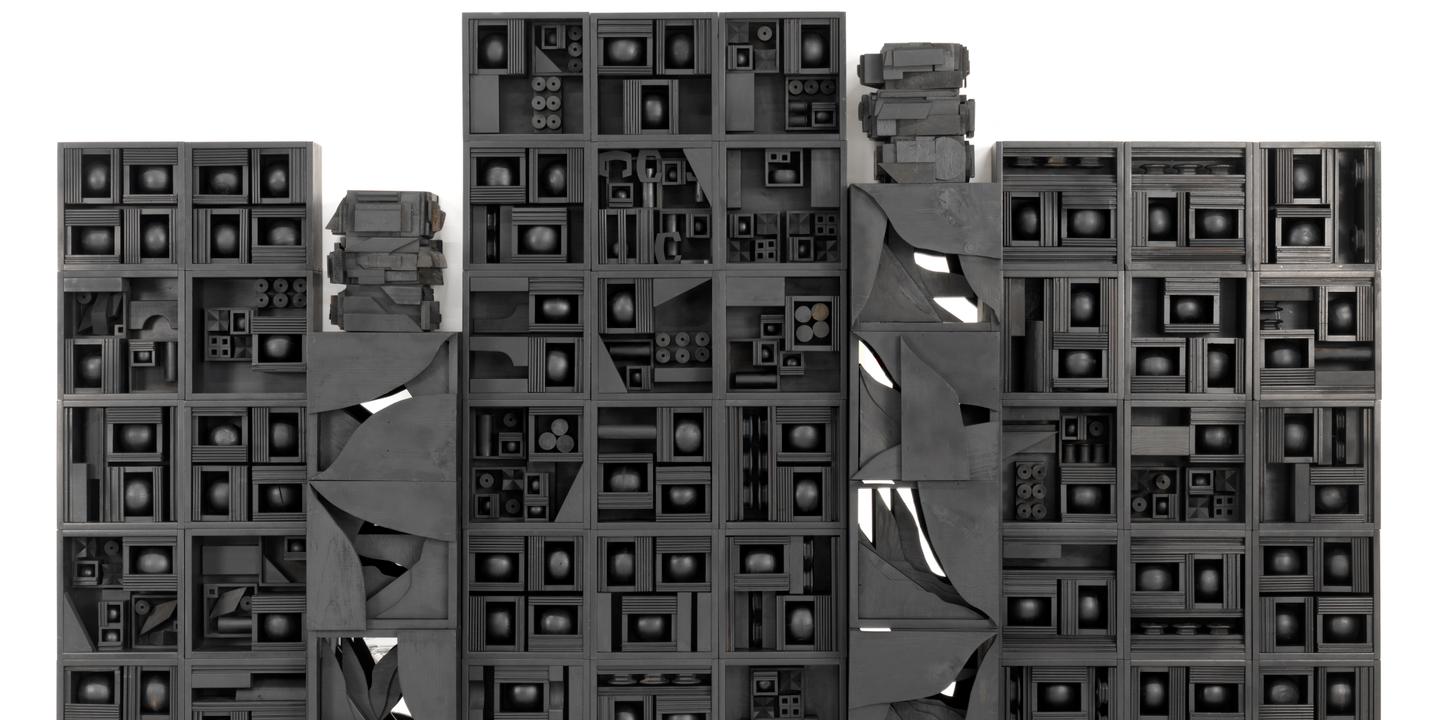
"Rain Forest Wall" (1967), by Louise Nevelson. TOM HAARTSEN/ARS/NY/ADAGP/MUSEUM BOIJMANS VAN BEUNINGEN By taking the risk of staging a retrospective of Louise Nevelson (1899-1988), the Centre Pompidou-Metz once again proves itself to be one of the few French museums where artistic curiosity still thrives. Why a risk? First, because while the artist and her work were internationally recognized from the 1960s to the early 1980s, her fame subsequently collapsed. A legal dispute among heirs prevented exhibitions for nearly 20 years, and when they resumed, it was slowly and modestly, in the United States and Europe. That is the first challenge. The second difficulty lies in the physical nature of Nevelson's most remarkable works. These are environments made from assembled wooden volumes, most often painted black, to which the artist frequently added irregular columns and sorts of altars or chests. Created for the American Pavilion at the 1962 Venice Biennale or for exhibitions at New York's Whitney Museum and MoMA, these installations were monumental and rarely preserved intact – especially since Nevelson did not hesitate to take elements from one piece to use in another. Today, few of her major works remain whole, among them The Royal Tides (1960-1964), a piece the artist donated to the Tate Gallery in London, thus preserving it from being dismantled. You have 83.19% of this article left to read. The rest is for subscribers only.