
Remember me
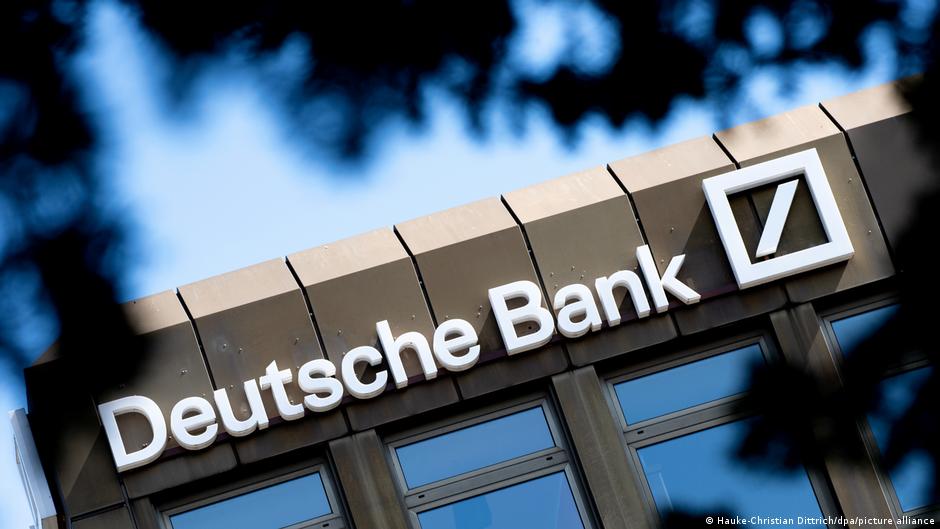





Jeffrey Epstein is thought to have managed a large part of his assets through around 40 accounts at Deutsche Bank, Germany's largest bank, which has come back to haunt the Frankfurt-based institution.
According to the German page of Wall Street Online, Deutsche Bank stock fell by 5.49% on February 4 after additional Epstein files detailing his criminal activities were made public. After the latest release of some 3 million documents, the United States Justice Department has said no more will be released.
The convicted sex offender was in custody awaiting trial for further charges when he died in August 2019, officially by suicide.
Money laundering, oligarchs, terrorists: How corrupt are the banks? What are the allegations against Deutsche Bank?The scandal has already led to a string of resignations and further investigations. Like others, Deutsche Bank claims to regret its actions.
On February 9, the German news agency dpa quoted a company spokesperson as saying: "As repeatedly emphasized since 2020, the bank acknowledges its mistake in accepting Jeffrey Epstein as a client in 2013."
So far, none of the bank's representatives have been accused of attending one of Epstein's notorious parties or visiting his private island. But it has been suggested that Deutsche Bank's problems appear to be primarily of a moral nature.
DW spoke about the case to philosopher Bernd Villhauer, a specialist in financial ethics at Germany's University of Tübingen. He said that he firmly believes that "banks have an obligation to monitor their business partners' circumstances," regardless of legal regulations and compliance guidelines.
He argued that in this particular case, it would have been necessary "to be very careful about making contact with somebody such as Mr Epstein or to support his business by managing accounts for him," especially as "considerable sums" of money were involved.
According to the German-language business newspaper Handelsblatt, Deutsche Bank knew exactly whom it was getting involved with. It began its relationship with Epstein after his former bank, J.P. Morgan, had severed ties with him. The US-based multinational institution later paid a $290 million (€244 million) settlement to sexual abuse victims of the disgraced financier.
Villhauer was cautious in his assessment of "how Deutsche Bank and other banks operate on the international market." But in this case, he points out, "Deutsche Bank may have been somewhat careless in several instances."
When it was put to him that a bank's role is to make money and not pass judgment on the law and propriety, Villhauer agreed, saying: "That's why it's very important for them to check whether a business relationship is profitable in the short, medium and long term."
He said this needed to be considered in a balanced way. Villhauer also adds that there were "good arguments for saying that certain dubious, questionable business relationships may bring short-term profits but that in the medium and long term they might bring risks, namely reputational damage."
New Epstein files reveal ties to Trump, Musk and royalty Bank 'not a judge'Deutsche Bank has been especially criticized for not reacting when Epstein withdrew large sums of cash from his account. But according to Villhauer, this is not necessarily suspicious.
"There are client relationships where, in my view, it is completely unproblematic for someone to withdraw $200,000 or more in cash. I don't think that a bank should see itself as a judge in such cases," he argued.
"But," he insisted, "the context is crucial. For example, if I know that someone has been involved in drug trafficking, to name just one example, and that person then withdraws a large sum of money, then of course I have to be alert."
Villhauer added that it was important to "be a bit cautious about saying, as a matter of principle, that cash withdrawals are criminal. That's not the case."
'Transparent as possible'Analysts have highlighted certain transaction details in the Epstein files that now seem problematic considering the financier's dubious business activities. Should a bank make checks before transferring money?
Villhauer believes that banks should "be as transparent as possible about what they check and in which situations they do so," but that strict rules should apply.
"A bank such as Deutsche Bank, which has already been the subject of discussion in various contexts, would be well advised to take a closer look."
Deutsche Bank has already been forced to pay out money in this case. The US Federal Reserve imposed a fine of more than $180 million after it was found to not have fixed problems with its money-laundering controls fast enough, and it was ordered to pay $75 million as part of a settlement to a group of Epstein's victims. Did the bank buy its way out of trouble?
No, according to Villhauer: "If a bank wants to maintain its reputation and do good business, in a moral sense too, then it will never be 'off the hook.' A bank must always examine itself," he said.
"There is no such thing as 'buying your way out.' This simply does not exist in the moral realm."
For the philosopher, the question is: "What ethical standards do I set for myself? And we can measure Deutsche Bank against those standard, too."
This article was translated from German.
Comments (0)