
Remember me



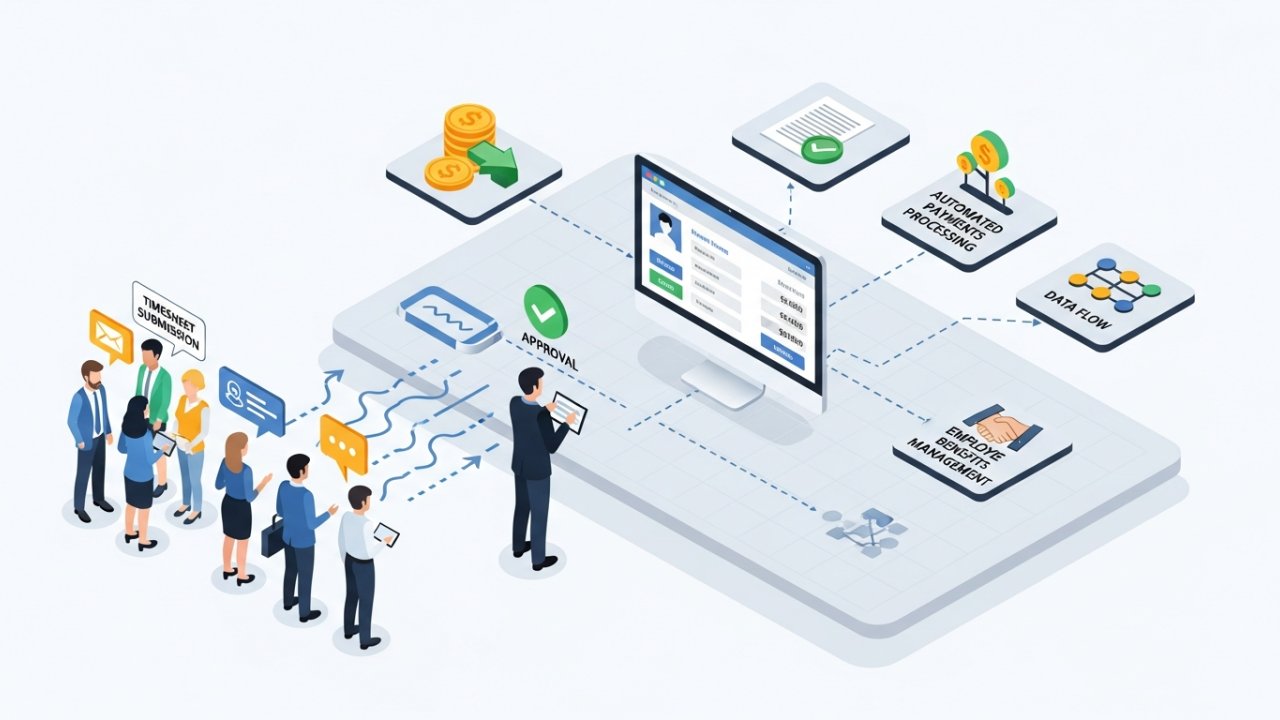




An HR payroll system is an essential software tool that streamlines the management of employee compensation. It automates various tasks, such as calculating wages, processing tax withholdings, and managing deductions. By integrating with timekeeping systems, it guarantees accurate tracking of hours worked. Comprehending how these systems function and their importance can greatly impact efficiency and compliance within your organization. As you explore further, you’ll discover the key features that make payroll systems indispensable in today’s workplaces.
Key Takeaways

An HR payroll system is a crucial tool for managing employee compensation efficiently. This software application automates the management of wages, taxes, and deductions for each pay period, ensuring accuracy and compliance.
By integrating with timekeeping and attendance systems, it accurately tracks hours worked, which is particularly important for hourly employees. With the HR payroll system, you don’t have to worry about manually withholding taxes and deductions, as it automatically handles these tasks, reducing the risk of IRS penalties.
Furthermore, many businesses use an HCM platform that offers a human capital management login, giving employees access to pay statements, tax documents, and the ability to update personal information. This self-service feature improves transparency and boosts employee satisfaction.
Depending on your organization’s needs, you can manage the HR payroll system in-house, outsource it to third-party providers, or opt for cloud-based solutions to fit various business sizes and intricacies.
Importance of HR Payroll Systems
HR payroll systems play a crucial role in ensuring you make timely payments to your employees, which is fundamental for maintaining their satisfaction and loyalty.
They likewise help your organization comply with regulatory requirements, reducing the risk of penalties from inaccuracies.
Furthermore, these systems improve financial recordkeeping, providing accurate data that supports effective decision-making and audits.
Timely Employee PaymentsTimely employee payments are essential for maintaining a productive and satisfied workforce, as studies indicate that 82% of employees view prompt payroll as a key factor in their overall job satisfaction.
Using an HR payroll system like HCM to Go helps guarantee employees receive accurate payments on scheduled paydays, whether weekly or monthly. These automated systems integrate time tracking with payroll processing, reducing financial stress for employees and enhancing engagement.
By making timely payments, you not only enhance retention but also avoid costly penalties associated with late payments, which can accumulate to thousands annually.
For more information on effective HR payroll solutions, visit the HCM to Go website and explore how HCM companies can support your payroll needs.
Regulatory Compliance AssuranceEnsuring regulatory compliance is crucial for any business, as failing to meet payroll tax obligations can lead to significant penalties and legal issues.
HR payroll systems help you stay compliant by:
Automatically calculating and withholding federal, state, and local taxes, minimizing the risk of costly penalties. Providing real-time updates on changing labor laws and payroll regulations, so you’re always informed about evolving requirements. Maintaining detailed records of employee payments and tax filings, supporting your compliance with documentation requirements set by agencies like the IRS.
Enhanced Financial RecordkeepingAs businesses often juggle multiple responsibilities, maintaining accurate financial records is essential for effective payroll management.
An HR payroll system helps you systematically track employee wages, hours worked, and deductions, ensuring compliance with tax and labor regulations. By automating payroll tax calculations, it reduces the risk of human error, which is critical for precise financial recordkeeping.
The system generates detailed reports on payroll expenses, enabling you to analyze labor costs and make informed financial decisions. Furthermore, by securely storing payroll data, it facilitates easy access during audits and compliance checks.
Improved financial recordkeeping can prevent costly penalties, like the $8.5 billion in civil penalties the IRS assessed in 2023 as a result of payroll compliance issues.
Key Functions of Payroll Management Software
Many businesses find that payroll management software plays a crucial role in streamlining their payroll processes. This software offers several key functions that improve efficiency and accuracy:
Automated Calculations: It automates the calculation of employee wages based on hours worked, salary agreements, and necessary deductions for taxes and benefits, ensuring accurate payments. Tax Processing: The software handles payroll taxes by automatically calculating and withholding federal, state, and local taxes, keeping you compliant with regulations and deadlines. Employee Access: It provides employees with pay statements and access to self-service portals, which boosts transparency and allows them to easily track their earnings and deductions.Furthermore, detailed record-keeping features maintain accurate financial records necessary for audits and compliance with labor laws.
The system can likewise alert you to changes in local laws, reducing the risk of penalties associated with payroll mismanagement.
How Payroll Systems Calculate Employee Wages
Payroll systems play a vital role in accurately calculating employee wages, a process that hinges on precise data input and effective time tracking. For hourly employees, the system tracks the hours worked and multiplies this by the hourly rate. For salaried employees, it divides the annual salary by the number of pay periods to compute gross pay.
These systems can handle various pay structures, such as commission and piece rates, providing flexibility in compensation models. Accurate input of employee data is fundamental since even minor errors can lead to significant discrepancies in wage calculations.
Once gross pay is calculated, the payroll system determines the net pay by automatically deducting necessary taxes and contributions, ensuring compliance with federal, state, and local regulations. This systematic approach helps maintain accuracy and efficiency in payroll processing, ultimately ensuring that employees are paid correctly and on time.
Processing Payroll Taxes and Deductions
Processing payroll taxes and deductions is a crucial aspect of managing employee compensation. Your payroll system automatically calculates and withholds federal, state, and local taxes from employee paychecks, ensuring you comply with tax laws.
Furthermore, you need to take into account various deductions that affect net pay:
Social Security and Medicare: Contributions to these programs are mandatory and help employees secure benefits in the future. Retirement Plans: Deductions for 401(k) or other retirement savings options can help your employees plan for retirement as well as reducing taxable income. Health Insurance Premiums: If you offer health benefits, these premiums are likewise deducted from paychecks, impacting take-home pay.Your payroll software generates necessary tax forms like W-2s and 1099s, ensuring they’re filed accurately and on time.
Keeping track of these deductions helps maintain organized financial records and prepares you for audits or reviews.
Ensuring Compliance With Regulations
When you implement an HR payroll system, you’re not just streamlining payroll but additionally ensuring compliance with various regulations.
This system automatically monitors tax withholding accuracy, keeping you informed of any changes in laws that could affect your business.
Plus, it helps fulfill recordkeeping requirements, making audits and compliance checks much easier to manage.
Regulatory Compliance MonitoringEnsuring compliance with regulations in payroll systems is vital for businesses aiming to avoid costly penalties and maintain operational integrity.
By implementing regulatory compliance monitoring, you can effectively adhere to various tax laws and reduce risks. Here are three key benefits of such systems:
Automated Updates: Payroll systems automatically update tax rates and labor regulations, keeping you informed of any changes that affect employee paychecks. Alerts and Reminders: Many systems offer alerts for important compliance deadlines, such as tax filing dates, helping you stay on track. Detailed Recordkeeping: Compliance monitoring tools maintain records of employee payments and tax filings, which are critical for audits and meeting legal requirements. Tax Withholding AccuracyTax withholding accuracy is a vital aspect of payroll management, as it directly impacts compliance with various regulations at federal, state, and local levels. Incorrect withholding can lead to costly penalties; in 2023, IRS penalties totaled $8.5 billion.
Your payroll system should automatically calculate and withhold the correct amounts for federal income tax, Social Security, and Medicare, ensuring adherence to the latest tax laws. Regular updates are important to reflect any changes in tax rates or regulations.
Furthermore, collecting accurate W-4 information from employees is important, as it determines the correct withholding amounts. Implementing automated payroll solutions can greatly reduce human error, enhancing accuracy and protecting your business from compliance-related issues.
Recordkeeping Requirements FulfillmentAccurate recordkeeping plays a crucial role in payroll management, directly supporting compliance with various federal and state regulations.
To guarantee you’re meeting these requirements, your HR payroll system should maintain detailed records, including:
Employee Information: Names, Social Security numbers, and hours worked. Payment Details: Wages paid, tax withholdings, and adjustments. Compliance Documentation: Automated pay statements for transparency and audit readiness. Different Approaches to Payroll Management
In relation to managing payroll, businesses have several approaches to choose from, each with distinct advantages and drawbacks.
You can opt for a manual payroll system using spreadsheets, but be cautious, as this method is prone to errors and inefficiency, especially in larger organizations.
On the other hand, in-house payroll software automates calculations and integrates with other systems, enhancing reliability by reducing administrative burdens.
If you prefer to minimize in-house tasks, outsourcing payroll to third-party providers allows you to leverage external expertise, though it may incur higher costs.
A hybrid approach combines in-house software for regular payroll cycles with outsourced services for specialized needs, such as international payroll compliance.
Each method has unique pros and cons, so it’s essential to evaluate your organization’s size, complexity, and growth potential when deciding the most suitable approach to payroll management for your business.
Benefits of Using an HR Payroll System
When considering the implementation of an HR payroll system, you’ll find that it offers numerous benefits that can greatly improve your payroll processes.
Here are three key advantages:
Time Efficiency: Automating wage calculations, taxes, and deductions can reduce payroll processing time by up to 80%. This allows your staff to focus on more strategic tasks. Employee Satisfaction: By ensuring accurate and timely payments, these systems can boost employee satisfaction and retention, leading to a 25% increase in engagement metrics within your organization. Compliance and Accuracy: HR payroll systems help you stay compliant with evolving tax laws and labor regulations, reducing the risk of penalties that can average $8,500 per year for small businesses.Moreover, integrating time and attendance tracking can lead to a 30% reduction in payroll errors, ensuring employees are compensated correctly for their hours worked.
Challenges and Limitations of Payroll Systems
In spite of the many advantages of HR payroll systems, they come with a range of challenges and limitations that can impact their effectiveness. For instance, inaccurate calculations often arise from incorrect data entry, necessitating regular double-checks to avoid costly errors.
Compliance issues with changing payroll tax rates can lead to penalties if the system fails to automate updates or provide timely reminders. Furthermore, many payroll systems struggle with scalability, making it critical for you to choose solutions that can grow alongside your increasing workforce.
Handling diverse pay rates and varying employment contracts can complicate payroll processing, highlighting the need for flexible systems. In addition, researching potential systems is vital; overlooking common payroll pain points can create significant administrative burdens and financial implications for your business.
Addressing these challenges is fundamental for ensuring that your payroll system operates efficiently and effectively.
Choosing the Right HR Payroll System
When you’re choosing the right HR payroll system, start by evaluating your business requirements to identify what features you truly need.
It’s additionally important to analyze how well the system integrates with your existing software, as this can streamline processes and reduce errors.
Finally, consider scalability options to guarantee the system can grow alongside your business, adapting to changes in employee numbers and payroll complexity.
Assess Business RequirementsChoosing the right HR payroll system starts with a thorough assessment of your business requirements, as this decision can greatly impact your organization’s efficiency.
To guarantee you pick the best system, consider these key factors:
Organization Size and Employee Count: Analyze how many employees you have and how your business may grow to guarantee the system can scale effectively. Payroll Frequency: Determine whether you need weekly, bi-weekly, or monthly payroll, as this influences system functionality. Compliance Needs: Evaluate local, state, and federal compliance requirements, guaranteeing the system can adapt to changes in tax laws and labor regulations. Evaluate Integration CapabilitiesEvaluating integration capabilities is vital for selecting an HR payroll system that meets your business needs, as seamless communication between payroll software and other HR applications can greatly improve operational efficiency.
A robust system should support API integrations, allowing real-time data exchange and minimizing manual entry errors. It’s important that the payroll system is compatible with your existing business software, such as ERP and accounting tools, to guarantee streamlined financial processes and accurate reporting.
Furthermore, the ability to integrate with third-party applications, like tax compliance and benefits providers, improves functionality and guarantees you meet regulatory requirements.
Evaluating these integration capabilities can save you time and resources, helping you avoid disruptions and inefficiencies often caused by disjointed systems.
Consider Scalability OptionsAs your organization grows, ensuring that your HR payroll system can scale accordingly is crucial for maintaining efficiency and accuracy.
To choose the right system, consider the following scalability options:
Modular Components: Look for systems that allow you to add functionalities as needed, such as advanced reporting or multi-currency support for international operations. Cloud-Based Solutions: These typically offer greater flexibility, enabling easy access to payroll data from anywhere, which is important for remote work environments. Vendor Track Record: Evaluate vendors’ experience in your industry and their ability to adapt to regulatory changes, ensuring long-term compliance and operational efficiency. Frequently Asked Questions
The payroll system in HR automates employee compensation management, calculating wages and tax deductions.
It guarantees compliance with regulations by automatically withholding federal, state, and local taxes. You can access self-service portals to view pay statements and track hours worked.
Integrating with timekeeping tools improves accuracy, reducing manual entry errors. A reliable payroll system boosts employee satisfaction by guaranteeing timely payments, ultimately leading to better retention rates and reduced financial stress.
How Does HR Do Payroll?To manage payroll, HR first collects and verifies employee work hours, including overtime.
They use software to automate calculations of gross pay, deduct taxes, and guarantee compliance with tax laws.
HR maintains organized records of compensation and tax filings, adhering to legal retention requirements.
After processing payroll, they issue payments and handle necessary post-payroll tasks, such as filing tax reports, streamlining the process during reducing manual errors through self-service portals for employees.
What Are the Three Types of Payroll?There are three main types of payroll systems you can choose from: in-house payroll, outsourced payroll, and hybrid payroll.
In-house payroll means your internal staff handles everything, providing more control but requiring significant administrative work.
Outsourced payroll shifts responsibility to a third-party provider, reducing your workload but often at a higher cost.
Hybrid payroll combines in-house management for regular tasks with outsourcing for compliance or international needs, offering flexibility customized to your business.
What Is an Example of an HR System?An example of an HR system is ADP Workforce Now, which combines payroll processing with human resource management. This system automates payroll calculations, tracks employee time, and manages attendance.
It furthermore offers self-service portals for employees to access pay statements and tax documents. In addition, ADP Workforce Now provides compliance support to help businesses adhere to labor laws, ensuring they minimize risks associated with penalties and maintain accurate employee records.
Conclusion
In conclusion, an HR payroll system is vital for efficiently managing employee compensation and ensuring compliance with labor laws. By automating wage calculations, tax withholdings, and deductions, these systems streamline payroll processes and reduce errors. They furthermore provide valuable self-service features for employees, enhancing job satisfaction. Although there are challenges to take into account, choosing the right payroll system can notably improve organizational effectiveness, making it a key investment for any business focused on efficiency and accuracy in payroll management.
Image via Google Gemini
Comments (0)