Cooking at home is an act of self-care with mental and physical benefits
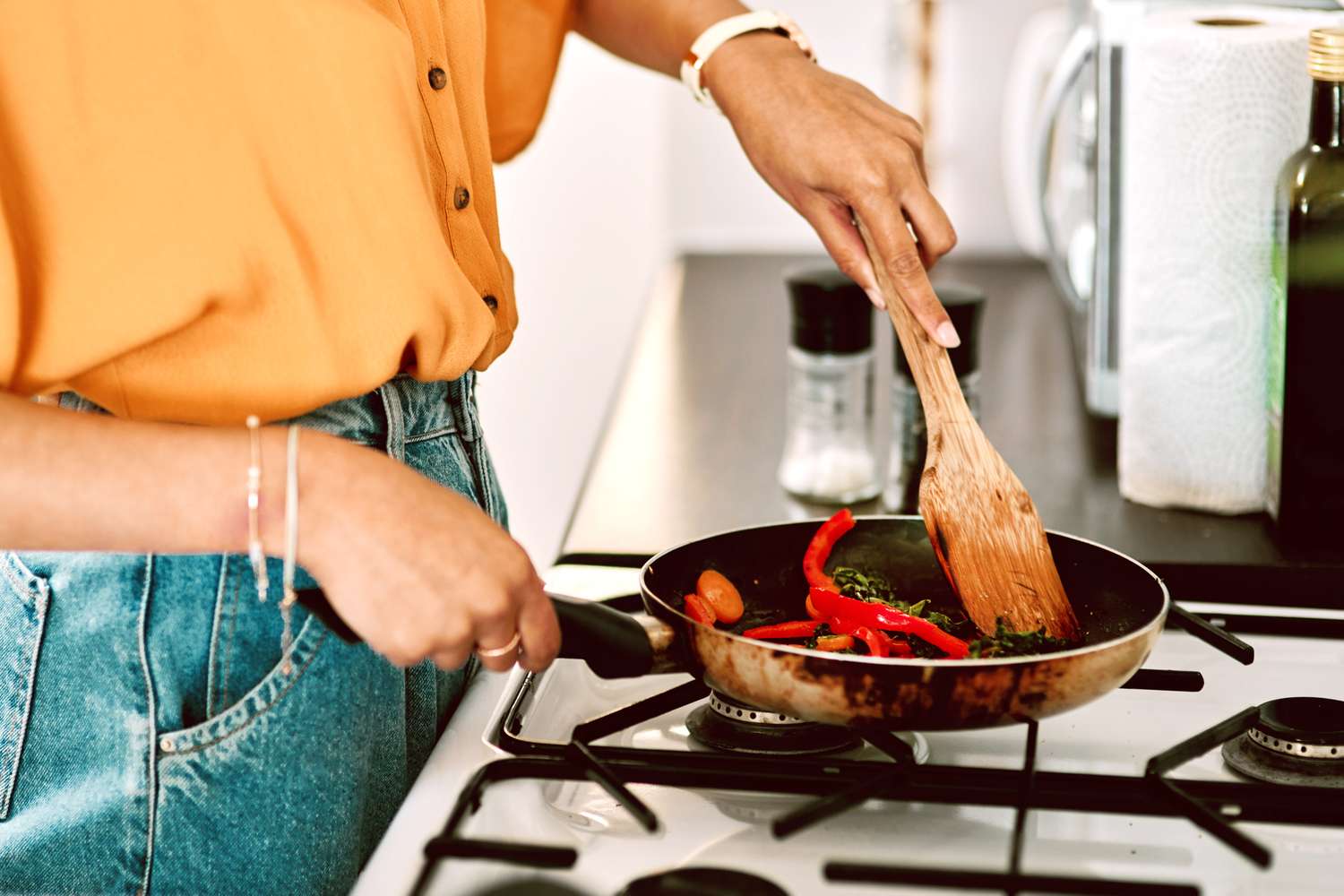
- ADVERTISEMENT - Cooking at home is one of the best things you can do for your health. No matter what you make, home-cooked meals tend to be better for you – lower in sodium and saturated fat and more sensibly portioned – than restaurant food or takeout. If you lean into more healthful recipes, that’s even better. But it’s not only the food itself that’s beneficial, as Nicki Sizemore explains in her cookbook “Mind, Body, Spirit, Food.” The process of cooking itself can be nourishing, too.
This may come as news to those who feel that cooking is often yet another stressful chore to get through after a long day. We’ve all been there – Sizemore, too. The idea for this book arose from her realization that by shifting her mindset, she could let go of the angst around meal prep and see it “as a tool to help us access more presence, freedom and joy in our lives.” She achieves this, in part, by taking a moment to set an intention for how she wants to feel as she cooks and eats. Such intentions can be as simple as “I will be fully present now.” They are statements that “have the power to transform cooking and eating from a necessity to an act of self-inquiry and care,” she writes.
In her book, she offers intentions for each recipe as inspiration. “I will leave my day at the door” is the one she includes with this socca flatbread, and it is an easy recipe that certainly lends itself to releasing the day and enjoying the cooking and eating process. It transforms socca, the tender Provençal chickpea flour pancake, into a crisp-edged flatbread by baking the batter in a hot cast-iron skillet. The flatbread is then slathered with pesto and piled with a salad of shaved vegetables, leafy greens and cheese. She encourages readers to play with the salad ingredients and proportions, so I went with a lemony fennel and arugula salad with shaved parmesan, and I added toasted pine nuts for crunch. The result is a delightfully different dish that can be served as a vegetarian main, side or starter. And it comes with the added bonus of a healthy reminder of how grounding the act of cooking can be.
- ADVERTISEMENT - – – –
Socca Flatbread With Fennel Arugula Salad
Servings: 2-6 (makes one 12-inch flatbread)
Total time: 45 mins
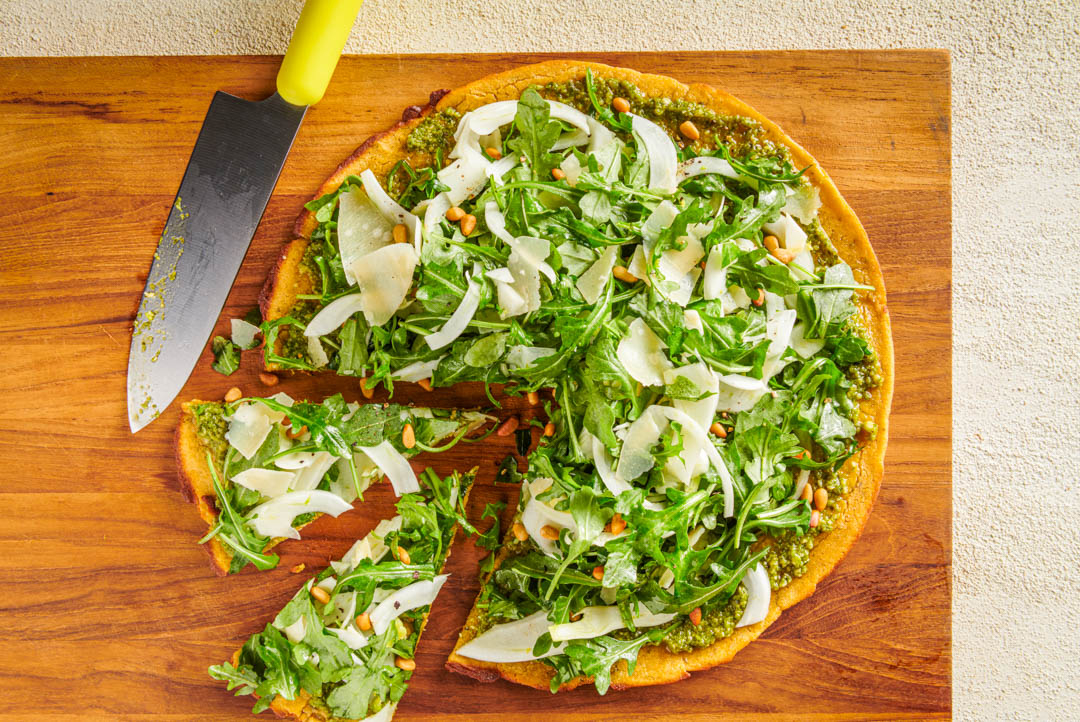
Socca Flatbread With Fennel Arugula Salad. MUST CREDIT: Rey Lopez/For The Washington Post; food styling by Carolyn Robb)
This recipe transforms socca, the tender Provençal chickpea flour pancake, into a crisp-edged flatbread by baking it in a hot cast-iron skillet. Slathered with pesto and piled with a lemony fennel and arugula salad with pine nuts and shaved parmesan, it’s a delightfully different dish that can be served as a vegetarian main, side or starter.
The baked socca flatbread before it’s topped with the salad. MUST CREDIT: Rey Lopez/For The Washington Post; food styling by Carolyn Robb)
Where to buy: Chickpea flour, sometimes labeled as gram or besan flour, can be found at Indian or Asian markets, well-stocked supermarkets and online.
INGREDIENTS
1 cup (240 milliliters) lukewarm water
1 teaspoon honey
1 cup (120 grams) chickpea flour (see Where to buy)
3 tablespoons olive oil, divided
1/2 teaspoon Italian seasoning
1/4 teaspoon plus a pinch fine salt, divided
1 1/2 cups (1 1/2 ounces/45 grams) lightly packed baby arugula
1/2 medium bulb fennel, very thinly sliced (1 cup/95 grams)
2 teaspoons fresh lemon juice (from 1/2 lemon)
Pinch freshly ground black pepper
3/4 ounce (20 grams) parmesan cheese, shaved with a vegetable peeler (about 1/2 cup)
3 tablespoons toasted pine nuts
1/4 cup basil pesto, store-bought or homemade (see related recipes)
DIRECTIONS
In a liquid measuring cup, stir together the water and honey until dissolved. In a medium bowl, whisk together the chickpea flour, honey water, 1 tablespoon of the oil, the Italian seasoning and 1/4 teaspoon of the salt until smooth. Set aside for 15 minutes to help the batter hydrate.
Position a rack in the middle of the oven and preheat to 450 degrees. Place a large (12-inch) cast-iron skillet in the oven for 10 minutes, then, using oven mitts, carefully transfer it to a heatproof surface. Drizzle 1 tablespoon of the oil into the pan and swirl to coat, then pour in the batter and swirl the pan to spread the batter in an even layer. Return the pan to the oven and bake for 15 minutes, until the socca is well-browned on the edges.
While the socca is baking, in a medium bowl, toss together the arugula, fennel, the remaining 1 tablespoon of oil, the lemon juice, pepper and the remaining pinch of salt until combined. Add the parmesan and pine nuts, and gently toss to combine.
When the socca is done, use a thin metal spatula to loosen it from the pan and slide it onto a cutting board. Spread the pesto over the top, then top with the salad, cut into slices and serve immediately.
Substitutions: Fennel >> more arugula. Dairy-free? >> Use nondairy parmesan and pesto. Pine nuts >> slivered or sliced almonds, or sunflower or hulled pumpkin seeds (pepitas). Italian seasoning >> one or a mix of dried herbs, such as basil, oregano and thyme.
Nutritional facts per serving (one-sixth socca and scant 1/2 cup salad), based on 6: Calories: 234, Fat: 16 g, Saturated Fat: 3 g, Carbohydrates: 16 g, Sodium: 271 mg, Cholesterol: 2 mg, Protein: 8 g, Fiber: 3 g, Sugar: 5 g.
This analysis is an estimate based on available ingredients and this preparation. It should not substitute for a dietitian’s or nutritionist’s advice.
Adapted from “Mind, Body, Spirit, Food” by Nicki Sizemore (Storey Publishing, 2026).




Comments (0)