
Remember me


February 20, 2026 — 2:32pm
SaveYou have reached your maximum number of saved items.
Remove items from your saved list to add more.
Save this article for later
Add articles to your saved list and come back to them anytime.
Got itAAA
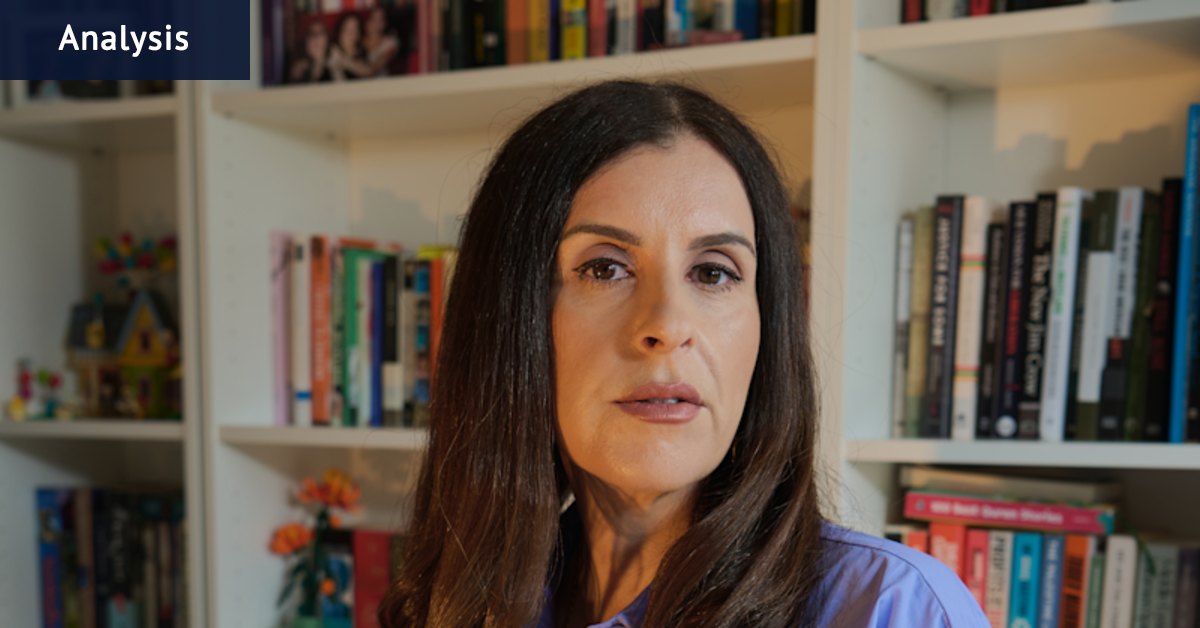
On the day the Sydney Writers’ Festival (SWF) confirmed the attendance of Palestinian Australian author and academic Randa Abdel-Fattah, its executive team personally contacted its leading patrons, sponsors and donors. It was a necessary tactic in an increasingly volatile political climate subsuming the arts.
By the end of that announcement day, the festival’s supporters page had been taken offline. When it reappeared, the branding for KPMG – which provides auditing services to the festival at discounted rates – had vanished.
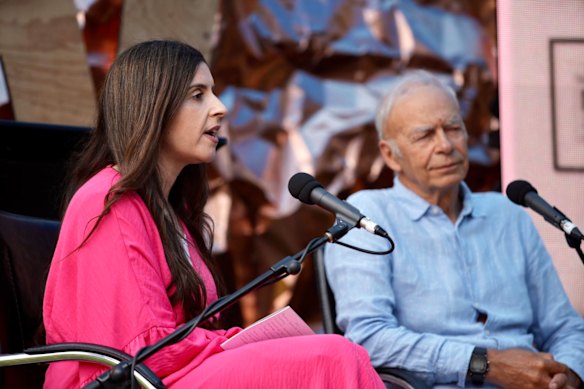 Randa Abdel-Fattah and Peter Singer at Adelaide Writers’ Week in 2023. This year, her invitation was withdrawn.Andrew Beveridge
Whether this was indeed a tactical retreat by the accounting firm or not, the reality remains that festival backers have been overwhelmed by media inquiries.
And behind the scenes, they’ve been feeling the heat from largely anonymous campaigners who argue that Abdel-Fattah’s highly disputed remarks following the October 7 attacks should have immediately disqualified her from the platform.
For arts organisations, the festival’s dilemma foreshadows a looming structural crisis. According to some observers, we are now witnessing the “quiet withdrawal” of corporate support.
This trend can be traced back to the Sydney Theatre Company in 2023, when three actors took to the stage during a curtain call wearing Palestinian keffiyehs.
Major Jewish donors subsequently withdrew funding, signalling that the social licence granted to arts organisations was conditional on political neutrality. In November, the Biennale of Sydney, led by Emirati princess and international curator Hoor Al Qasimi, lost its key sponsor, Mirvac.
While the SWF steadies itself and its partners, the collapse in January of Adelaide Writers’ Week serves as a cautionary tale. In Adelaide, a decision to disinvite Abdel-Fattah triggered a mass boycott by more than 180 authors and the resignation of almost the entire board, leading to the festival’s total cancellation.
This created an intractable bind for the organisers of Sydney Writers’ Festival – disinviting a writer invited in October, well before Adelaide, could trigger the loss of artists and audiences, while keeping the author in the program risked funding.
Schwartz Media remains a partner of the Sydney Writers’ Festival. High-profile publisher Morry Schwartz stepped back as chair and doesn’t make decisions about its involvement in such matters any more. “Personally, I’m appalled that festivals are programming politics rather than literature and wish the needless division would stop,” he told this masthead. “I don’t want to see this festival also fall over, because of the cost to readers and writers and the culture.”
The pressure is now moving beyond the boardroom and into parliament. The NSW government is facing intense demands from Jewish advocacy groups to revoke its $500,000-plus commitment to the festival.
While Arts Minister John Graham has attempted to hold a line of distance between curation and funding, Premier Chris Minns described the Newcastle Writers Festival’s invitation to Abdel-Fattah as “divisive”.
The risk to Australian arts is a slow smothering of the depth and quality reach of festivals celebrating dance, theatre, literature and visual arts.
That’s a small price to pay for social cohesion, says the Zionist Federation of Australia.
Related Article
As literary festivals transform from “bookish” retreats into stages for contested ideas, the corporate donor may well reconsider their exposure and retreat to avoid reputational damage. In an era of tightening public budgets, this shift potentially places the funding onus on taxpayers.
But what becomes of the literary festival if the ground becomes too toxic for governments to navigate, even those that subscribe to principles of free speech and artistic expression? Ideas and talks festivals, which have mushroomed across the country, will be left to rely on box office and steadfast donors, perhaps surviving in a more shrunken form.
Ultimately, if the arts are deemed as too controversial to fund, the long-term casualty may be the very diversity and funding resilience the sector has spent the past decade trying to build.
Start the day with a summary of the day’s most important and interesting stories, analysis and insights. Sign up for our Morning Edition newsletter.
SaveYou have reached your maximum number of saved items.
Remove items from your saved list to add more.
 Linda Morris is an arts writer at The Sydney Morning HeraldConnect via X, Facebook or email.From our partners