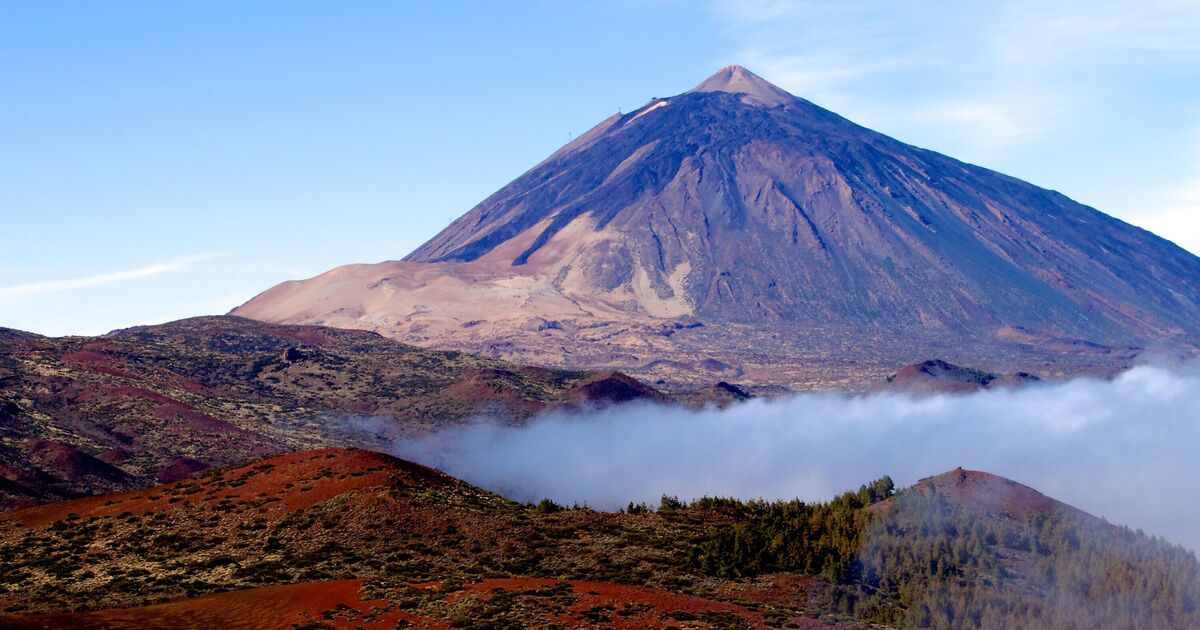
The leader of the local government in Tenerife tried to quash concerns over an upcoming volcanic eruption on the popular holiday island. Earlier this week, an unusual seismic event was recorded beneath the island's volcano, swinging authorities into action.
Scientists confirmed there is no immediate threat of an eruption following the unprecedented tremor - but said one "will happen". However, according to the officials, the continuous monitoring and strengthened coordination with local councils has provided the island with unprecedented readiness. President of the Cabildo, Rosa Dávila said the recent rise in seismic activity is most likely the result of pressure building within the hydrothermal system due to gas injection, rather than any movement of magma.
She noted that this pattern differs from the behaviour recorded before the eruptions on El Hierro and La Palma. Teide has been under intensified scientific scrutiny since the first seismic swarm in 2016, with monitoring now continuous and extensive.
She said: "The aim is to keep the island as prepared as possible. Right now, it is more prepared than ever," adding that the available instruments allow authorities to detect any underground movement swiftly.
On Tuesday, an emergency meeting of Pevolca, the Canary Islands' volcanic risk civil protection body, was convened after an hour-long rumbling was detected.
A shorter seismic pulse lasting several minutes was also detected on Wednesday, and experts said they would remain on alert following the intense seismic episodes.
*** Ensure our latest news headlines always appear at the top of your Google Search by making us a Preferred Source. Click here to activate or add us as Preferred Source in your Google search settings. ***
Itahiza Dominguez, director of the National Geographic Institute in the Canary Islands, said: "We saw a small pulse similar to Tuesday's but it only lasted about seven or eight minutes. In the last 10 years, we have detected low-frequency signals but they usually last four or five minutes.
"Never, until Tuesday, have we seen such a prolonged signal."






Comments (0)