
Remember me

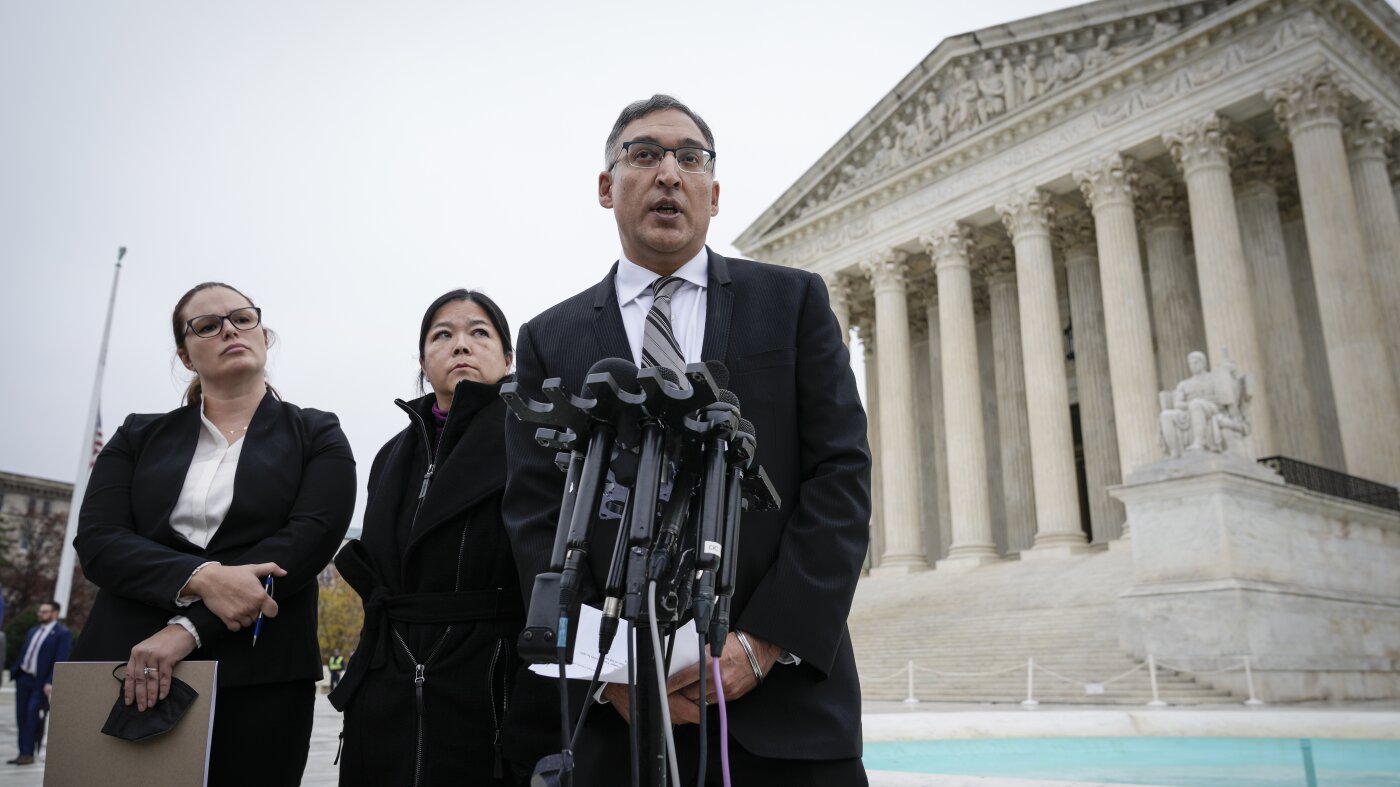







(L-R) Allison Riggs, chief counsel of voting rights at the Southern Coalition for Social Justice, Kathay Feng, national redistricting director at Common Cause, and Attorney Neal Katyal talk to reporters outside the U.S. Supreme Court after they attended oral arguments in the Moore v. Harper case December 7, 2022 in Washington, DC. Drew Angerer/Getty Images/Getty Images North America hide caption
toggle caption Drew Angerer/Getty Images/Getty Images North AmericaNeal Katyal, one of the attorneys who argued on behalf of plaintiffs in the U.S. Supreme Court case against Trump's tariffs, told Morning Edition that his clients want a refund from the federal government.
"There's a pretty commonsense principle, which is if you've collected a bunch of money illegally and the court says it's illegal, then you've got to give it back," Katyal said. "It's not a finders keepers rule in this country. We have a system of justice."
Last week, the Supreme Court struck down President Trump's sweeping use of emergency powers to impose tariffs under the International Emergency Economic Powers Act (IEEPA). The 6-3 ruling is a major setback for the president's economic policy agenda. The next day, Trump announced in a social media post that he would raise global tariffs from 10% to 15% under a different law. While discussing the ruling with NPR's Steve Inkseep, Katyal, who represented U.S. businesses that objected to the tariffs, said that under the U.S. Constitution "it is up to Congress to set the tariffs and not the president acting on his own."
Click the play button in the blue box above to listen to the full conversation.
Comments (0)