Remember me

The icon indicates free access to the linked research on JSTOR.
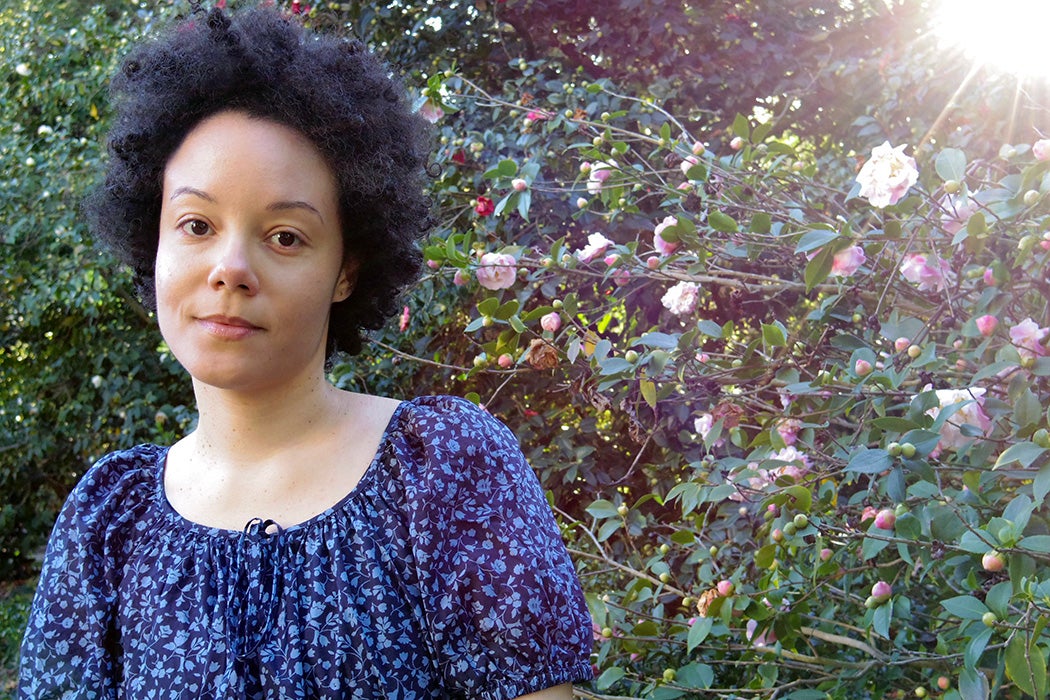
Welcome to Ask a Professor, our series that offers an insider’s view of life in academia. This month we interviewed Dana Elle Murphy, Assistant Professor of Black Studies and English at Caltech. Murphy is a scholar, critic, and poet whose research centers on Black feminist criticism, archival practice, and the afterlives of Black women’s writing. Her recent book, Foremother Love: Phillis Wheatley and Black Feminist Criticism (Duke University Press), examines Wheatley as a foundational figure for Black feminist criticism, positioning her as both writer and critic in conversation with others’ work and its contexts. Murphy’s scholarship includes essays on Ntozake Shange’s Sassafrass, Cypress & Indigo, which she reads through the lens of “Black feminist hoodoo,” and on Margaret Walker’s Jubilee and the 1973 Phillis Wheatley Poetry Festival, where she traces intergenerational literary remembrance as a form of praxis. In addition to her scholarly writing, Murphy is a poet whose work has appeared in venues such as West Trestle Review, Cordella Magazine, and Up the Staircase Quarterly.

What’s something most people don’t know about your field?
As someone who is both a critic and a writer working in academia, I have long been interested in historical and more contemporary figures who think and work across genres—and the ways their writings shape disciplines or fields, as well as institutions. Indeed, I’m still very much thinking and working through these relations. For instance, I recently learned that a prominent critic and theorist in my fields—who is famous for her exacting, dense, theoretical essays—wrote a novel earlier in her career and it is extant, unpublished in the collection of her papers (I read this in a forthcoming colleague’s book, so e-mail me or visit the forthcoming books in the Duke University Press Black Feminism on the Edge book series in a few months to find out who this was).
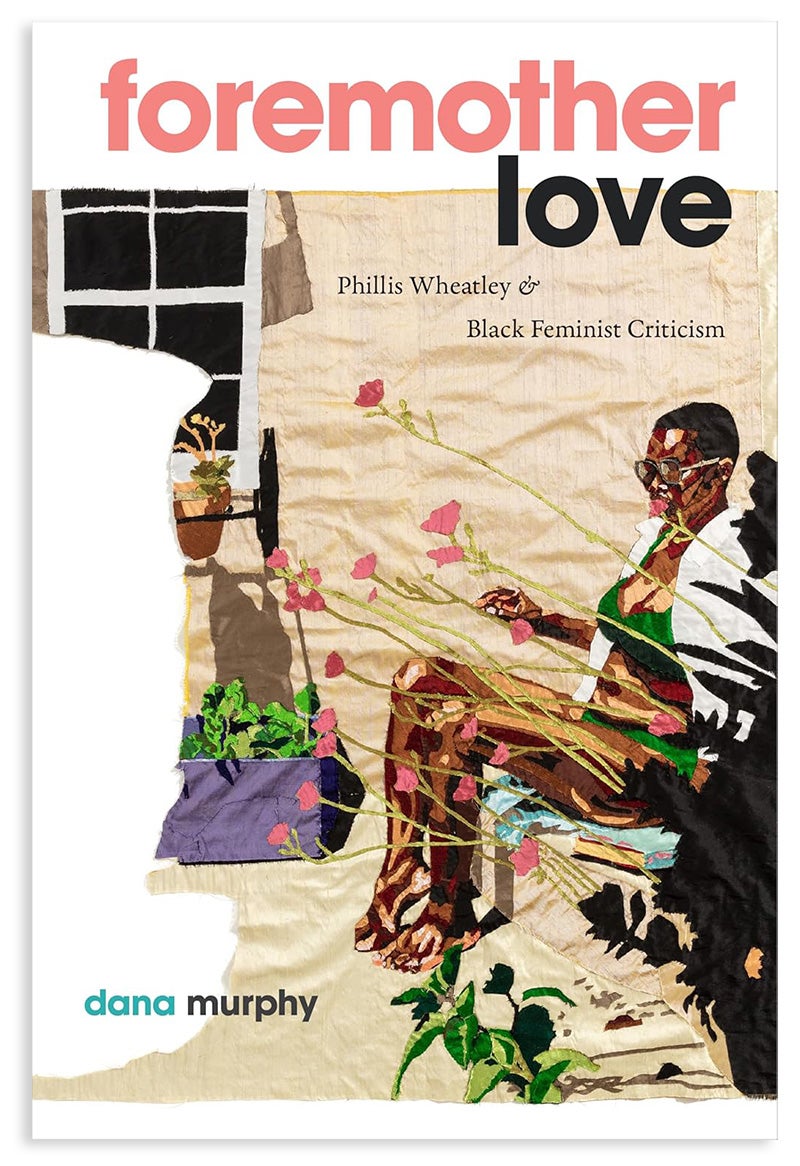 Duke University Press
Something we may all need reminding of is that the fields we work in are dynamic. We may sometimes assume that literary workers need a certain kind of academic environment or the support of an institution or even a university degree to write. While all of us deserve a plurality of civically minded opportunities and supportive structures readily available, I find myself also asking questions about writers who find ways to create their own opportunities (however small). Sometimes their work trickles back into the university—and sometimes it does so by becoming a novel or a book of poetry.
I also recently learned about Sonny Rollins’s sabbaticals and am very interested in support for cultivating forms of leave and refusal in order to sustain ourselves.
Finally, I hope readers have the chance to engage the work of my late colleague-friend, Selamawit D. Terrefe, who made a call in the dedication of her dissertation to those who are “recalcitrant” (“Dissociative States: The Metaphysics of Blackness and the Psychic Afterlife of Slavery,” PhD diss., University of California, Irvine, 2017).
What’s the best discovery you’ve made in your research?
There are certainly several moments I highlighted from university archives for my recent book, Foremother Love: Phillis Wheatley and Black Feminist Criticism, that I described as “Wow!” moments, taking up a term used by archivists at the University of California, Berkeley’s Bancroft Library. I try to always be in the process of better understanding literary histories and am continually interested in ephemera as well as in archival materials that are not typically read as scholarly in a mainstream sense. Similarly, my methods and values continue to lean toward not just the predominance of archival fact, whatever that may be, but an understanding that engaging with archival contexts in many shapes and forms encourages us to be ever mindful of how evidence is, to a certain extent, subject to slight changes, and that one’s claims may thus ultimately change. Following my former UC Berkeley professor Namwali Serpell’s reclamation of errors as productive, I enjoy moments where archives offer a multiplicity of meanings—so there have been moments where current critical consensus has been blurred for me due to an excised line in a draft or subsequent word added later in pencil.
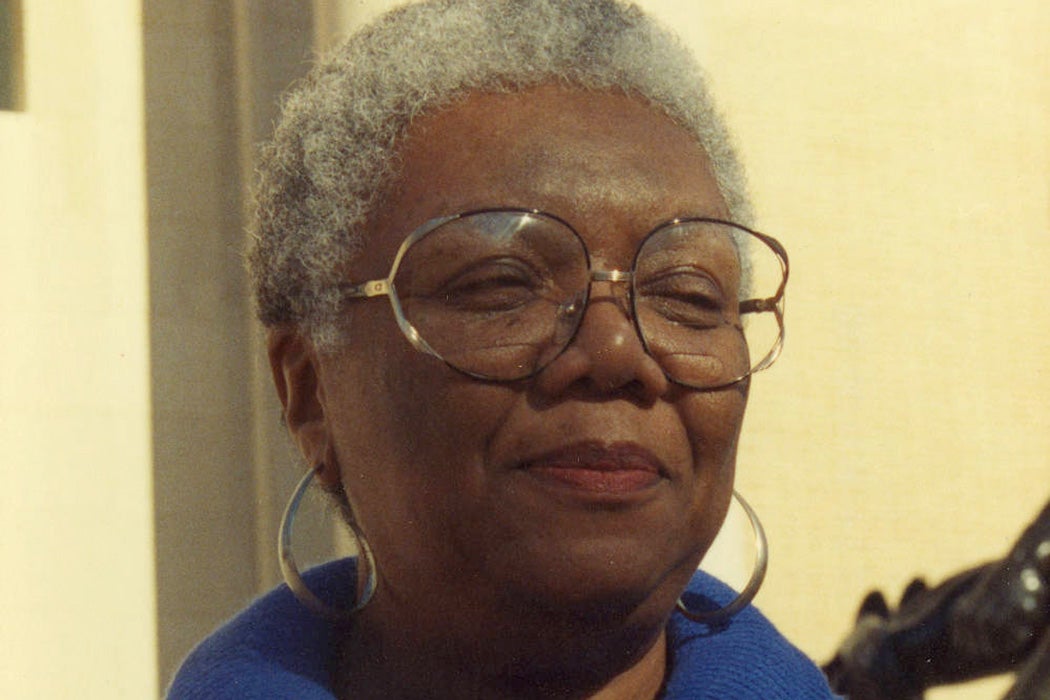 Remembering Her Memories: Lucille Clifton’s Generations in Our Time
 February 1, 2023
The poet stares history down in an artful, Whitman-infused exploration of traumas her family endured and survived.
For example, this past summer, I was revisiting my photos of Lucille Clifton’s papers, especially the poem published under the title “reply,” which appeared in Clifton’s 1991 collection Quilting and is also in her 2012 Collected Poems. The poem takes as its context the letter from one Alvin Borgquest [sic] to W. E. B. Du Bois (dated April 3, 1905), in which Du Bois is asked, in what could perhaps only generously be described as stunning deadpan, “Whether the Negro sheds tears…” Clifton’s published poem proceeds to list a two-word-per-line collective, albeit third person, response (how does one respond to this without running the risk of dignifying it with a response?) that starts with “he” and “she” and proceeds to fifteen lines of “they,” her selection of paired verbs both humanely everyday and profound. Given that previous critics of the poem have noted how important it is that Clifton remains with the third person, I was surprised to read in an undated draft: her insertion of “we (?)” at the close of the poem, crossing out the final “they” with a backslash (“\”), and how this possible “we” lingering in the archive raises new, further questions about that poem’s project. Note: archives also show that Du Bois did himself respond to that letter.
Similarly, in reviewing my old photos, I was heartened by a poem by Mari Evans, a meditation on her own sense of fragmentation written on a fragment, fourteen words total written on a half-ripped and crumpled tiny piece of paper—a sign perhaps of her work flourishing perhaps even in constrained, devalued circumstances.
Do you have a favorite classroom moment?
I would like to write a pedagogy essay one day soon, so all I will say now by way of beginning is I am continually in awe of my students’ abilities to theorize the future courageously. My favorite moments in the classroom have been those when I have observed students teaching one another, especially when they show one another grace (“calling in with love,” as Loretta J. Ross might put it). I also remember the late Donald A. McQuade, another one of my professors at Berkeley, who told us: “A good teacher makes him/herself obsolete.”
What’s the next big thing in your field?
I am going to suggest a bouquet, as I’ve always loved that the word “anthology” etymologically points to a collection of flowers: To begin, over thirty scholars, including myself, will be featured in the Phillis Wheatley Peters In Context collection of essays forthcoming from Cambridge University Press, so do look out for this incredible volume of contemporary scholarship on Phillis in the coming year. I am also very much looking forward to reading new works by colleague-friends: such as SaraEllen Strongman’s edited collection, Essential Poems by Pat Parker (Sinister Wisdom, 2025); and James Edward Ford III’s forthcoming book, Phillis, the Black Swan.
What’s on your bedside table? What’s your next read?
I am in the process of rereading Diana Evans’s 26a, as her 2006 novel has been formative for me and kept me company during the writing of Foremother Love. I am also on a streak of rereading Jane Austen’s novels for a new project and to celebrate the 250th anniversary of Austen’s birth. The recent Masterpiece show Miss Austen, an adaptation of the 2020 novel by Gill Hornby, which focuses on Cassandra (“Cassie”) Austen’s role as a critic, and features a multicultural cast, is very much in the tradition of Foremother Love. I found Cassie’s ability to trust her gut and chart her own path, even at the risk of surrendering material comfort, for the sake of her sister’s writing (or her own critical identity), to be stellar. I have also been dipping in and out of Larry McMurtry’s 1975 novel Terms of Endearment for several months now, and Aurora Greenway (and her filmic portrayal by Shirley MacLaine) will remain one of my favorite complex character portraits.
In terms of what I’m reading next: I attended several Stanford Stegner fellows’ readings last year, so I am looking forward to reading Bernardo Wade’s new collection, A Love Tap (Lookout Books, 2025), among others. Over the summer, I was asked to review Laura Elizabeth Vrana’s Pitfalls of Prestige: Black Women and Literary Recognition (Ohio State University Press, 2024), and it is a book I am looking forward to re-reading in the coming years. Next on my university press to-read list are Mimi Khúc’s dear elia: Letters from the Asian American Abyss (Duke University Press, 2024), and drea brown’s Conjuring the Haint: The Haunting Poetics of Black Women (University Press of Mississippi, 2025). Finally, I am looking forward to reading my colleague-friend Suzanne Manizza Roszaks’s novel, The Poison Girl (Spuyten Duyvil, 2024), a retelling of Nathaniel Hawthorne’s “Rappaccini’s Daughter.” Indeed, the contemporary retelling or postcolonial rewriting genre remains important to me (see also the considerate relation between Charlotte Brontë’s Jane Eyre and Jean Rhys’s Wide Sargasso Sea; Emily Brontë’s Wuthering Heights and Maryse Condé’s Windward Heights; and more).
Fun fact: I don’t have any books on my bedside table (I have a box of white tea with rosebuds, a small bottle of lavender oil, an old lamp…), but there are currently books everywhere else in my bedroom and office—I have to limit the sprawl from there. If I could only keep a stack of them dry in the bathroom next to the tub, I would!