MILAN — Brand identity, at times in flux and at others simply reaffirmed, was not just a recurring theme but a veritable obsession for this round of Milanese shows.
Louise Trotter’s sophomore outing at Bottega Veneta boldly reaffirmed the house’ identity as the temple of experimental craft: the true high-luxury icing on Kering’s cake. On display was a smorgasbord of textures and workmanship, an endless interplay of the natural and the man-made.
If the pieces were in fact very light — as Trotter insisted backstage — the effect was at times visually burdened, with some of the models drowning in matter. But this was limited to the womenswear. Menswear expressed both a tautness and an unruliness that felt engaging and promising: the preamble of an interesting direction for Bottega to pursue.
The show, in terms of spectacle, was a joy to behold: a fast-paced, dryly theatrical 80-look parade of texture and shape in a brutalist room bathed in sensual red carpeting. The contrast of brutalism and sensuality reflected that very Milanese contrast of stern façades and warm interiors, which Trotter is now immersed in, having moved to the city. There were other axes for playing with counterpoint — the severe and the wild, the sombre and the flamboyant. For sure the level of couture craft was high, and much of it likely meant for pure display: It’s the accessories that sell at Bottega, not the clothing, and that allows ready-to-wear to soar as pure fantasy.
The message was clear, and understandable. What remains problematic, however, is how Phoebe Philo-inflected the exercise felt: an aspect that needs to go. Trotter has the talent. She just needs to find the guts to break that mould.
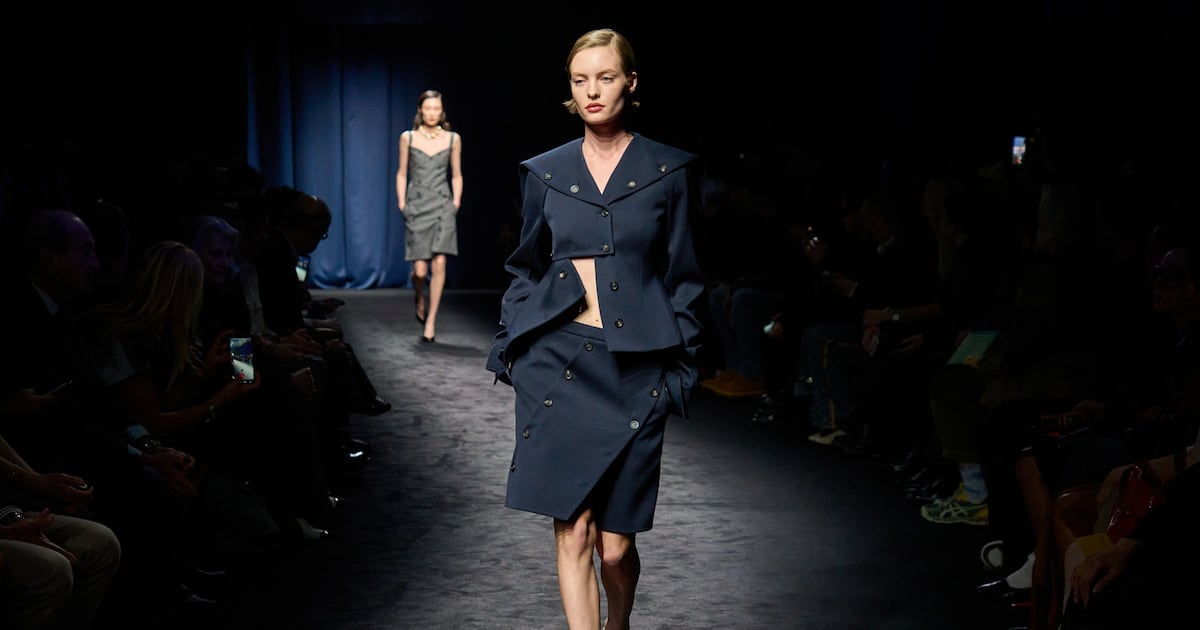
Over at Ferragamo, Maximilian Davis produced one of his most focused collections to date. He still has a tendency to spin in many different directions, rather haphazardly, at once. But this time the collection coalesced into a precise, 1920s-inflected line that felt convincing and elegant yet devoid of overtly retro overtones despite its historical inspiration. The effect was graphic, lively: a face-off of discipline and unruliness. Davis mixed 1920s modernism — an enduring obsession for him, with details and shapes drawn from sailors’ uniforms (perhaps among the most fascinating specimens of military dress for both formal solution and symbolic meaning). It worked, delivering an electric, falling-apart brand of elegance. How or what all of this telegraphs in regards to the Ferragamo identity, however, remains unclear.
When things get murky and they need a clean slate, Domenico Dolce and Stefano Gabbana revert back to their safe place: Sicily, where the core brand identity is rooted. They did it again this season, looking at a seminal moment for the brand: the black-flooded late 1980s, with shapely tailoring, lingerie and socks, a sense of sensuality mixed with strictness. The show was endless deja vu in terms of brand identity, and intentionally so: A no-nonsense way to say: This is what we stand for, this is what our clients want from us. As simple and straightforward as that.
Since Act N.1’s Luca Lin parted ways with Galib Gassanoff, the identity of the brand they previously ran together has shifted in an interesting new direction. This was Lin’s first show alone, and it was worth taking note: an exploration of the classics which got twisted, fluidified and deconstructed into a unisex wardrobe, rendered in muddy coulors that looked lived-in without the live-in affectations that too often occur in fashion. It felt authentic, in fact. Lin is a fresh voice worth following.



Comments (0)