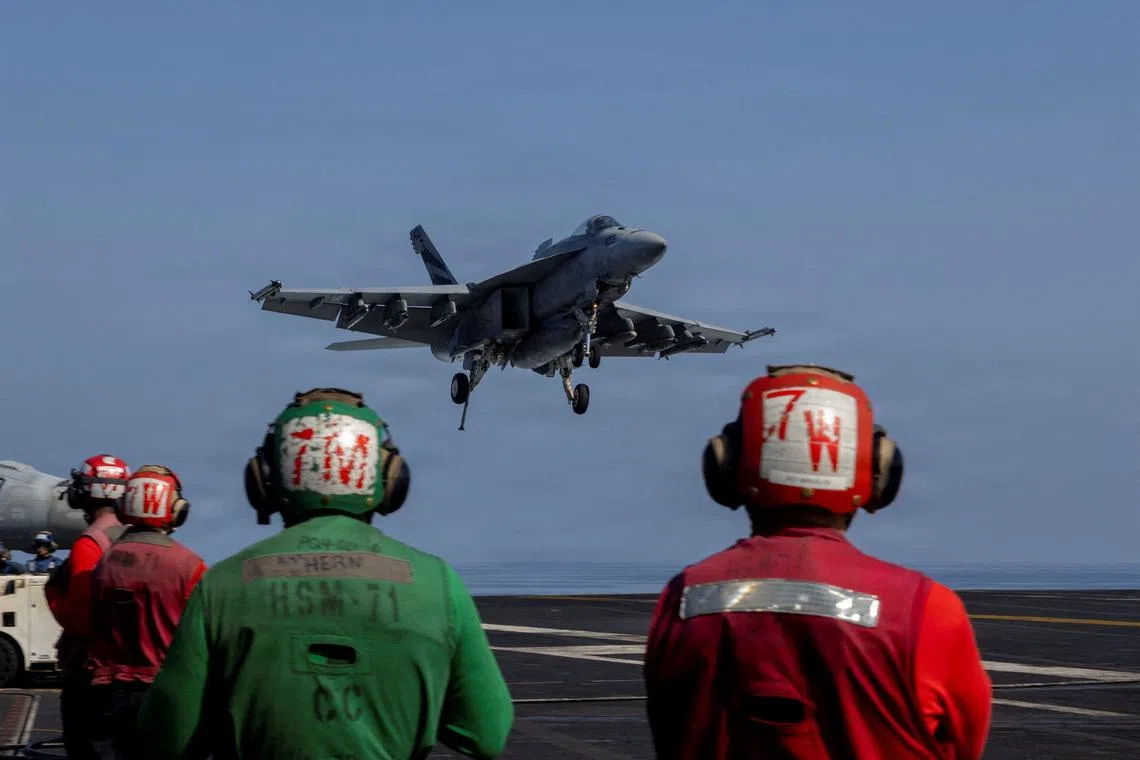
WASHINGTON, March 3 - U.S. President Donald Trump's top national security advisers spent much of the day on Tuesday making the case to Congress for the U.S.-Israel war on Iran, describing a rapidly evolving operation and leaving open the possibility of sending in American troops, Democrats and Trump's fellow Republicans said.
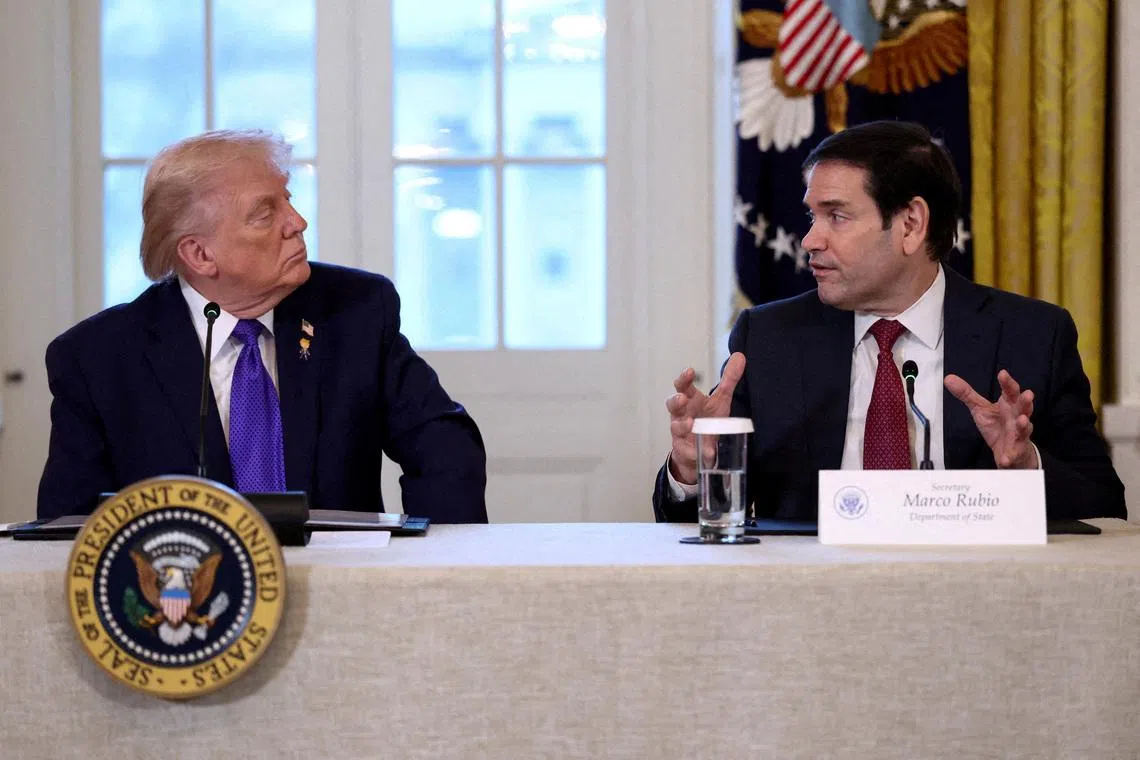
Secretary of State Marco Rubio, Secretary of Defense Pete Hegseth, CIA Director John Ratcliffe, and General Dan Caine, chairman of the Joint Chiefs of Staff, held classified briefings first for the entire Senate and later the full House of Representatives.
Missouri Republican Josh Hawley told reporters afterward the operation was massive and changing rapidly. "The briefers emphasized this: it's really changing almost by the hour, and I think the scope of it is very broad," he said.
Senator Bill Cassidy said he does not think Trump plans to deploy ground forces in Iran, although he said the briefers did not rule out that possibility. “I don’t think the American people want to see troops on the ground,” the Louisiana Republican told reporters. “They left open that possibility. But it seems not to be something they’re emphasizing.”
Trump's Republicans control slim majorities in both the Senate and House and have been strongly supportive of his policy initiatives, as is typical when the White House and Congress are controlled by the same party.
But the Middle East war has prompted a few members of his party to join Democrats in saying the president should not send troops to fight abroad without obtaining Congress' approval.
Democrats said the administration officials had not outlined an exit strategy, and accused Trump of starting another "forever war" like the long conflicts in Iraq and Afghanistan that began under Republican President George W. Bush.
"Let's see how long it lasts," California Democratic Representative Nancy Pelosi, the former Speaker of the House, told reporters.
She and other Democrats also noted Bush and top aides had come to Congress and to the United Nations to make the case for both wars and Congress had passed authorizations for the use of military force, but Trump's team had held few briefings or testified in public hearings.
Republican House of Representatives Speaker Mike Johnson called such a demand "a dangerous thing" that would put U.S. troops in harm's way.
'AMERICA FIRST?'
Others said they were looking forward to getting more information, especially if the White House comes to Congress to request additional funding for the war.
"America First was supposed to be a rejection of the globalist war machine," Republican Representative Warren Davidson of Ohio said in a post on social media platform X, referring to a slogan Trump used when running for re-election when he stressed he would not pull the country into foreign wars. "I look forward to seeing the intelligence the administration found so persuasive, then voting," Davidson said.
South Carolina Republican Representative Nancy Mace said she might have concerns if the conflict lasted for more than a few weeks.
Rubio told reporters on Monday the U.S. had attacked Iran because Israel planned to do so, prompting some lawmakers to accuse the administration of letting another country decide whether to go to war.
However, Rubio said on Tuesday before the briefings the administration did not strike Iran because of Israel. "I said no, this had to happen anyway," he said.
Congressional leaders said it was too early to know whether Congress will need to consider a supplemental funding bill to pay for the war. "There was early talk of a supplemental. But we're not at a stage where any of those numbers could be discussed. Look, you're going to see a robust debate about this over the next weeks and months," Republican House Majority Leader Steve Scalise of Louisiana said.
The funding request would face stiff opposition from Democrats. House Democratic leader Hakeem Jeffries of New York told a news conference earlier on Tuesday that Trump should get Congress' consent for the war before asking for funding.
The Senate is due to vote on Wednesday and the House on Thursday on war powers resolutions seeking to block Trump from continuing to attack Iran without congressional authorization.
Congressional Republicans have blocked previous efforts seeking to force Trump to obtain lawmakers' approval for military action. Even if a resolution were to pass this time, it is not expected to get the two-thirds majorities in both the House and Senate needed to override Trump's veto. REUTERS