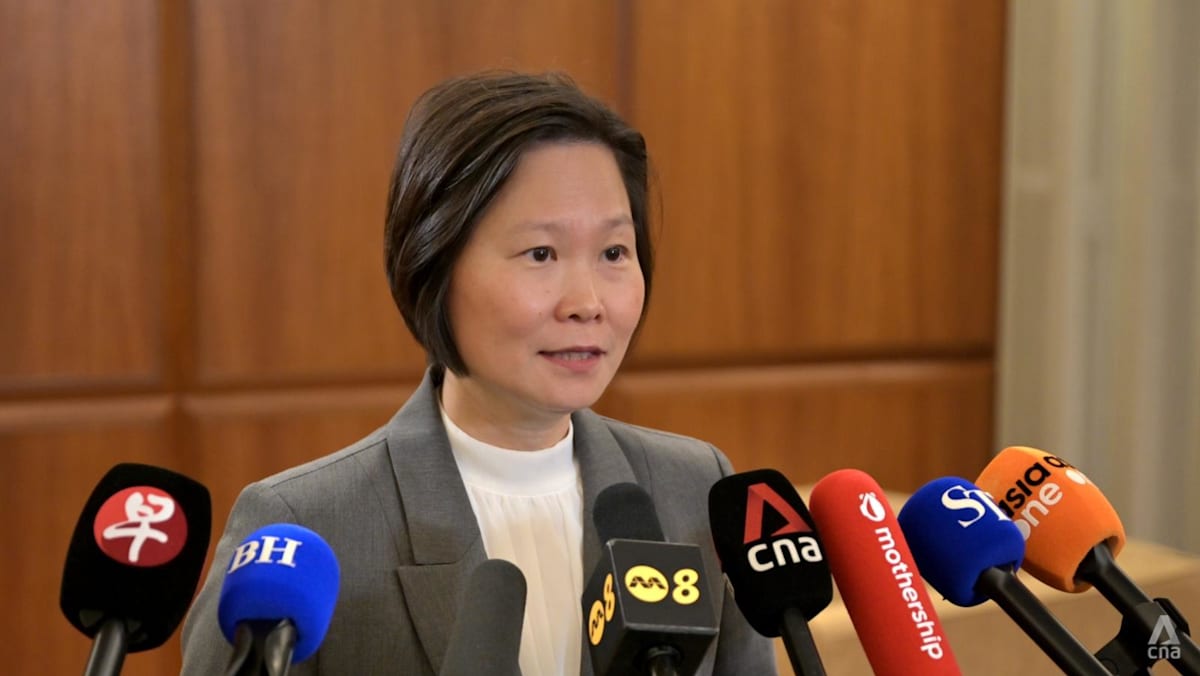
Speaking in parliament on Thursday, where he laid out his ministry's spending plans for the year, Health Minister Ong Ye Kung said the government's use of AI in healthcare was guided by two principles.
"One, care should be AI-enhanced, not AI-decided. Clinicians remain in the loop and healthcare remains a profoundly human endeavour," he said.
"Two, we take a practical, use case approach. AI should not be a hammer looking for a nail, a solution looking for a problem. We deploy AI where we know it will improve patient outcomes or the delivery of care, and it can do so cost-effectively."
When used responsibly, such tools can help clinicians intervene earlier, delay or even prevent the onset of severe disease, he added.
The ministry said the move marks a shift towards preventive care that is personalised to individual risk profiles, rather than applied uniformly.
By identifying at-risk patients earlier, it hopes to prevent or delay more serious cardiovascular events and potentially reduce long-term healthcare costs.
Beyond individual screenings, MOH is also targeting areas where chronic disease rates are higher than the national average.
Diabetes and hypertension are more prevalent in northern Singapore, and residents there are also less physically active than the rest of the country, the ministry said.
According to MOH, the prevalence of diabetes and hypertension in the northern part of Singapore is 10.5 per cent and 35.9 per cent respectively – above the national average of 8.8 per cent for diabetes and 33 per cent for hypertension.
Residents there also engage in less physical activity compared with the rest of the country.
Woodlands Town, which has around 250,000 residents according to the Department of Statistics, will be the first to receive stepped-up support. Eleven community health posts in active ageing centres there will shift from monthly to weekly operations by the first quarter of this year, and will accept walk-ins alongside booked appointments.
Services on offer will include vital signs monitoring, fall-risk assessments, medication reviews and counselling, nutrition care and health coaching. Support for caregivers, including assessments of their knowledge, skills and stress levels, will also be available.
Community care teams comprising nurses, health coaches, therapists, pharmacists and dieticians will work closely with general practitioners and hospitals to provide coordinated care.
Noting that some patients miss specialist appointments due to work schedules or limited mobility, Minister of State for Health Rahayu Mahzam announced that Woodlands Hospital will begin offering specialist-supported care in the community from end-March.
Patients with diabetes and asthma can access outpatient care at the community health posts or through teleconsultations with hospital nurses.
Those with low-risk colonoscopy results can also review their findings via teleconsultation with hospital doctors.
Health Promotion Board programmes – including exercise sessions and healthy living initiatives – will also be rolled out at familiar neighbourhood spaces such as community halls and malls from April.