
Remember me

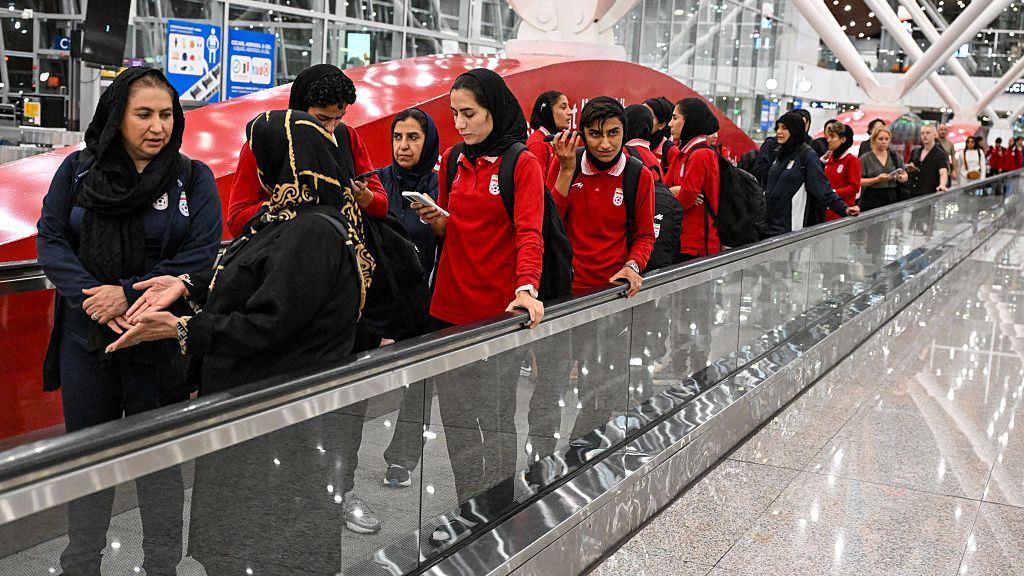








Two more members of the Iran women's team were granted asylum in Australia before their teammates departed, the country's Home Affairs Minister Tony Burke said Wednesday.
The pair has been reunited with five players who were granted humanitarian visas a day earlier, Burke told reporters in Canberra on Wednesday. One of those in the later group was a player and the other a team staffer, Burke said, and both sought asylum before their teammates were transported to the airport.
Editor's Picks

The rest of the team's departure from Sydney, Australia to return to Iran late Tuesday local time happened during fraught and outraged protest at the team's hotel and at the airport. Iranian Australians sought to prevent the women from leaving the country, citing fears for the team's safety on their return to Iran after they were labelled "wartime traitors" by Iranian state media for refusing to sing the national anthem before their opening match.
Their flight departed late Tuesday.
Burke said that as the women passed through security at Australia's border, they were each taken aside individually by Australian officials and interpreters, without minders present, and were made offers of asylum.
"They were given a choice," he said. "In that situation what we made sure of was that there was no rushing, there was no pressure."
Those who have sought asylum received temporary humanitarian visas, which have a pathway to permanent residency in Australia, Burke said.
The team members previously confirmed to be staying in Australia were captain Zahra Ghanbari and players Fatemeh Pasandideh, Zahra Sarbali, Atefeh Ramezanizadeh and Mona Hamoudi.
Iranian refugee advocate Ara Rasuli, who was involved with the asylum process, said the Australian government had "opened every avenue for the girls to stay here and to be protected."
The players who returned to Iran possibly faced execution, and their families faced retaliation from the regime, she said.
"They are in a lot of danger," Ms. Rasuli said. "There are all sorts of different threats, such as taking the families into custody, taking over their assets ... and that's why most of the girls are choosing to go back home, because the threats are a big issue in this matter."
The Iranian team arrived in Australia for the Women's Asian Cup last month, before the Iran war began on Feb. 28. The team was knocked out of the tournament over the weekend and faced the prospect of returning to a country under bombardment.
Information from AAP and The Associated Press was used in this story.
Comments (0)