
Remember me

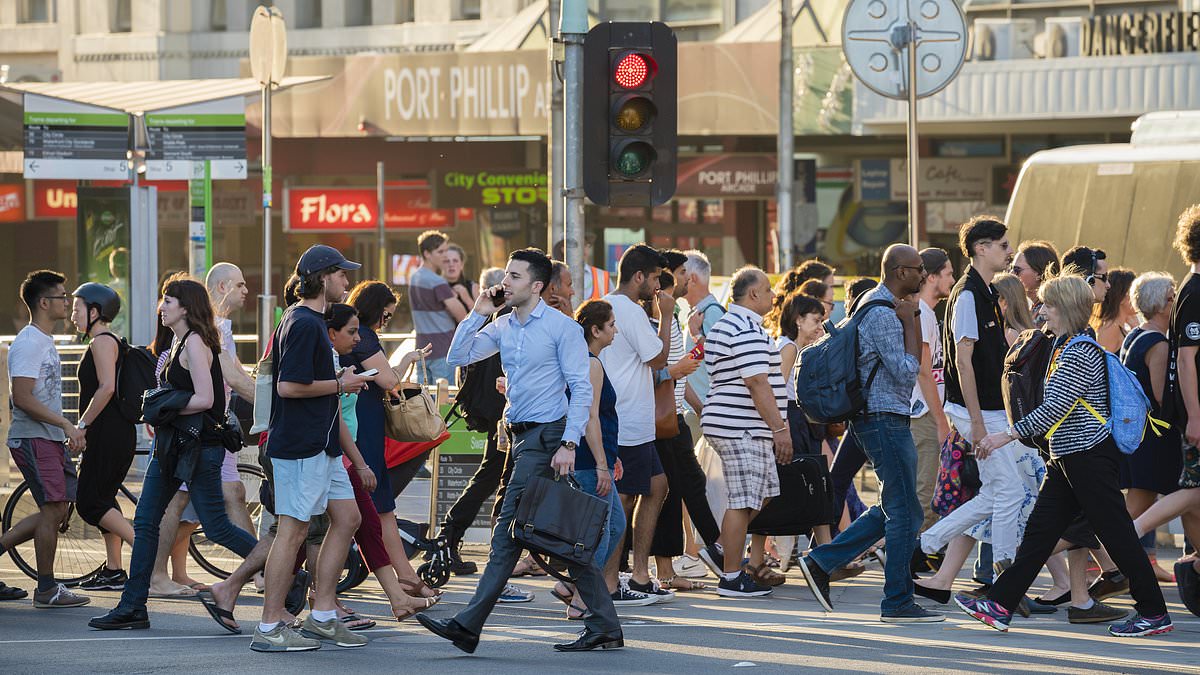







Australians need at least $630,000 in their superannuation as the cost-of-living crisis pushes up the amount needed for a comfortable retirement.
The Association of Superannuation Funds of Australia (ASFA) found many Aussies need tens of thousands of dollars more to keep up with rising expenses.
The ASFA modelling revealed the majority of Aussies aged around 60 have less than half the super they need for a 'comfortable retirement'.
A single person needs a lump sum of $630,000 by the time they turn 67 to retire comfortably on a mixture of their super and a part age pension. Couples need $730,000.
A 40-year-old, on a $90,000 salary, needs to have $117,000 in their super right now in order to reach the $630,000 target at the end of their working life.
A 45-year-old needs to have $184,700 right now, and a 50-year-old, $262,000.
The news isn't bad for all Aussies, particularly the younger ones who have been in the workforce for 10 years or less.
A 30-year-old Aussie currently earning $90,000 needs a super balance right now of just $9,900 to retire comfortably.

Many Aussies on the verge of retirement don't have enough super to live comfortably
Younger Aussies have a brighter future regarding their super because compulsory employer super contributions sit at 12 per cent.
The superannuation guarantee rate rose from 11.5 per cent to 12 per cent last July, equating to an extra $317 in super each year for the average person.
Super Members Council CEO Misha Schubert told Daily Mail at the time the increase was a 'game changer' for average Aussie workers.
'It will help people have that dignified standard of living in retirement that all of us would hope for so let's celebrate that milestone now,' she said.
'Australia has a remarkable system that is the envy of the world in how we help our workforce save for retirement.'
ASFA chief policy and advocacy officer James Koval added: 'People retiring today have only had super for the last 30 years, and even then it was only 3 to 4 per cent back in the 90s.'
In 1991, Australia passed federal legislation that created the universal compulsory super system.
The superannuation guarantee act started by having employers pay three per cent into employees' super accounts.

Younger Aussies face a much brighter future thanks to super laws that were brought in during the 1990s
How much super you should have by nowThe super balance you should have now to have $630,000 at 67 based on earning a $90,000 wage.
Age 30 - $9,900
Age 35 - $59,900
Age 40 - $117,700
Age 45 - $184,700
Age 50 - $262,200
Age 55 - $352,100
Age 60 - $456,100
Age 65 - $576,600
Age 67 - $630,000
ASFA's Retirement Standard states that a single person can live comfortably in retirement on $54,840 a year, while a couple needs $77,375.
Those figures aren't huge but also mean, according to the Australian Tax Office, that an after-tax income of $72,000 for a retiree is the equivalent of a full-time worker earning $90,000 a year before tax.
Australia's total superannuation pool is only behind the US, Britain and Canada, which all have substantially larger populations.
'We're talking about a country (Australia) that has 0.2 per cent of the global population but has the fourth-largest retirement savings pool in the world and that's not per capita, that's full stop,' Mr Koval said.
'We're the 54th-largest country in terms of population. Australia will see the percentage of government spending on the pension decrease over the next few decades (from 2.4 per cent today to 2.2 per cent by 2060).'
Financial strategist Theo Marinis told The Australian that Aussies should seek out professional advice to make the most out of their superannuation.
'The earlier you start contributing, the more compound interest will do the heavy lifting for you,' he said.
'If you start it as a regular direct debit or salary sacrifice, you don't even notice it, and it will compound your returns. We're human beings – the more we earn the more we spend.'
Comments (0)