
Remember me



The body lies mutilated in the street. The wounds are savage but calculated. This is more than sadism. It is a message.
At first glance, it’s just one more Iranian who has lost their life amid the state’s promiscuous violence. A tragedy – as death always is – but in the Islamic Republic, sadly a part of daily life.
But this is different: it’s not an Iranian protester lying in the dirt for all to see but an officer of the regime’s first and last line of defence: the Islamic Revolutionary Guard Corps (IRGC).
Since the US-Israeli strikes on Iran began on February 28 I have been in contact with a source who is across western intelligence inside the country.
And what they have revealed to me is something extraordinary: that amid the chaos and fury of the war in Iran, the state’s most brutal security forces are not only penetrated by enemy services and in disarray – they are turning on each other. ‘Over the past four days, reports have painted a picture of an Iranian security apparatus under severe and accelerating internal strain,’ says my source.
‘More than 60 incidents have been documented across virtually every branch of the regime’s military and security apparatus, spanning multiple regions simultaneously.
‘That body turned up in the street just the other day,’ they add. ‘And it’s not an isolated incident by any means. There are many reports of IRGC soldiers being executed for desertion,’ he continues. ‘It’s happening constantly. IRGC leaders are also regularly executing subordinates for refusing to carry out orders.’ This is ‘not isolated turbulence but a nationwide condition,’ they add.
Executions are reportedly occurring throughout Iran’s military and security forces, with personnel from multiple branches being put to death – sometimes on the spot at their own bases.
The killings are often carried out under secret orders so tightly classified that even fellow officers are kept in the dark.

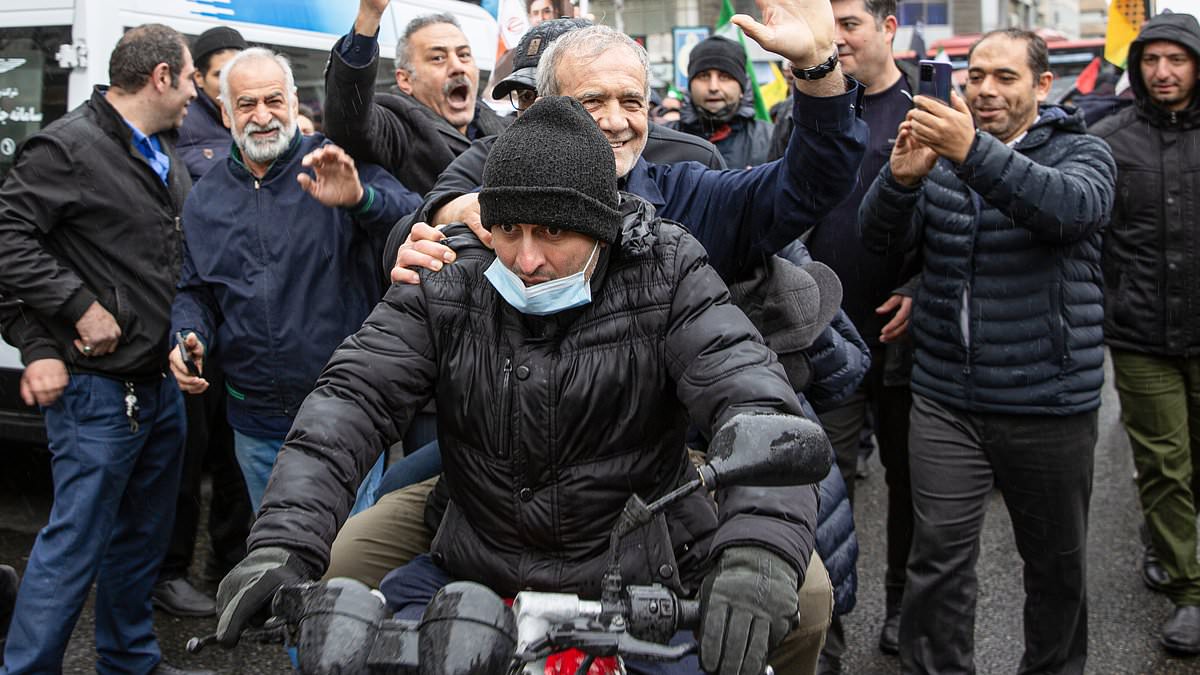
Iranian president Masoud Pezeshkian (pictured on the back of a motorcycle) waves to crowds as he attends a march in Tehran on March 13, 2026

Rescue workers search for survivors in the rubble after a strike in southern Tehran, Iran
At the same time, bodies of regime officials showing signs of torture have been turning up dumped in streets and other public places. The victims come from across Iran’s security apparatus – including intelligence officers, naval personnel and members of the regular army. Opposition groups are believed to be responsible for some of the killings.
The message is clear: the regime is under attack from all sides.
Even Iranian missile teams are penetrated, with their equipment reportedly ‘breaking down’ mysteriously on occasions. Authorities suspect sabotage and the incidents are followed by investigations, arrest – and yet more executions. The security forces are so widely compromised that they are being turned inside out. Paranoia is at an all-time high.
The Iran War has sparked outrage among many critics. Even those more sympathetic to the need to take out this vicious regime have questioned what appears to be an absence of clear objectives or planning in the war.
Regime change beyond the state’s inner circles seems, for the moment, impossible – as we have just seen by the replacement of Ayatollah Ali Khamenei by his son Ayatollah Mojtaba Khamenei.
But it remains the goal.
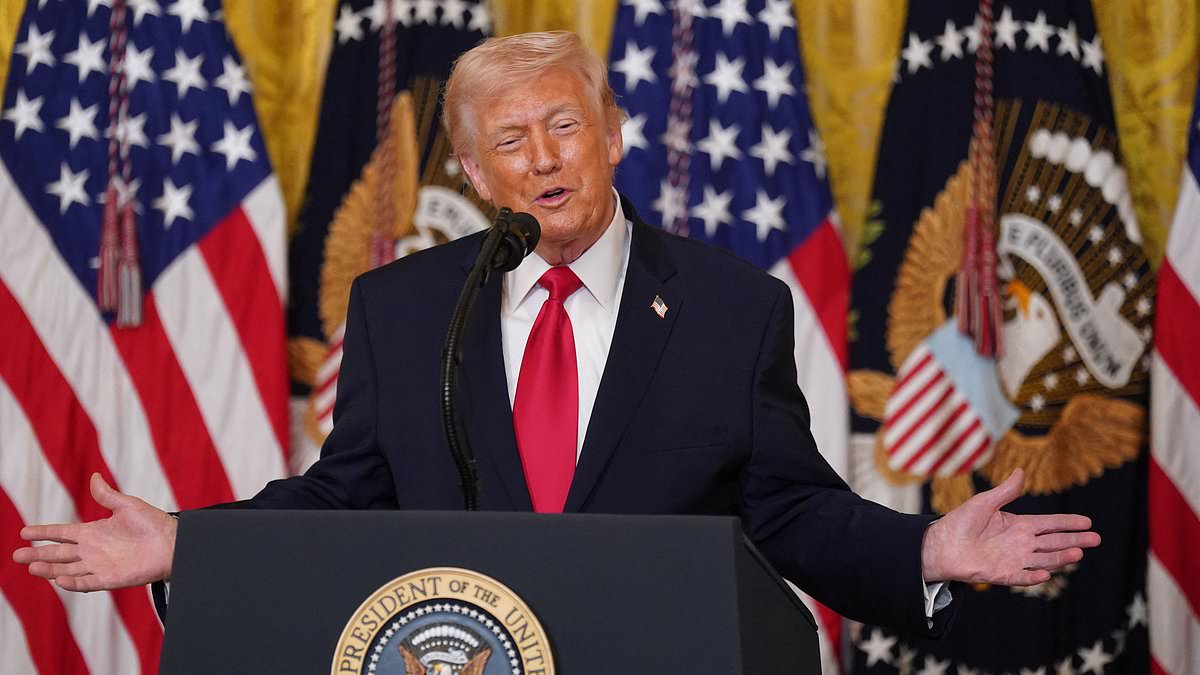
In a video message released on February 28 as the strikes began, Trump called on the Iranians to seize the moment.
‘The hour of your freedom is at hand,’ he told them. ‘When we are finished, take over your government. Now is the time to seize control of your destiny.’
So far, there is little sign of that. People are mostly confined to their homes while US and Israeli airstrikes continue to pound Iran.
Trips out into the street and shops are few and mainly for basics and retribution for those who step out of line is swift.
‘If anyone comes forward in line with the wishes of the enemy, we will no longer see them as merely a protester, we will see them as an enemy,’ said national police chief Ahmad-Reza Radan in comments aired by state broadcaster IRIB. ‘And we will do to them what we do to an enemy… all our forces are also ready, with their hands on the trigger.’
My source confirms this. ‘On the street the atmosphere remains bleak,’ they say. ‘Across the board there is extremely heavy repression. There are checkpoints everywhere in Tehran. People are being beaten, investigated and detained.’ But as the days roll by, a clear plan – tactically at least, is starting to emerge.

Smoke rises after an explosion during the World Quds Day march as participants carry Iranian flags and banners in Tehran, Iran on March 13, 2026
The first wave of strikes took out Iran’s now former Supreme Leader Ayatollah Khamenei and as much of the leadership as possible. Then came wider strikes aimed at IRGC facilities and Iran’s potent ballistic missile capability. In recent days strikes have moved on to hitting the Basij, the IRGC’s street-thug enforcers – and the checkpoints.
What is now evident is that a central plank of the American and Israeli plan is to do whatever they can to help the people rise up after the bombing stops.
Even now, amid the relentless pounding, there are still signs of opposition. ‘Last week there was an attempt to organise a large rally in Tehran,’ says my security source. ‘But it collapsed because the city was saturated with security forces. And yet the regime does not have complete control.’
Attacks from the limited opposition that is able to function mean security officials are on their guard. ‘Regime forces are more scared of a mobilised population than air strikes for these reasons,’ says my source.
For now, the bombing is relentless; swathes of Iran are an inferno and the people are terrified. A friend I will call Mahmoud, who lives in Tehran, was blunt. ‘It’s terrifying,’ he told me. ‘The bombs are very loud and we hear them through the night. I gather with my family and try to tell them we will be OK. We are very afraid. It’s a terrible war. But we hope the Americans will succeed.’
Will regime change happen? I ask Baqer, a 45-year-old office worker. ‘Right now, it seems little has changed,’ he says, referring to Mojtaba’s accession to the leadership. ‘But we hope the regime will be much weaker when this war ends. One day Trump and Netanyahu will finish the job. Then, believe me, our time will come.’
If this might once have seemed fanciful, intelligence assessments are becoming more sanguine, despite the soaring costs of oil and gas caused by Iran’s chokehold on supplies.
Not least because another growing source of chaos is the regime’s failure to pay its thugs. Across Iran, soldiers and security personnel from multiple branches have reportedly staged protests, threatened to abandon their posts – and, in some cases, deserted after months of unpaid salaries and pensions. Critically, the anger cuts across the ranks, from ordinary troops to senior officers. Instead of addressing the mounting financial crisis, authorities are doing what they always do: lash out. The result is more surveillance, more intimidation, more punishment.
The effect is merely to breed yet more resentment among the very forces the regime relies on to keep it wedged in place. ‘Personnel across multiple branches [of the Revolutionary Guard] have fled or attempted to flee. Manhunts have been launched for missing members, and families of those who fled have been placed under house arrest. Resignation requests across multiple provinces have been rejected outright, in some cases under explicit threat,’ reports my source. ‘The idea is that all this paves the way for uprisings in the future,’ they conclude.
‘When the smoke clears, people will be surprised at how degraded the regime’s machinery of terror is. It’s only a matter of time before it starts breaking down.
‘No one seems to understand just how much trouble the regime is now in.’