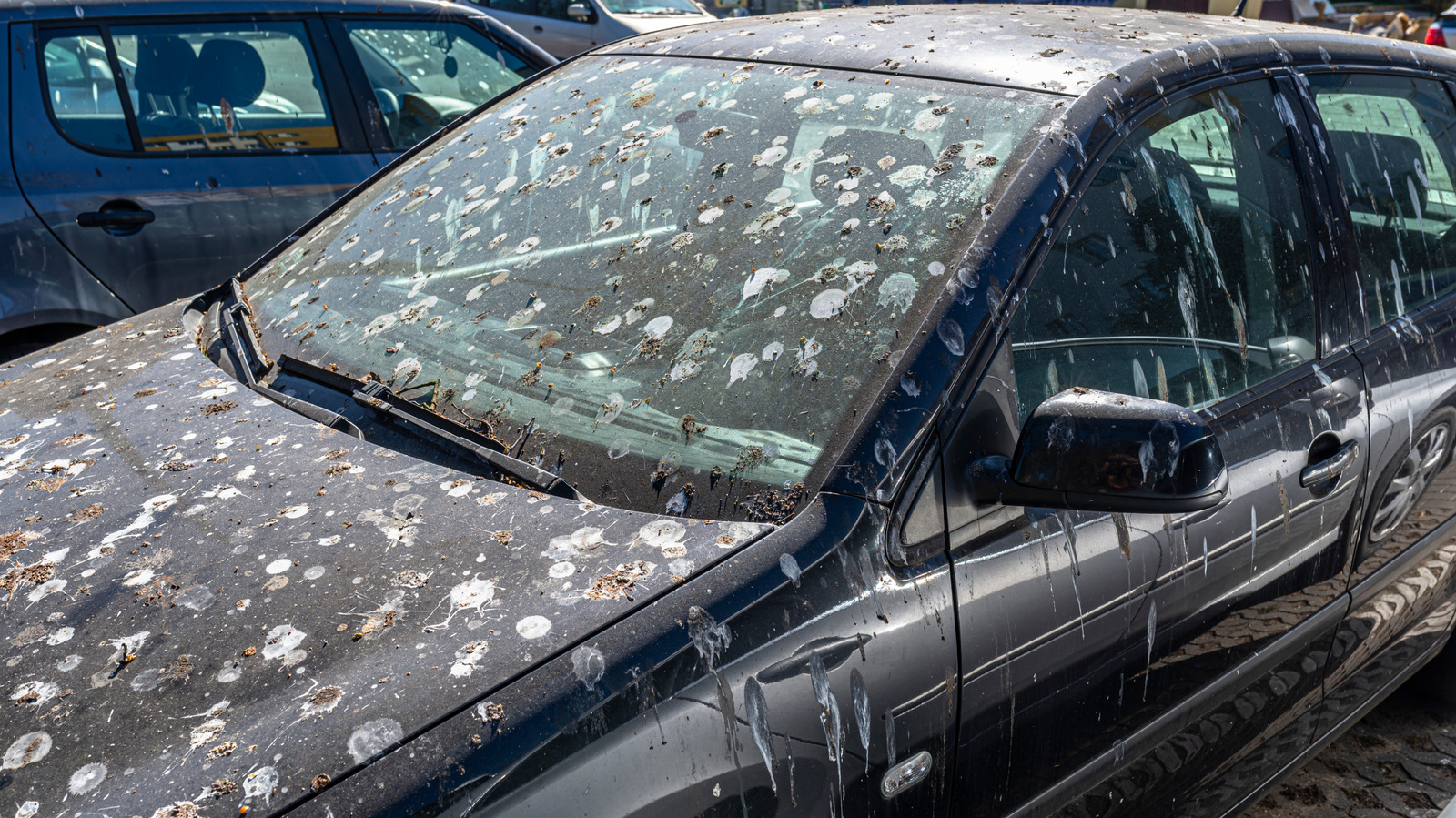
Birds. Some are sacred. Some are deadly. Some are delicious. They can fly, float, swim and sing. Science suggests these magnificent creatures descended from dinosaurs. But when their droppings descend onto your car, you'll want to act quickly. As many of you may unfortunately know, bird poop can ruin your car's paint job. Big time.
The stuff is so bad for paint that automakers develop artificial bird poop in labs, spray it onto test panels, and then, as if that's not enough fun, they bake their work to simulate the effects of sunlight and create poop cement. Why? Because in the real world, paint expands and contracts with heat cycles. When it cools, whatever gunk is on the surface embeds itself in the enamel. Bird poop loves to embed.
The first problem is that bird poop is especially acidic, with a pH of 3 to 4.5, and will etch into your clear coat and your paint if left alone. For context, a pH of 7 is neutral, like clean, fresh water. Each unit up or down represents a tenfold variation in acidity.
Also, birds don't launch pee and poop separately — most birds, anyway. Ostriches are the known exception, and if ostrich poop is on your car, you may have more pressing ornithological concerns. Otherwise, your average bird dropping contains both solids and uric acid, also known as the white, goopy part, which doesn't break down in water like the urea in human urine. That's problem number two, so to speak. Bird poop's acidic, and not water-soluble. Sweet. On the bright side, it's also a real pain to clean — wet or dry.
Bird bomb cleaning
That's right. Dealing with even the freshest globby gift from the heavens isn't as simple as wiping it away. Solids — like all that lovely bird seed you just loaded into the feeder — lurking in the poop mix can scratch the finish. You don't want to mash them into the paint or spread the acidic element much beyond where it already is.
Add this to your bag of car cleaning tips and tricks: lifting bird poop off is the way to go, preferably with a damp microfiber towel. Dab. Lift. Repeat. Rinse the residue away with a hose, then dry the area with a clean towel. Grab your detailer spray to cleanse any remaining residue, and wax the area to restore protection.
If you're dealing with a dried mess, soften the situation with warm water. Or, mix water with a touch of baking soda and dish soap (not too much!) to break the acids down. You can leave a wet towel over the blemish until it's malleable. Then, treat it as you would if it had just happened, dabbing and lifting. Rinse, and assess the damage. Hopefully, all that fancy simulated poop baking in the factory will result in a finish that has held up. Light etching might be something you can polish out. Clear coat erosion to the paint might mean a call to a professional detailer.
Remember to wash those towels thoroughly, and wash your hands as well! Bad stuff can grow in bird poop, especially if there's a lot of it. Bad stuff that can make you sick.
Bird poop protection
Nature remains undefeated. However, there are some ways you can shield your car from avian excrement. The most obvious is to avoid parking where birds lurk above, like beneath street lamps and power lines. And trees. Good grief, avoid trees, if for no other reason than that removing tree sap from your car totally sucks. Shade's great and all, but tree sap is a nightmare.
Perhaps you're thinking that washing your car weekly is the answer to your bird poop predicament. Nope. Not necessarily. Washing your car too often can actually cause other problems, and who needs more problems these days? Especially if you're the one dealing with those damn ostriches. But, whenever you do wash your car, a quality wax will give you some air cover. Regardless of bird poop, this is just good automotive hygiene.
As far as the aftermarket goes, paint protection films can offer additional protection. And a ceramic coating might be worth it. Airplanes often rely on them, and they have to perform in pretty harsh environments and extreme temperature fluctuations. Professional ceramics can be pricey, but there are cost-effective, better-than-zilch options at your local auto parts store. Just be sure to read the labels and follow directions so you don't accidentally do more harm than good. Leave the accidents to the birds.






Comments (0)