
Remember me







Sometimes, fuel economy figures are seen as fixed and unchangeable numbers. That what appears on the EPA window sticker (i.e., city, highway, and combined) when a vehicle is new are the preset numbers, no matter what.
However, you can boost those numbers by treating your vehicle like any other tool. How you maintain and operate that tool can and will increase its performance, including the miles per gallon. It often comes down to small, sometimes overlooked details that lead to long-term gains in gas mileage.
Here are five simple things you can do to increase your MPG on every trip.
5 Avoid excessive idle times No need to let your engine "warm up" Credit: Mehaniq41
If you are of a certain age, you may recall the advice you received about letting your engine warm up on cold mornings. While there isn’t anything inherently wrong with still doing this, especially if you like the convenience of a remote start or need to scrape your windows, it’s also not totally necessary for modern cars. In other words, you won’t damage or hurt your engine if you skip the warm-up advice.
That advice stems from an era of carbureted engines and is less relevant now, given advancements in powertrain and lubrication technologies, such as fuel injection and synthetic oil. With today's vehicles, there is no need to let them run for more than about 60 seconds, even during the winter. You can start your car, buckle up, get situated, and then drive off gently as your engine finishes warming up.
Extended idle times, like having your car “warm up” in the parking lot after work, needlessly burn gasoline. In a similar vein, if your vehicle is equipped with a start/stop system, turn it on so your engine shuts off while you are stopped at a traffic light. Every little bit helps, and every reduction in engine idle time is fuel saved.
 Related
4
Drive defensively
Gentle acceleration saves gas
Related
4
Drive defensively
Gentle acceleration saves gas
 Credit: AltrendoImages | Envato Elements
Researchers at the Department of Energy’s Oak Ridge National Laboratory determined that aggressive driving can tank (no pun intended!) your fuel economy. Their study found that aggressive behavior behind the wheel can lower gas mileage by up to 40% in stop-and-go traffic and up to 30% at highway speeds.
When engines are “gunned” during aggressive maneuvers, the transmission is forced to hold a lower gear for longer to push the speedometer upward. The higher RPMs generated by rapid acceleration burn more fuel over time.
Instead, treat acceleration as a steady, linear process to maximize fuel economy and prevent excessive engine wear. Try coasting as much as possible, too, especially around town where you might have a hill you can take advantage of on your commute. You can squeeze out extra fuel-economy gains by letting your vehicle coast down those hills for a short time before you need to press the accelerator again at the bottom.
3 Check your tires Portable inflators can be a good investmentYour tires will typically drop between one and two psi for every 10-degree change in outside temperature, and even this small change can affect your fuel economy.
When a tire is under-inflated, it loses its rigid shape and "slumps," creating a larger contact patch with the road. This increases what is known as rolling resistance, meaning your engine works harder to overcome the added friction from under-inflated tires. While some degree of rolling resistance happens each time you drive, the idea is to keep it as minimal as possible.
One of the best ways to reduce rolling resistance is by keeping your tires at the correct pressure year-round. Doing so can improve your gas mileage by up to 3.3%, according to the U.S. Department of Energy.
The recommended tire pressure for your vehicle is on a placard or sticker inside the driver’s side door jamb. Heat from your tires while driving can alter the pressure reading, so it’s better to check your tires in the morning after your vehicle has been sitting (if you have already driven, wait a few hours and then try again).
Investing in an affordable battery-powered inflator with a digital gauge can make this process a breeze. Once you attach the hose to your valve stem, the digital gauge will give you an instant reading. Most tire inflators work by pressing a single button and can even shut off automatically once the target pressure is reached. Most also come with a range of attachments, a built-in flashlight, and a storage bag.
A common mistake is inflating tires to the pressure listed on the tire sidewall. That number is actually the maximum pressure the tire can hold, not the optimal pressure for your vehicle.
2 Keep up on routine maintenance Follow your oil life monitor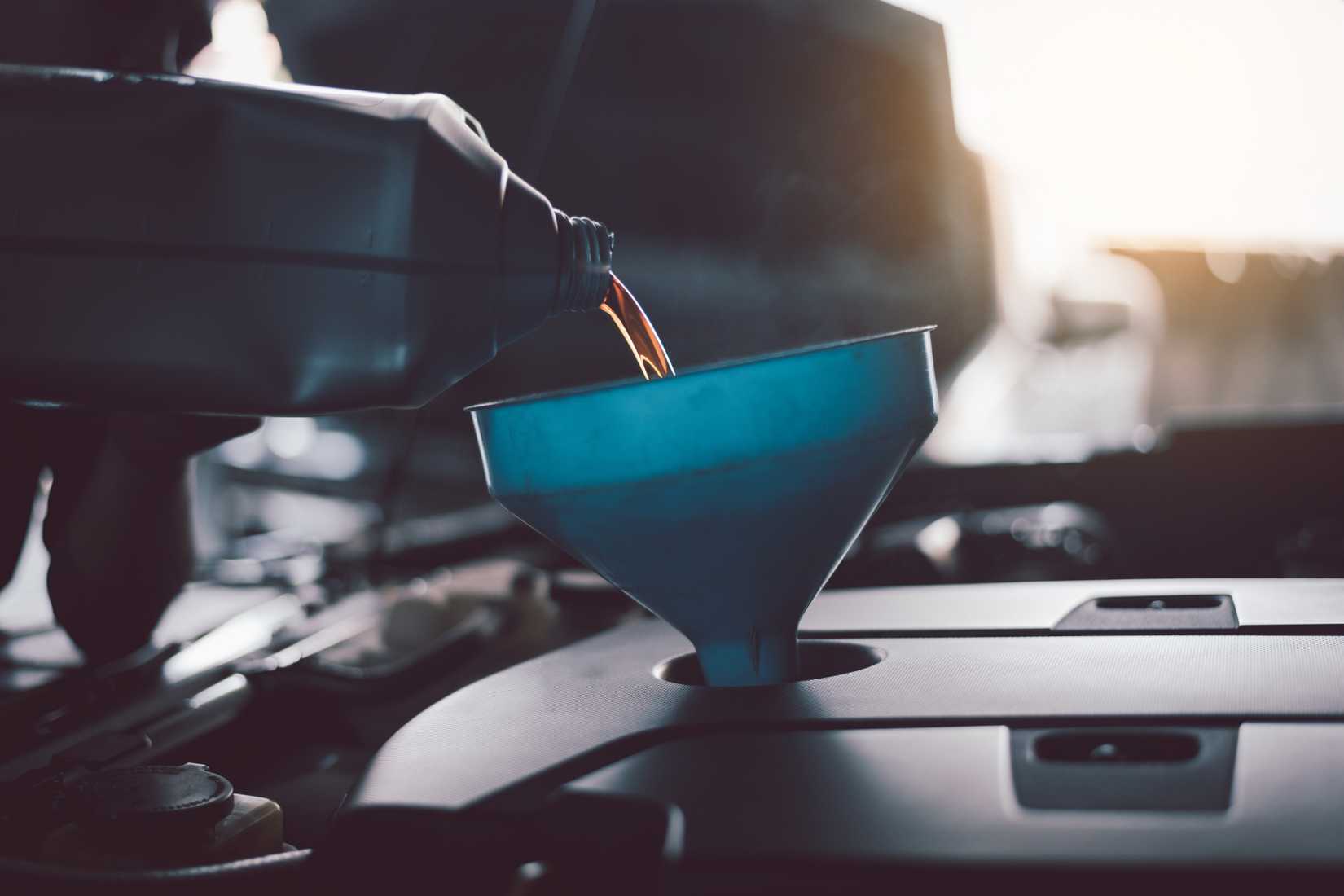 Credit: APchannel / Envato Elements
Staying up on routine service, including regular oil changes, will improve your gas mileage and reduce the risk of costly repairs in the future. Although 3,000 miles was the standard recommendation for ages, that’s not necessarily applicable to today’s vehicles.
In most instances, vehicles now come from the factory with a specific type of oil, most likely a synthetic, which can run much longer than 3,000 miles under normal driving conditions. This is why it’s fine to follow the oil life monitor and schedule your oil change after it lights up. That system takes into account a variety of factors, such as outside temperature and engine load to determine your next oil change.
If you have a vehicle that does not get driven often, change the oil by the time interval, rather than by mileage, which should be at least once a year. If you have a hybrid vehicle, you may not hit the mileage interval as the engine is not always running. If so, change the oil in your hybrid once a year.
With the driving I do here in metro Detroit in a 2022 model-year vehicle, my oil changes happen about every 6,000 to 7,000 miles, or every four to five months. It might depend on your exact vehicle, but mine starts notifying me at around 28 to 30 days that I need an oil change, counting down a day each morning after I start my vehicle.
Either way, keeping on top of oil changes is one of the best ways to help your fuel economy.
 Related
The 5 most efficient new cars in 2026 under $30,000
Related
The 5 most efficient new cars in 2026 under $30,000
These cars prove efficiency doesn’t have to be expensive.
1 Lighten the load Toss out that junk in the trunk Credit: Fabrika Photo / Envato Elements
Automotive engineers focus on making vehicles lighter for many reasons, but improving fuel economy is among the primary goals. Before my time at How-to Geek, I worked in the Product Development and Benchmarking division at Ford Motor Company. At our facility in Allen Park, Michigan, our job was to remove as much weight as possible from components used to manufacture new models.
You can use this same approach on your own vehicle. Pop the trunk or the rear hatch and see what is sitting back there that can be removed. For example, keep your winter or road emergency kit, but maybe remove those heavy boxes, tools, or golf clubs. It may not seem like a lot, but the less your vehicle carries while driving, the better your fuel economy. Even small weight reductions add up.
Likewise, remove seasonal items, such as a roof rack or bike rack. If you only use certain accessories in the summer, you can likely do without them during the winter and vice versa.
Combine these tips for the best resultsIf you can keep unnecessary weight out of your vehicle for a prolonged period, drive defensively, and get in the habit of checking your tire pressures, you should see better fuel economy over time. The benefits will be twofold: saving you money and being better for the environment.
While most late-model vehicles have a real-time fuel economy calculator, you can track any of these changes manually. To calculate your MPG, record your mileage at a full tank, then drive until you need to fill up again. From there, divide the miles traveled since that first fill-up by the total gallons it took to refill the second time. That number will be your average MPG.
Comments (0)