Israel’s blanket evacuation orders for Dahiyeh and southern Lebanon breach the core safeguards of Fourth Geneva Convention (Article 49) which require safe routes and swift returns. It has driven more than 500, 000 people into forced displacement and urban collapse under the cover of “civilian protection” rhetoric.
“We’re still here, but nobody knows where we are supposed to go.” The message arrived from my friend in Haret Hreik, a district of Beirut’s southern suburb of Dahiyeh, following evacuation orders issued by the Israeli military for Beirut’s southern suburbs and large parts of southern Lebanon. Evacuation… a word that travels effortlessly through diplomatic corridors, carrying with it the reassurance of humanitarian precaution, suggesting that civilians are warned and depart in time to be spared, promising that violence is carefully managed, instead of being socially imposed. Nevertheless, if you look closely at what is currently unfolding across Lebanon, you will understand that the semantic calm of that word begins to dissolve as it no longer aligns with the bureaucratic comfort embedded in the term itself, following Israel’s issuance of massive displacement orders for Beirut’s southern suburbs and large parts of southern Lebanon.
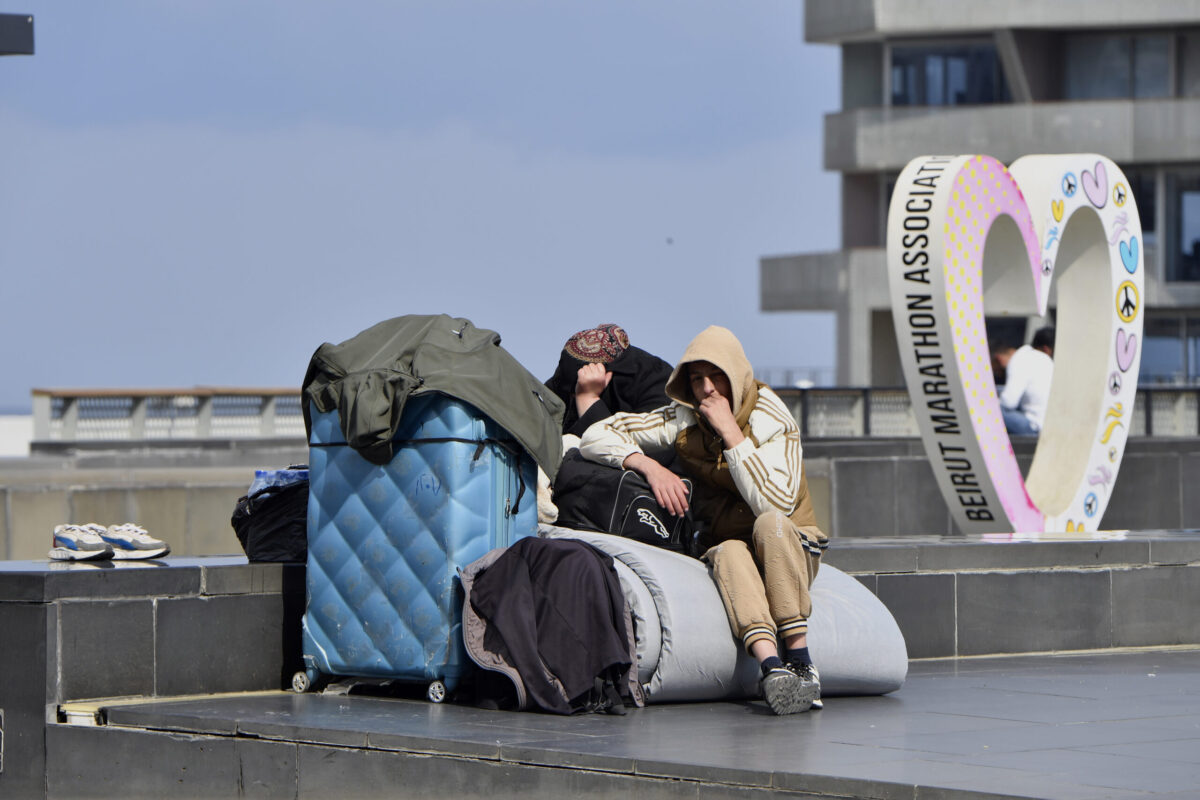
On 5th March, Dahiyeh marked the beginning of the mass and forced displacement of people from the southern edges of Beirut, revealing that the idea of a mere administrative safety measure was no longer tenable. The roads leading out of Dahiyeh became clogged with cars moving forward without a clear destination, and three-wheeled vehicles stacked with mattresses and suitcases, resembling a slow-moving exodus.
Even so, to anyone familiar with Dahiyeh, it is well known that the area is not a coordinate on a military grid. An urban environment composed of layers of ordinary life with apartment buildings perched above grocery shops, narrow streets crowded with taxis, schools wedged between traffic arteries, and pharmacies and cafés woven into everyday routines. Currently, hundreds of thousands of residents in Beirut’s southern suburbs are being targeted by evacuation warnings. The directives extend across large parts of southern Lebanon, and the area covered by the evacuation order encompasses roughly half of southern Lebanon, making it the most extensive displacement directive issued since the current escalation began. Furthermore, UNHCR reported that approximately 100,000 people had already been displaced inside Lebanon, while tens of thousands of Syrians who had been residing in Lebanon crossed back into Syria. By March 8, Lebanon’s Health Ministry and UN agencies reported nearly 700,000 internally displaced persons nationwide-a catastrophic surge from initial figures-with shelters overwhelmed, public schools converted into tent cities at triple capacity, and tens of thousands reduced to sleeping on Beirut’s streets or piling into overcrowded buses fleeing north toward Tripoli and the Bekaa Valley. Furthermore, over 78,000 Syrian refugees, have crossed back into Syria amid the chaos.
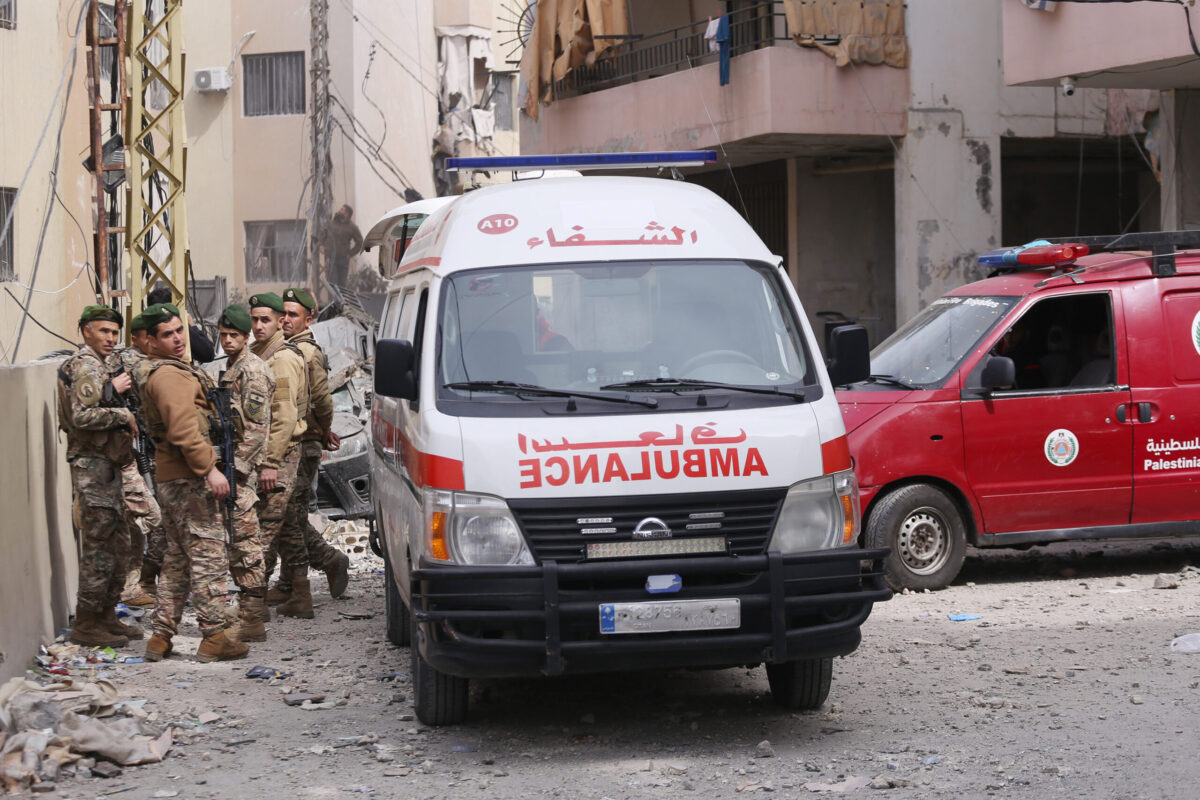
Many of the displaced sought refuge in improvised shelters, schools, and public buildings, where humanitarian agencies warned that capacity was already under strain.
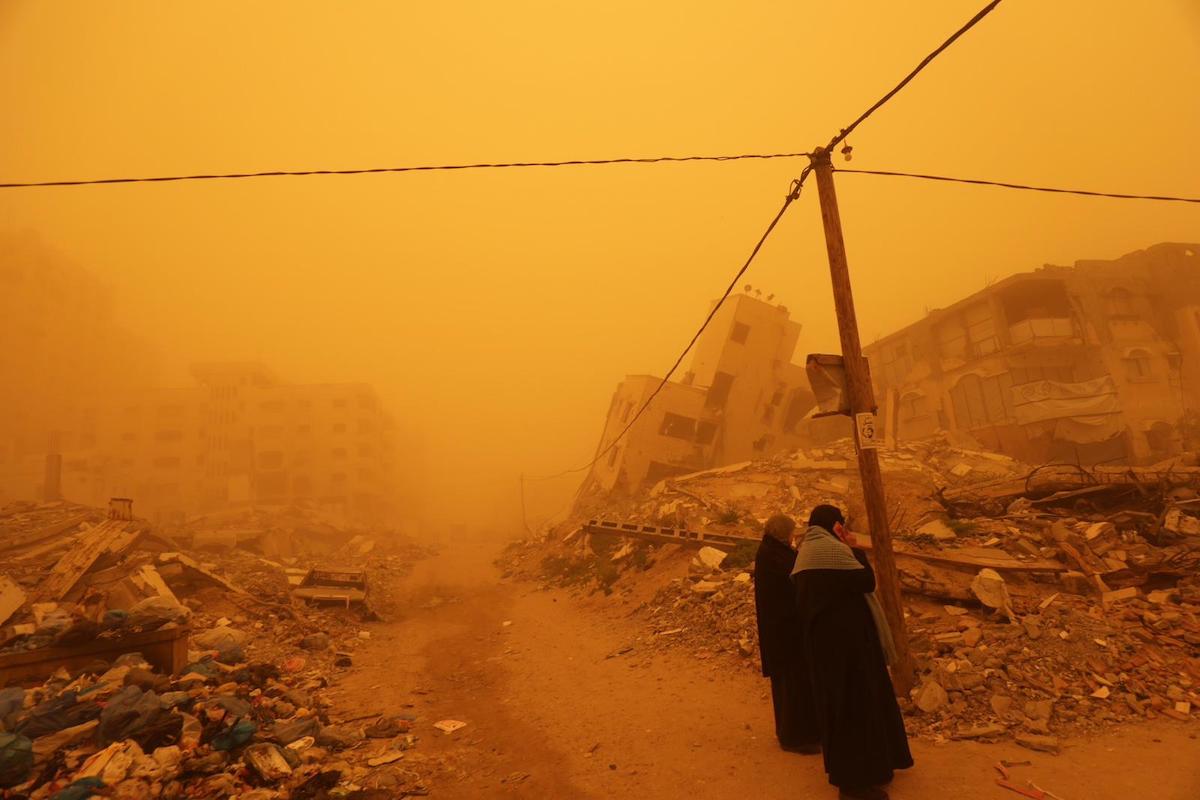
At the same time, over 200 killed and 800 injured since the 2nd Marchthe escalation, triggered by Hezbollah rocket salvos following the killing of Khamenei. Dahiyeh endured nonstop airstrikes through 5th-6th March, leveling apartment blocks and Hezbollah-linked sites alike, while Israeli Finance Minister Bezalel Smotrich openly threatened that Beirut’s suburbs would soon “look like Khan Younis” in Gaza, signaling intent for total devastation…Compounding this, UN officials and Amnesty International have spotlighted clear violations of international humanitarian law: the evacuation orders’ blanket scope over civilian-dense areas fails distinction and proportionality tests under Geneva Convention Article 49, which mandates narrow, temporary measures with ensured safe routes, humane conditions, and swift returns, none of which materialized amid bombed escape paths and indefinite “no-return” zones. Moreover, Lebanon’s desperate appeals to France and the US for ceasefire mediation and humanitarian corridors were stonewalled, even as Israeli ground forces advanced beyond border villages into deeper southern territories, encircling communities and accelerating the exodus. Many of the displaced sought refuge in improvised shelters, schools, and public buildings, where humanitarian agencies warned that capacity was already under strain. Nonetheless, what appears in military language as precaution functions, in social reality, as the unequal redistribution of vulnerability. Those with cars leave differently from those without them, those with relatives elsewhere move differently from those who have nowhere to go, those already living in precarious housing absorb the shock more brutally than those with savings, documents or second homes.
Moreover, within Dahiyeh lies Burj al-Barajneh, one of the Palestinian refugee camps administered by UNRWA. In other words, part of the landscape now subjected to renewed evacuation and bombardment is already marked by earlier histories of expulsion, statelessness or overcrowded refuge. Some of those now packing belongings are moving once again through a regional history in which displacement has become less an exception than a recurring structure of survival.
Likewise, Israel’s current operations in Lebanon are that exact targeting of the social world deemed to sustain that adversary, the hosts, the displaced, the neighbourhoods, the economic life, and the sense of belonging. Read alongside Netanyahu’s threat that Lebanon could face “destruction and suffering as we see in Gaza,” the implication is not difficult to discern. The operative objective is to act upon the conditions that make communal endurance possible, to displace and isolate the population believed to constitute the surrounding environment of resistance. In that respect, the relevant political frame is the production of a society’s immiseration as a means of weakening its capacity to remain socially and politically intact. Reuters reporting that the affected population in Beirut’s southern suburbs numbers in the hundreds of thousands, together with AP’s documentation of blanket orders followed by strikes, gives factual substance to this broader political reading.
From the bombed building to the blocked road, from the blocked road to the overcrowded shelter, from the shelter to the school that can no longer teach, the clinic that can no longer treat, the landlord afraid to rent, the shopkeeper who closes, the child whose routine disappears, the elderly person cut off from care. Atrocity in such a setting is cumulative, unfolding through the silent erosion of the conditions that allow a people to remain present in the world as a social body. The evidence already lies in the sequence documented with vast zones declared unsafe, civilians ordered to move, bombardment continuing, shelters overflowing and of course, their return uncertainty, making life elsewhere precarious and life at home impossible. Furthermore, International humanitarian law should not be a decorative appendix to the argument but one of its tests. Article 49 of the Fourth Geneva Convention prohibits forcible transfer except where the security of the civilians involved or imperative military reasons demand temporary evacuation, even then, civilians must be returned as soon as hostilities in the area have ceased, and proper accommodation, hygiene, health and safety must be ensured. Can directives covering Beirut’s southern suburbs and vast stretches of southern Lebanon genuinely be described as narrowly tailored to civilian protection? Were residents given time and destinations that made compliance realistically feasible? Does bombardment in and around the very spaces being emptied undermine the claim that the warning’s principal object was civilian safety? Do overcrowded shelters and strained services satisfy the Convention’s requirement that evacuation remain humane and temporary?
Atrocity in such a setting is cumulative, unfolding through the silent erosion of the conditions that allow a people to remain present in the world as a social body.
Warnings, after all, do not convert inhabited districts into legally unprotected zones. Even where civilians are told to leave, the attacking party remains bound by the ordinary rules governing hostilities: targets must be verified as military objectives, attacks expected to cause excessive civilian harm must be suspended or cancelled and means and methods must minimize suffering. Nor do warnings extinguish the protection owed to property indispensable to civilian survival. In urban war, shelter, water, sanitation and access roads are not ancillary matters. They are among the very conditions that make continued civilian life possible. The law’s real question is therefore whether civilians were placed in circumstances where remaining meant exposure to death and departure became the only rational option available. Accordingly, these practices are proliferating due to the growing expectation that the destruction of a person’s social environment can be justified as a necessity, even as a precaution, while remaining politically unpunished. The map, the warning, the strike, the displacement centre, the overcrowded shelter and the deferred return are interconnected steps in the gradual erosion of a people’s ability to remain where they are. This process is exemplified by the road out of Dahiyeh, which reveals a form of violence that reorganises agency, while silently eroding the basis on which people could ever continue to live where they have long made their homes.
The views expressed in this article belong to the author and do not necessarily reflect the editorial policy of Middle East Monitor.