
Remember me





Get the free Morning Headlines email for news from our reporters across the worldSign up to our free Morning Headlines emailSign up to our free Morning Headlines email
“Who the hell are you? I don’t recognise you as my mother.”
Diane’s son Jim stormed into her home on a Sunday morning. He had just learned that she was six months into a relationship with a fraudster who was claiming to be Sir David Attenborough.
“You were ready to leave me!” he yelled.
Jim had just discovered that Diane, a 74-year-old widow, had sent him almost half her life savings in the belief that she was supporting the 99-year-old broadcaster through health problems and legal trouble.
After meeting him via a fake celebrity page on Facebook, she was preparing to sell her flat and send the money to a man she was convinced was her partner, who had been hinting at marriage and encouraging her to leave her home in Canada to join him in London.
Diane and her son shared their story with The Independent, shedding light on the cruel psychological tactics of a growing criminal enterprise, and leading this paper to uncover shocking flaws in user protection on the world’s largest social media site.
Diane was approached by a fraudster behind the fake Attenborough Facebook profile in October 2024. He soon suggested they move to Telegram where, he said, their messages would be more secure.
Their communication was intense. Diane stayed up very late each night to message her new flame, who claimed to be on UK time. Before long they were saying “I love you”.
Have you been affected by fraud on social media? Share your story at liam.james@independent.co.uk
After a few weeks of texting every day he told her he was having financial trouble because his ex-wife took hundreds of thousands of pounds from him.
A fortnight later, the fraudster said he needed Diane to help him pay a lawyer to retrieve the money from his wife to pay for life-saving kidney treatment.
Diane sent $4,000 Canadian dollars. The requests for cash kept coming. “There were always new excuses,” she says.
She sent anywhere from a few hundred to a few thousand dollars at a time. The fraudster asked to be paid via cash deposits into a cryptocurrency account – making the money harder to trace and, tragically, crushing any hope Diane had of recovering it.
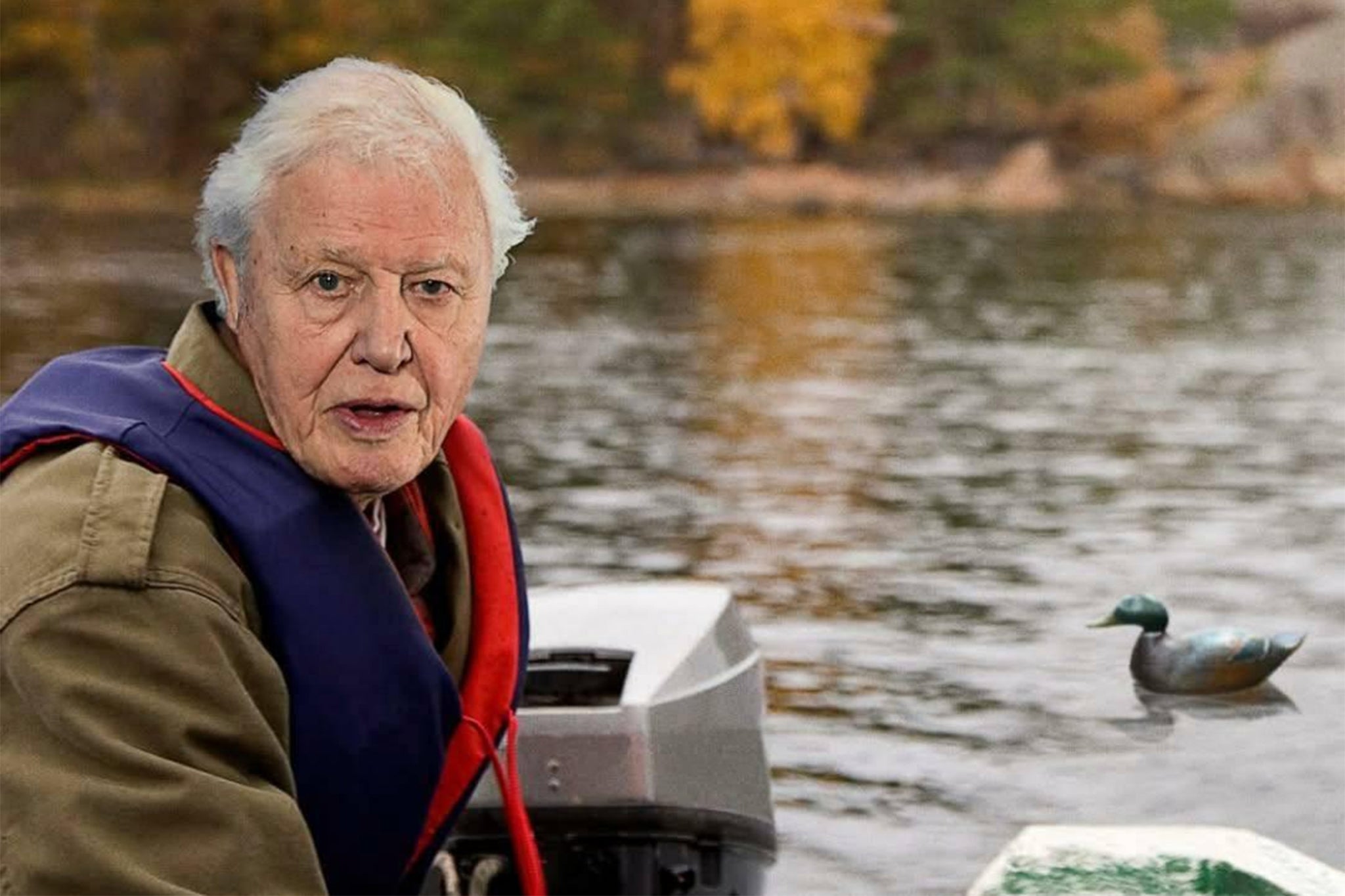
open image in gallery
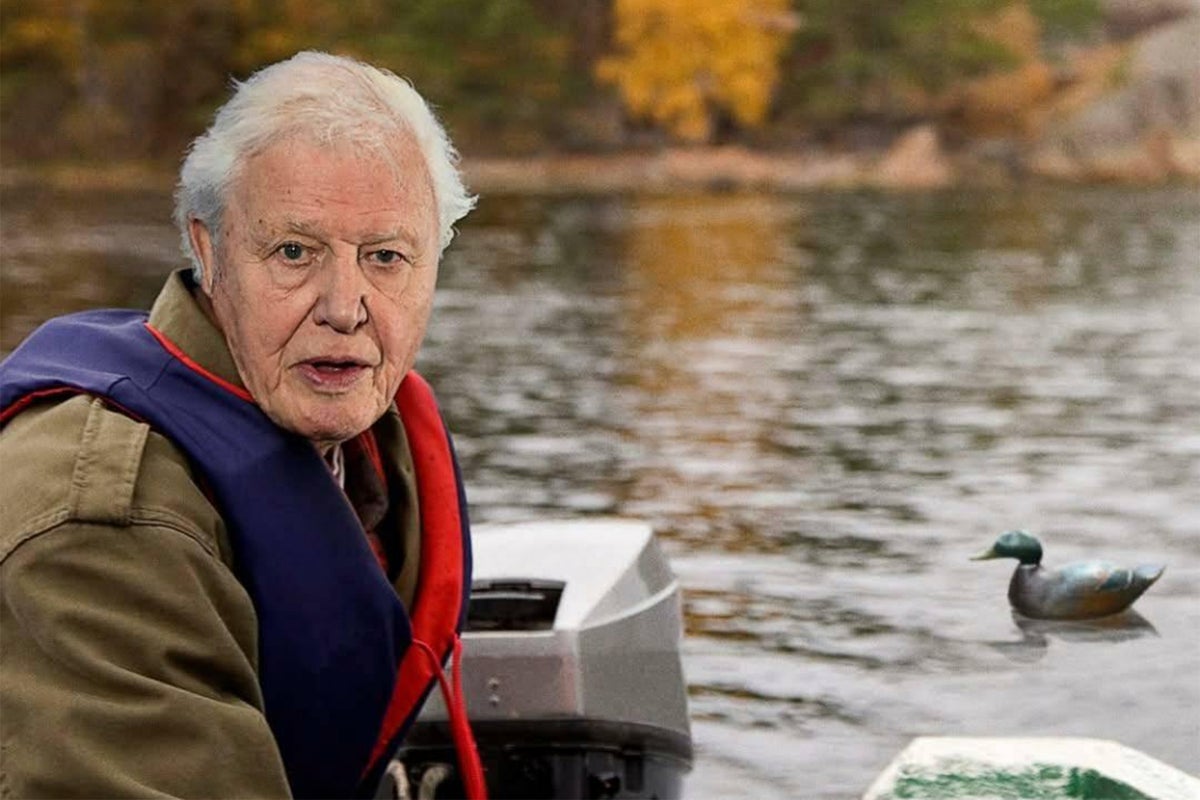
Diane’s fraudster created an AI photo of Attenborough for a Facebook profile (Supplied)By March, Diane had sent $22,000 CA (£12,000) – around half of her life savings – leaving her with only $6,000 in an account she could access.
She had doubts from the start about her new partner’s identity. “All this time a little voice inside was saying ‘Diane cut it off. He’s scamming you.’ But I was in love with him.”
He suggested they get married and promised a great life together in the UK – after she sold her flat and gave him the money.
With this plan in mind Diane bought a passport.
But her doubts were growing and she started asking for more proof of the fraudster’s identity. Eventually, he sent a prerecorded video featuring an AI rendering of Attenborough, complete with voice.
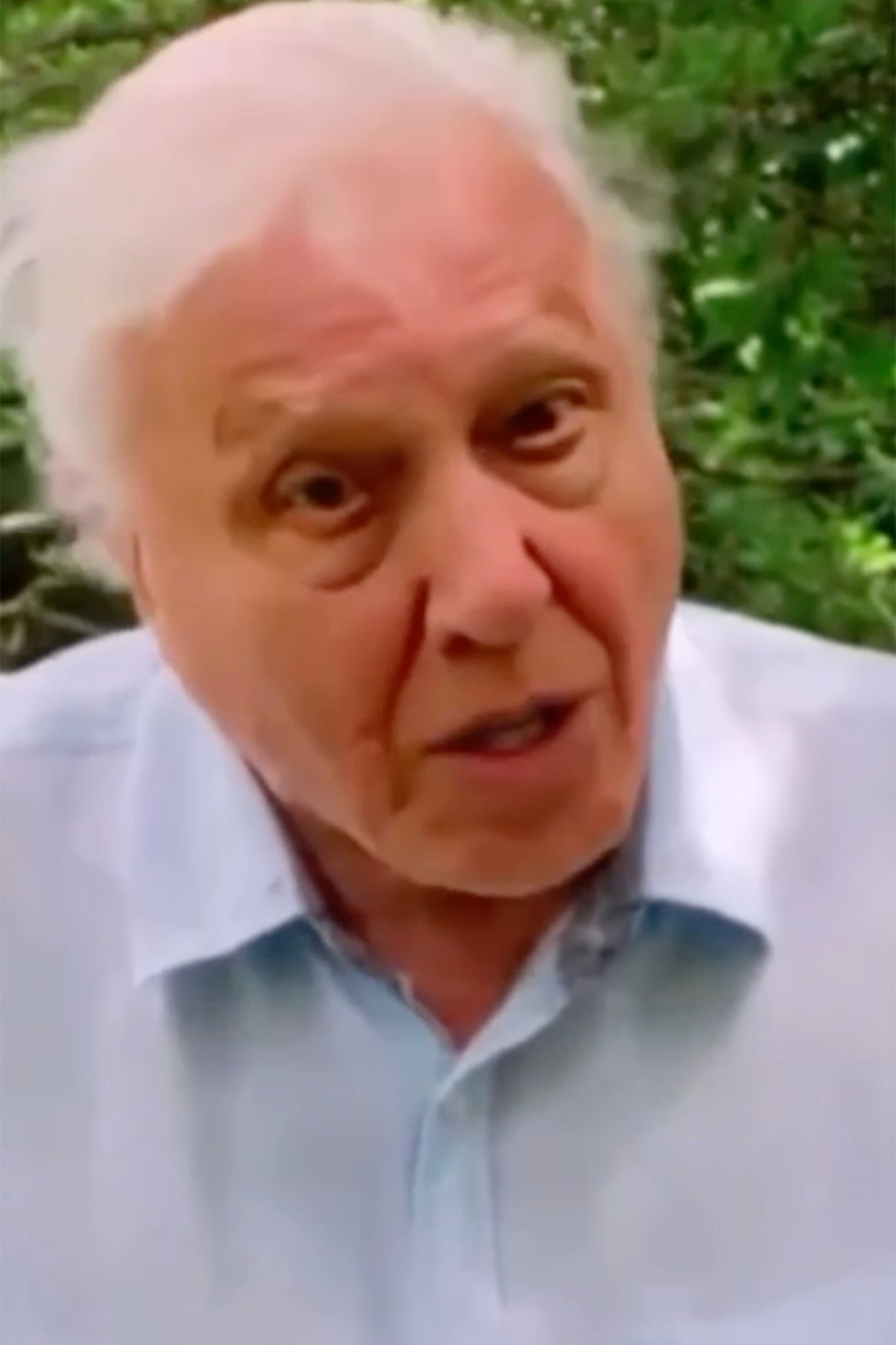
open image in gallery
Diane received an AI generated video featuring a fake Attenborough (Supplied)She remained doubtful and withdrew the remaining money from the cryptocurrency account she had been depositing in. But days later she was again contacted by the fraudster, who had created a new Facebook profile to “prove” he really was Attenborough, and she returned to exchanging messages.
Diane’s son Jim found out what had been going on and confronted her. This pushed Diane to break away from her relationship with the fraudster and set about unravelling the psychological trauma she had suffered.
Ten days after Jim’s intervention, the fraudster emailed Diane. Still pretending to be Attenborough, he wrote: “You never deserved me. You pretended you loved me when you never did. You are an idiot for causing me this pain in my heart.”
Diane by this time knew she had been defrauded but she still had a glimmer of her deep feelings for the fraudster. Sadly, a glimmer was all he needed to draw her back. Around six weeks after the email, she emptied her savings account and sent all the money to the scammer.
Jim said he and his mother have since opened a joint bank account for her money so that he can see what goes in and out and she has sought help with a family doctor.
Diane is the victim of a romance scam – a cruel type of fraud which casts a hook deep into a victim’s psyche to turn them into a reliable source of cash.
Experts said fraudsters use similar tactics to domestic abusers to isolate their victims and make them feel responsible for the wellbeing of their supposed partners. Research by UK Finance found that romance frauds typically involve more payments than any other type of fraud, reflecting the lasting relationships fraudsters build with their victims.
Romance fraud has grown significantly in recent years. UK Finance found that £20.5m was lost to romance scams in the first six months of last year, up more than a third on the same period in 2024. Since 2020 the amount lost each year has almost doubled.
Social media has become a prime hunting ground for fraudsters. The National Fraud Intelligence Bureau found last year the number of approaches for romance fraud made via social media and messaging apps such as Telegram was growing, and analysis of TSB data found that over half (58 per cent) of all romance fraud cases started on social media – 29 per cent involved celebrity impersonation.
Facebook, which accounted for 30 per cent of all cases, is littered with fake celebrity accounts.
open image in gallery
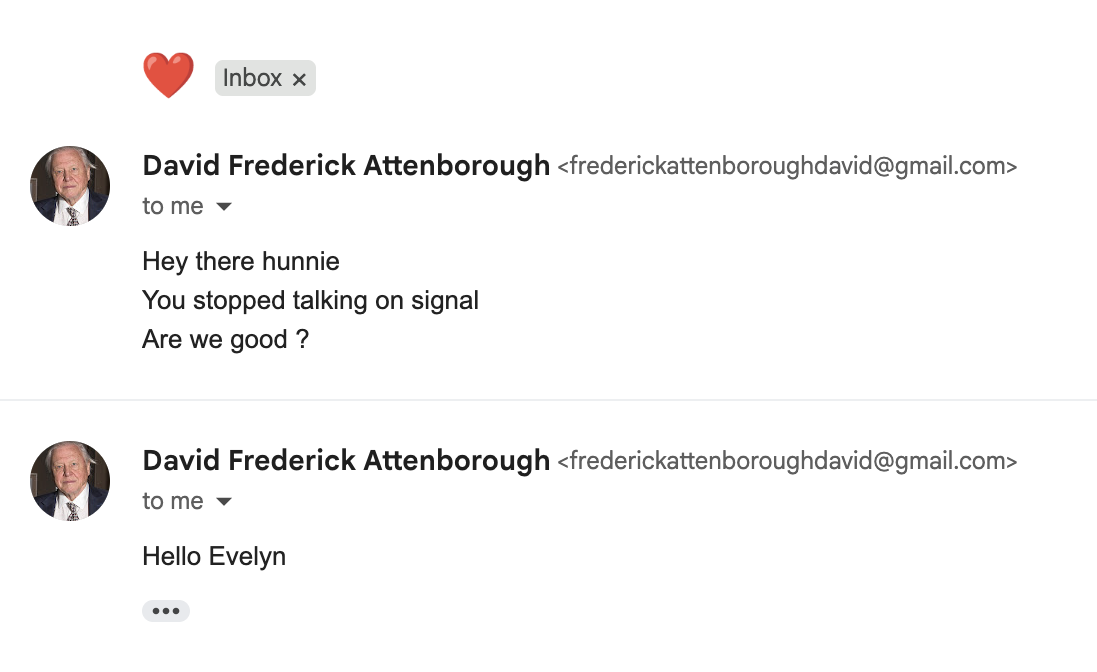
A reporter was contacted by a fake Attenborough via a Facebook account – the fraudster soon moved the conversation to email and messaging app Signal (The Independent)Diane followed two pages that pretended to be Attenborough and openly asked fans to message them privately. Each had been active for several months.
The Independent reported the two pages to Facebook, which declined to remove either, saying it focused on “the most severe cases with potential for real world harm”. The Independent went on to make contact with both pages. They both responded pretending to be Attenborough.
One went on to engage a reporter in an attempted romance fraud which followed many of the steps Diane reported – culminating six weeks later in the fraudster asking for £2,000 via Bitcoin.
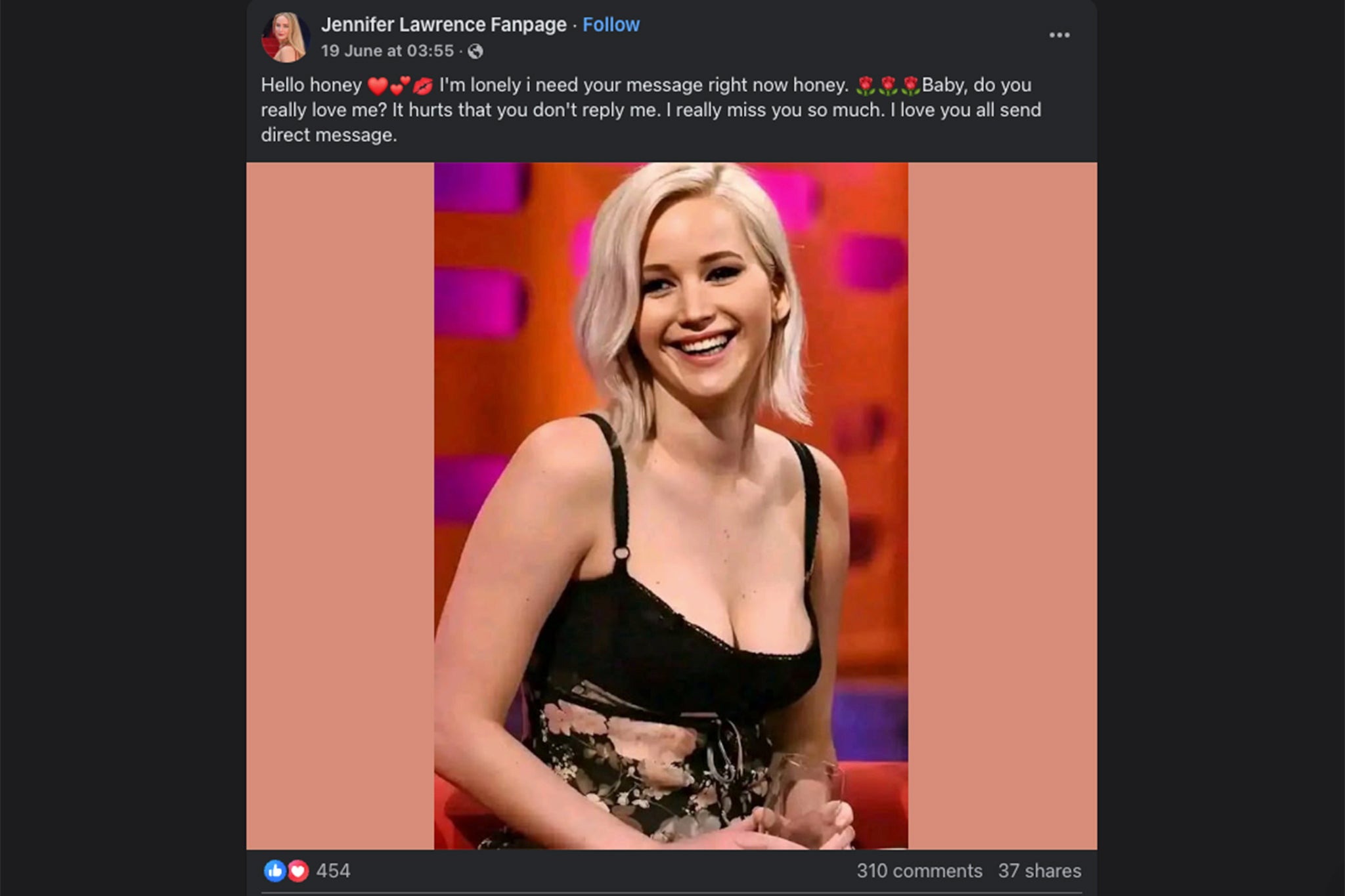
Searches for other celebrities found several fake pages attached to each name. Some were easier to debunk– one fake page claiming to be actor Ryan Reynolds interchangeably used photos of Reynolds and Brad Pitt – and didn’t draw any followers. Others, meanwhile, had tens and even hundreds of thousands of followers.
Facebook says it actively identifies and removes fraudulent content. There is a tool on the site for users to report questionable material.
Users can report a page for posing as a celebrity if the real person has an official Facebook account or page. When The Independent flagged a selection of pages of this type, they were mostly removed, but pages posing as celebrities who did not have an official Facebook presence could not be reported in this way. Such pages could however be reported for showing signs of fraud.
The Independent reported 100 fake celebrity pages which showed clear signs of attempted fraud. Each page had at least 1,000 followers – the biggest had 206,000 – and was recently active.
Of the 100 pages, Facebook said 91 of them did not violate their content policy and would not be removed. It declined to review two of them and didn’t respond to reports on two others. Five were removed. It was unclear what separated these from the others.
open image in gallery
A typical post from a fake Jennifer Lawrence page which had 28,000 followers – Facebook said the page didn’t go against its policy (Facebook)Many of those pages disappeared over the next six months but it was only after being contacted by The Independent that the remaining pages were finally taken down.
During this time many of those that remained active continued to grow a following: an account posing as Denzel Washington gained more than 100,000 additional followers and was still posting several times a day. After The Independent directly flagged the accounts to Meta’s press office, all but one of them was removed.
The UK’s Online Safety Act requires tech firms to take action against illegal activity on their platforms. Meta, Facebook’s parent company, said it uses automated systems to detect and remove fake celebrity accounts.
Simon Miller from Cifas, Britain’s biggest not-for-profit fraud prevention service, said: “Social media and online platforms hold immense power to disrupt this national emergency – by tightening verification processes, cracking down on fake pages, and actively protecting their users.”
Diane’s fraudster had characteristics typical of international fraud gangs. Anti-fraud agents said fraudsters targeting anglophone countries often operate out of West Africa and Southeast Asia, where growing networks of scamming gangs connected to other forms of organised crime have developed. Authorities have found people working these scams are often trafficking victims.
Older people were disproportionately affected by romance fraud, TSB found. Over-55s made up 58 per cent of all cases. The most scammed age group was 65-74 year olds (23 per cent), followed by 55-64 year olds (19 per cent).
A spokesperson for Meta said: “It’s against our policies to impersonate public figures and we have removed and disabled the pages that were shared with us.
“Scammers are relentless and continuously evolve their tactics to try to evade detection, which is why we're constantly developing new ways to make it harder for scammers to deceive others – including using facial recognition technology.”
Telegram did not immediately respond to request for comment.
*Names have been changed to protect identities
LoveSaid offers support for people affected by romance fraud. You can contact them via post@lovesaid.org. Incidents of fraud can be reported to Action Fraud on their website or on 0300 123 2040. If you are in immediate danger contact the police on 999
Comments (0)