
Remember me








With party to party setting different rules candidate vetting is a curious game
It’s a brave assertion - and one almost certainly likely to return to haunt a party leader.
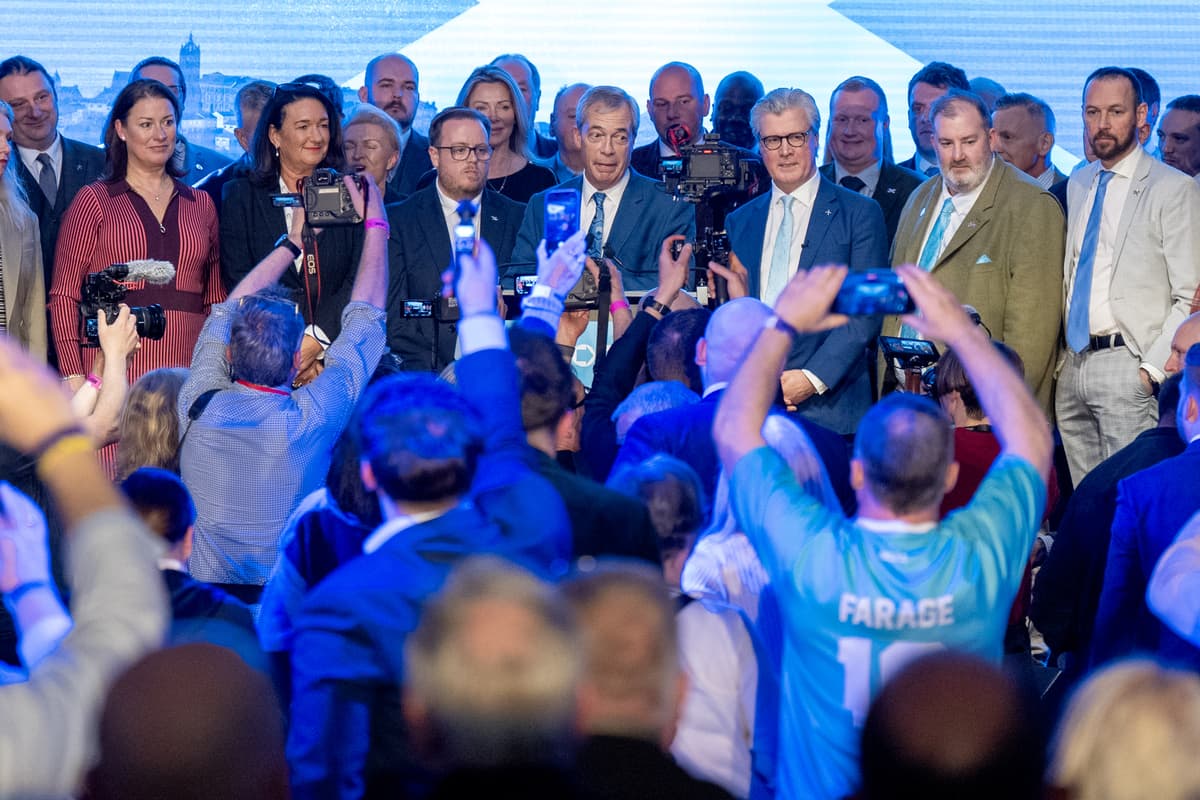
Ahead of announcing Reform’s Holyrood candidates on Thursday, Nigel Farage claimed his party’s vetting process was the most robust in UK politics.
As part of professionalising the party, he said, vetting had been ramped up.
Within 24 hours one would-be MSP had been suspended and several others were seeing unfortunate past incidents exposed in the media.
The SNP has recently lost two candidates following revelations about their behaviour.
Each party handles vetting differently, but is it ever possible to ensure a candidate is squeaky clean?
A senior Reform insider insisted - still - that vetting is extremely thorough.
Across England, the source said, Reform has 5200 would-be councillors to vet for local elections, 96 in Wales and its 129 potential MSPs for Scotland.
“We go through deep levels of vetting,” he said. “But you can’t continue to keep vetting every week.
“Someone could have a perfect record and then later something might emerge.
He said Reform’s is the most stringent because “we are held to higher standards than everyone else.
“It’s just a fact. If one of our guys had a criminal conviction they would get absolutely lambasted in the media, so it would never be worth it.”
So what makes it so robust? “We dig into every part of their lives.

 Councillor Holly Bruce and Patrick Harvie MSP | PA
“We do job checks, work, financial checks, a DBS check, background checks, everything.
“It’s stringent. No other party does it.”
DBS - Disclosure and Barring Service - is specific to England and Wales.
The Scottish equivalent would be a disclosure check from Disclosure Scotland.
The vetting team, the insider says, is “massive”. In double figures, he adds.
“They don’t just go through their social media, they go through their whole lives.”
As well as the background checks, Reform puts candidates through six stages of vetting, including a day of media training with a professional broadcaster.
“We really put them through their paces,” the party insider said.
One of the motivations for being so strict on vetting is that a failed candidate, exposed in the media, can have their “life ruined”.
“And elected politics is sh*t,” he said. “You get sh*t money and it's a whole load of grief so it’s not worth it.”
The SNP did not respond to a request for interview. However, a candidate slipped The Scotsman a copy of the vetting application form - with its near-40-page explanatory notes.
In common with Reform UK, it sets out that the party has “professionalised the process”, which has adapted to now reflect a job application process.
 Reform UK leader Nigel Farage had criticised the iftar event (Jane Barlow/PA Wire)
It warns candidates to be open about anything in their past the media might find interesting and to think of what a tabloid journalist might dig up about them.
A Scottish Labour spokesman describes his party’s vetting process as a “fairly big deep dive”.
“We will investigate everything that is in the public domain.”
Asked about Disclosure checks, as Reform claimed, he said: “Oh we don’t do that.” Why not?
“Our lawyers told us we can’t,” he added. “Disclosure checks are specifically for employers and the party is not technically the employer.”
Honesty is a key component of the vetting process.
Parties don’t have extensive investigative powers so catch all questions such as “Have you ever done anything that would bring the party into disrepute?” require frank answers but give leeway for offloading anyone who isn’t open and violates the candidate contract.
“We use the same people who run our investigations process so they are professional investigators.”
They produce a report and that report is used to question the candidate.
A subcommittee, usually chaired by depute leader Jackie Baillie, interviews the candidates and “they can be asked anything”.
Anyone under investigation by the party becomes ineligible to be a candidate, as happened with now-independent MSP Foysol Choudhury.
Other issues will automatically trigger suspensions, such as being arrested.
Anyone wishing to gain approved candidate status for the Scottish Greens applies to their local branch.
A vetting panel will be formed made up of three people, two of whom must also have approved candidate status.
Branches will support each other so it’s not only friends vetting friends. But it’s a relatively straightforward two-stage process, which also includes a thorough scouring of the would-be candidate’s social media.
Following the vetting panel, three recommendations can be made - either approval, rejection or recommendations to fulfil before approval.
 Scottish Labour deputy leader Jackie Baillie | PA
A Scottish Green insider explained the process as “two-way”.
“The party is looking for people who are good candidates, but also the party is looking to find out what support people needs to be good candidates,” they said.
This means offering support to those in marginalised groups or who face barriers to standing.
Charles Dundas is both the head of the Scottish Liberal Democrats candidates committee and a candidate himself, so he’s seen the vetting process from both sides.
“Well, the LibDems is a party of joiners-in so we all wear multiple hats all the time,” he said.
Mr Dundas is standing in Edinburgh Central, which will see him take on Angus Robertson and Lorna Slater.
The party’s vetting process is a series of “gateways” that, if passed, will allow a candidate to stand at either Westminster, the Senedd or Holyrood, as they see fit.
Firstly, you require a reference from your branch and then candidates pay a “small fee” to cover the cost of the social media background check.
The Lib Dems are trialling new AI software that scans social media back and produces a long report listing keywords linked to hate speech or references to drugs, guns or violence.
It still requires a keen set of human eyes to check the report as the vast majority are false positives.
This can be particularly cringe-inducing for 30-something candidates whose social media spans their school and university years.
“A lot of candidates then use that as an opportunity to be proactive and go back and delete certain things,” Mr Dundas says. No doubt.
Candidates also sit a written exam on Lib Dem policy. The idea of an exam raises eyebrows when other parties are asked if they do it too.
If resits are failed then “we have a bespoke conversation with each candidate and say, ‘maybe there’s another way you can help the party’.”
An assessment day follows where senior party members put them through their paces with tasks such as mock hostile media interviews.
Make it through that and you’re approved to go on the list. “It’s quite a gold-plated process,” Mr Dundas added.
Gold-plated or not, the process can’t catch everything, as all parties know.
“For us,” the Labour spokesman added, “It’s not about the level of depth of the vetting process or having a uniform standard of vetting across parties.
“It's about having a robust process for dealing with things when they go wrong.”
The Scottish Conservatives did not respond to a request for interview.