Remember me



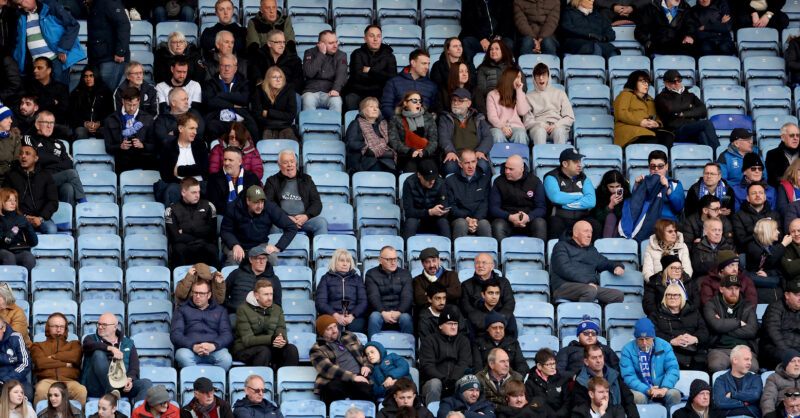






British snobs and baton-wielding police officers in continental Europe have something in common. Both share a low opinion of English football fans. The cliché goes that football is a gentleman’s game played by hooligans, the reverse of rugby. Really, this caricature belongs to another era. English football has cleaned itself up in the process of becoming the world’s most popular cultural form. Now, over a million people attend football matches every week in the UK, with very little trouble given the enormous numbers. But there are nagging fears that the game has lost its soul along the way.
Today (22 March), Arsenal will play Manchester City in Wembley Stadium in the League Cup final. It should feel like a triumphal parade for a country where the football is higher quality, and more globally popular, than anywhere else in the world. Pubs across the country will be packed with happy fans. Wembley’s facilities make it one of the most popular for international tournaments. But there is a growing sense of unease at the summit of the English game that the spirit inside stadiums is deteriorating.
Even players are starting to feel that something is off. Last weekend Liverpool midfielder Dominik Szoboszlai spoke to the media after his team conceded a disappointing late equaliser at home to Tottenham. “I don’t think it helps us that after 80 minutes people start to go home, it doesn’t help us at all,” said the Hungarian. “Everyone is noticing that and when we concede a goal still people are leaving the stadium – you don’t leave when we score. I understand the frustration… but we need them, we need everybody.”
Szoboszlai has a point. Tickets are more expensive than ever before, but fans seem less invested than ever before, too. Premier League stadiums are getting quieter, and more likely to empty out in the final stages of the game as people rush to beat the traffic. It might seem curious, but it makes sense when you consider that the game’s new popularity is changing the composition of who is inside the stadiums. Clubs keep adding hospitality seats to make money. English football is in danger of eating itself, as the gritty authenticity that made it popular is repackaged and sold back at inflated prices, forcing out the old-school fans who helped build the very identity that is now so commercially valuable around the world. I watched Aston Villa beat Lille on Thursday night to reach the quarter-finals of the Europa League. Because of high prices, 5,000 seats were left empty. The morning victory glow was punctured when details of the next game against Bologna were announced: price hikes again.

Subscribe to the New Statesman today and save 75%
It’s striking that this feeling is even true at Szoboszlai’s club, Liverpool. Its stadium, Anfield, is one of the most passionate and historic in the country, and has seen as much glory and sorrow as any other. It is the place where a club repeatedly conquered England and Europe in the 1970s and 1980s while the city around it was going through chaos, strikes, and economic decline. Then, 97 fans were unlawfully killed at Hillsborough. Despite the club’s global size, it has a fiercely cohesive local identity. More recently, teams inspired by raucous Anfield atmospheres powered the club to several trophies under manager Jürgen Klopp. Attempts by American owners to raise ticket prices in 2016 were abandoned after a mass walkout, a genuinely rare example of the sort of fan power that is common in continental Europe.
There is almost never an empty seat at Anfield, but grumblings are growing ever louder that the famous atmosphere is being eroded by “tourists” and “day trippers”, as has long been the worry at other top English stadiums, especially in London. Like other forms of tourism, if too many people seek out authenticity, it can undermine the very culture the visitor wants to see. This is true in overcrowded Mediterranean villages which no longer seem as picturesque as they do on Instagram. It is also true at Anfield, if “You’ll Never Walk Alone” starts being sung more and more quietly, because lots in the crowd do not know the words by heart.
Noisy stadiums are also a critical part of the Premier League’s global appeal and why the game looks and sounds good on TV. They also genuinely help teams win; home advantage all but disappeared during Covid. But the demand for and price of tickets makes it harder for choruses of loud local fans to get into the stadium, let alone sit together and coordinate a song. In Argentina or Germany, organised fan groups stand together, lead singing for 90 minutes regardless of the score, and few people leave early, despite the standard of football being lower than in England.
What can be done? Financial rules could be rewritten to lessen the incentive for clubs to constantly jack up prices if they want to compete on the pitch. If that doesn’t happen, fans could take a leaf out of supporters abroad and organise themselves, voting with their wallets and their feet.
The phenomenal popularity of English football is something to celebrate. But there must be a way to enjoy the success without dampening the atmosphere. Because if the stadiums fall silent, they might never shout again.
[Further reading: Watching Britain’s best Sunday league team]
Content from our partnersRelated