
Remember me


Who and what was covered in philosophy courses at UK universities in the 1950s and 1960s?
.

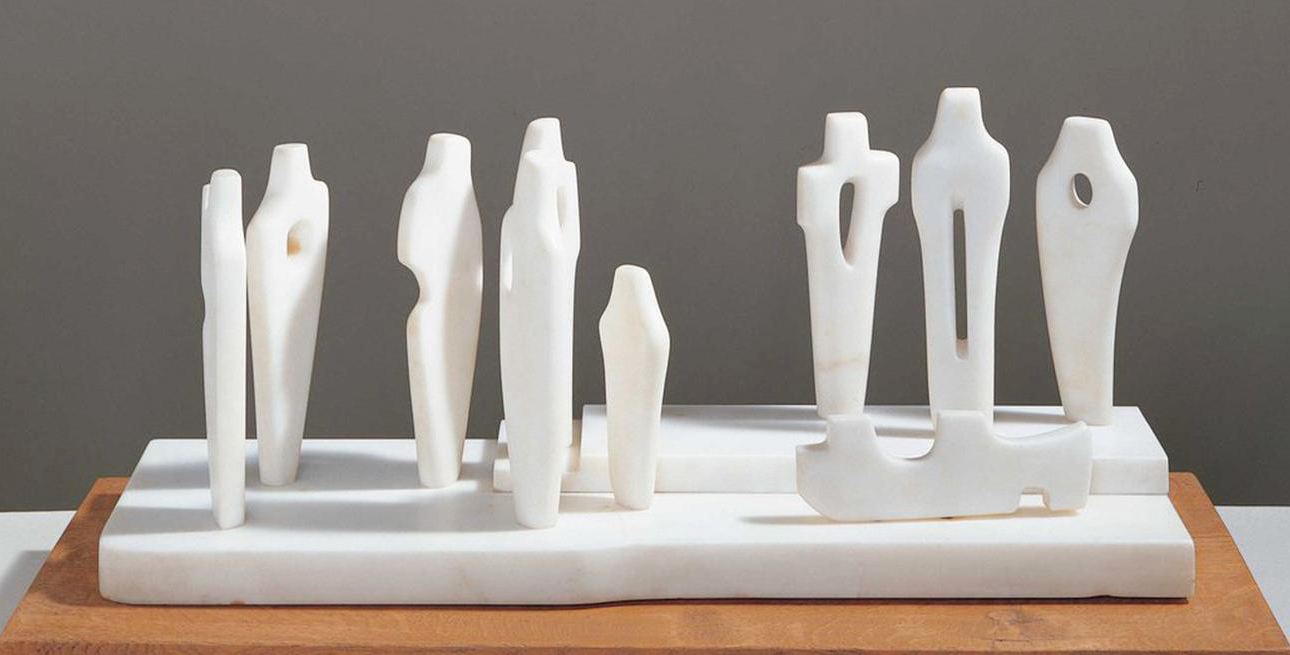
[Barbara Hepworth, “Group III (Evocation)”]
That question comes from Brice Ezell, an independent scholar working on a book “about Tom Stoppard’s dramatizations of core questions in analytic philosophy.”He says:
I’m currently writing a chapter on a radio drama of Stoppard’s called Albert’s Bridge, whose principal character is a young man fresh out of a philosophy undergraduate degree. I’m looking to see if I can find any scholarship and/or information about the history of undergraduate philosophy curricula from that time in the UK (1950s-1960s). I’ve found only a few smattering of things to that end, largely more focused at the primary (and A-levels) than universities.
If you have any information about this, please share it in the comments, as I imagine it would be of interest to more than just Dr. Ezell. Concrete information about the curricula at specific universities will be more useful than general speculations. Thanks!

And in case you’re curious, here’s a bit more about Albert’s Bridge, which was Stoppard’s first radio play, from Craig Burrell at All Manner of Thing:
Albert, a philosophy graduate casting about for gainful employment, joins a crew tasked with painting an enormous steel bridge. He likes the work so much—the feeling of satisfaction at seeing the fruits of his labours, his role in beautifying the skyline, the pleasure of clambering about high above the ground, the gratification of “doing something simple but so grand, without end”—that he decides to adopt the painting of this bridge as his life’s work. And when, as a cost-cutting measure, Clufton city council decides to reduce the number of bridge painters to one, Albert is chosen. Each coat will take eight years to apply, and when he completes one coat, he is to start again.
His young wife, caring for their young child, is concerned about his taking the job:
KATE: If you fell I’d die, Albert.
ALBERT: So would I.
But she does not anticipate the real hazard, for with each passing day that Albert spends crawling over the bridge high above the city, his unusual perspective starts to undermine his relationship to human things.
You can hear the play here.
Comments (0)