After graduating college in 2010, I floated around Iran for a few weeks. I hung around the Turkish Embassy in Tehran and met a lot of Azeri Iranians who were kind enough to show me around the country.
Once, on the drive back from the holy city of Qom, my middle-aged Iranian guide and I talked about politics. By and large, the Iranians I met were patriotic, despite disliking the character of their regime. When I asked my guide about his feelings towards the 1979 revolution and the Islamic Republic, the discussion became unusually tense. “You know, Selim,” he said, “if—God forbid—Iran is ever attacked, we will fight. It is a matter of country and honor. But what happened to Iran [the revolution] must never happen in Turkey.”
After graduating college in 2010, I floated around Iran for a few weeks. I hung around the Turkish Embassy in Tehran and met a lot of Azeri Iranians who were kind enough to show me around the country.
Once, on the drive back from the holy city of Qom, my middle-aged Iranian guide and I talked about politics. By and large, the Iranians I met were patriotic, despite disliking the character of their regime. When I asked my guide about his feelings towards the 1979 revolution and the Islamic Republic, the discussion became unusually tense. “You know, Selim,” he said, “if—God forbid—Iran is ever attacked, we will fight. It is a matter of country and honor. But what happened to Iran [the revolution] must never happen in Turkey.”
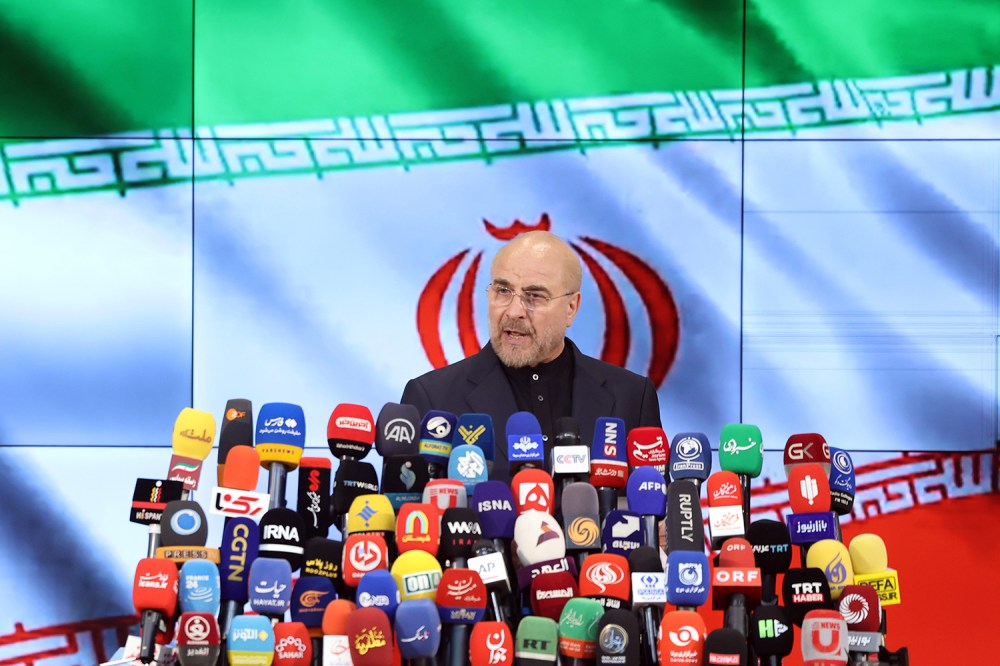
As the U.S.-Israeli war on Iran stretches into its fourth week, people in Turkey are watching with a mix of dread and disquiet as their Iranian neighbors remain stuck between a repressive regime and aggressive foreign powers. Many are wondering: What would we do? Could Turkey’s own political foundations withstand similar threats?
Inadvertently, then, the war is providing Turkey a chance to reflect on security and stability in times of crisis. First and foremost, this has made clear that a regime that loses the trust of its people will be brittle and vulnerable. Here, the contrast between Iran and Israel couldn’t be starker—and should serve as a vital lesson to Turkey’s leaders.
First, take Iran. The Iranian people have long suffered under the rule of the mullahs, but conventional wisdom held that if Israel ever attacked, the country would rally around the flag. Decades of economic and political misery, however, have taken their toll. In recent years, the taboo against Israel seems to have weakened. Many young people seem so virulently opposed to the Islamic Republic that they actually accept Israeli intervention so long as the regime is toppled. Disillusionment with the regime also appears to have helped Israeli intelligence in its efforts to recruit assets within Iran.
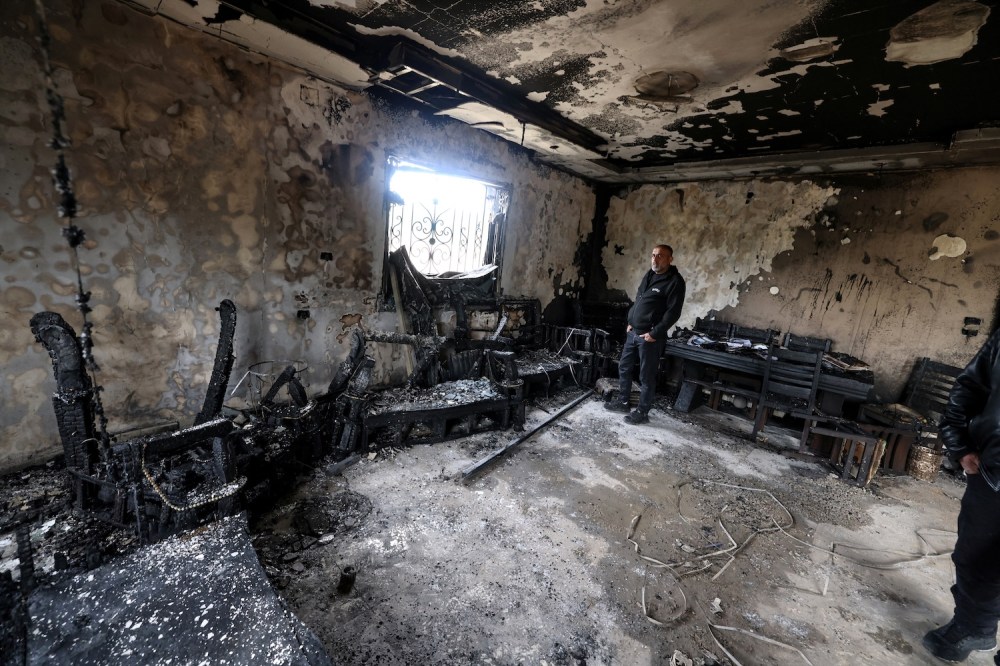
Now, as bombs rain down on Iranian cities, it is too late for the clerical government to mend its relationship with the public. Even if there has not yet been a popular uprising during the conflict, the regime can clearly no longer count on the support of the majority of its own people.
Israel, meanwhile, may be one of the most unpopular countries in the world. But domestically, public opinion is fully behind its aggressive foreign policy—including this latest war. Ninety-three percent of Jewish Israelis support their country’s attack on Iran. Even the country’s opposition leaders are writing op-eds in global publications defending the war. Support among Israel’s Arab citizens is much lower, at 26 percent, but the social order is configured so that this isn’t a problem. Israel is an apartheid state, partly because it wants to minimize the role of non-Jewish citizens and maintain high levels of political uniformity. In this environment, Israel’s Jewish population remains highly invested in its political project. And even though Israel’s current leaders, especially Prime Minister Benjamin Netanyahu, have seriously infringed on the country’s democratic institutions, the decay does not yet seem to have sapped national solidarity; state and society still move together here, not just in war but during peacetime preparation as well.
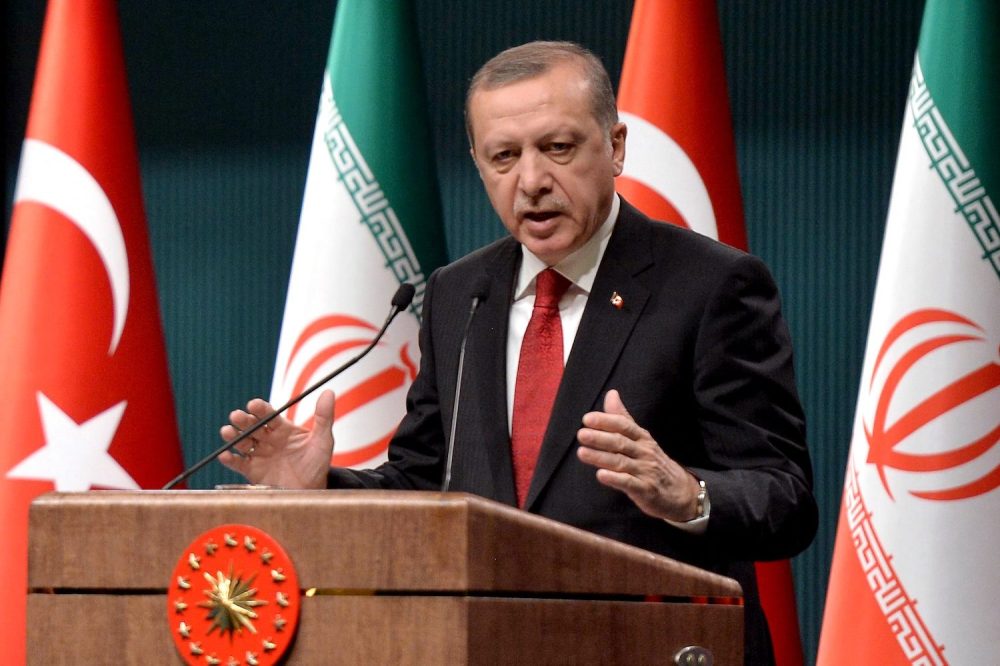
Turkey sits between these two extremes, still more cohesive than Iran’s population but less cohesive than Israel’s. Unfortunately, I believe that it is currently moving in the direction of greater division. To understand why, let’s look at how the country’s two halves— President Recep Tayyip Erdogan’s backers and the opposition—have reacted to the current war.
Over the past two years, Erdogan’s political ecosystem has been alarmed at the effectiveness of Israel’s military campaign across the region. The president’s rhetorical attacks on Israel— calling it a terrorist state and continuously comparing Netanyahu to Adolf Hitler—are reciprocated by senior Israeli politicians, who have portrayed Turkey as the “new Iran” and the leader of a “Sunni axis.”
Amid the anxiety, Erdogan’s base finds comfort in the domestic defense industry. Turn on any mainstream TV channel, and you will see pictures of Turkish rockets, interviews with engineers about air defense, or graphics of the “steel dome” anti-missile system that Turkey is developing.
There are also less exciting but equally important ways in which Turkey has made itself resilient to geopolitical volatility, most importantly through energy diversification and food security. Erdogan often says the world is about to enter a time of greater geopolitical unrest and that he seeks to position Turkey as a country that can weather these storms and emerge as a more powerful force on the other side.
In terms of political resilience, Erdogan considers the Kurdish minority, which has a history of armed resistance, as Turkey’s weak underbelly. This is why he has systematically degraded the Kurdistan Workers’ Party (PKK), not only in Turkey but across the border in Syria and Iraq as well. The “Turkey without terror” project now seeks to conclude Turkey’s war against the group and possibly absorb its political leadership into Erdogan’s ruling block.
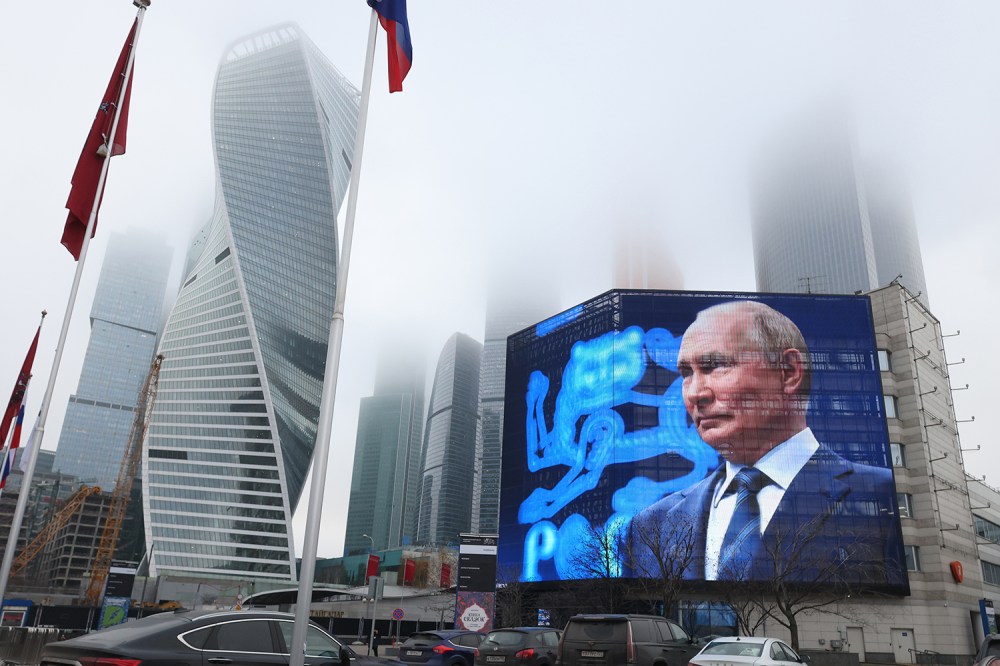
But what about the main opposition? Across the street from where I’m writing these lines in Istanbul, there is a big photo of the president, proclaiming, with reference to the Turkish national flag: “We are one. We are together. We are safe under the crescent and star.” Yet the president also keeps reminding us that we are not “one.” The week the United States and Israel started bombing Iran, the most widely circulated quote from Erdogan was that “if we had listened to those [Erdogan’s opponents] who said, ‘Don’t test rockets, the fish get scared,’ then we certainly couldn’t have achieved any of this.” On TV and social media, pro-Erdogan commentators disparaged members of the Iranian diaspora who supported the bombing of their homeland, seeing in them a version of Turkey’s own “self-hating” opposition. It is common in these circles to see pluralism as weakness. “While we may possess prowess in technology and defense,” pro-government journalist Nedim Sener said on TV, “our leniency toward internal threats is becoming a strategic vulnerability.”
Meanwhile, among Turkey’s political opposition, feelings about the war, and Turkey’s geopolitical positioning, are more complicated. Many anti-Erdogan commentators are still shocked by the level of aggression from the United States and Israel. The martial language used by U.S. Defense Secretary Pete Hegseth and the vacuous promises of “liberating” the Iranian people are met with horror here. At the same time, there is great empathy with the majority of Iranians who are struggling against the brutality of their Islamist regime. Independent journalists such as Nevsin Mengu, who has covered the protests in Iran closely over the last few years, are sympathetic to anti-regime Iranians but are far from supporting the strikes on the country.
This empathy at least partially comes from the opposition’s experience of the Turkish state’s repression. The level of authoritarianism in Turkey is, obviously, nowhere near as extreme as in Iran. Opposition politicians and civil society leaders aren’t forced to perform confessions on video or executed by hanging. They are, however, jailed on bogus charges, especially if they’re very successful.
It was thus grimly fitting that that the trial of Istanbul Mayor Ekrem Imamoglu began amid the U.S.-Israeli attack on Iran. A leading member of the opposition Republican People’s Party (CHP), Imamoglu was preparing to run against Erdogan in the 2028 presidential election and already held a lead in nationwide polls. His arrest may be the heaviest blow against Turkey’s republican tradition since the 1980 coup, and the public has noticed. Only about a quarter of the population approves of Imamoglu’s arrest, and nearly three-quarters believed the protests immediately after the arrest were legitimate. This means that the vast majority of the country, including a large chunk of Erdogan supporters, considers Imamoglu’s arrest unjust.
Erdogan and his Justice and Development Party (AKP) can only claim to represent all citizens if their election victories are perceived as legitimate. Erdogan has often stretched the limits of what is considered “free and fair” but never before to this extent. The jailing of the opposition’s preferred candidate means that the will of half the country has been silenced. This won’t build a stronger “domestic front.” Rather, it could loosen the opposition’s ties to the state and weaken the country’s coherence as a whole.
The result is likely to be seen in electoral dynamics over the coming years. In Iran, for example, 72.7 percent of eligible citizens voted in the 2013 presidential election, and 73.3 percent voted in 2017. Both times, the reform-leaning candidate Hassan Rouhani was elected president. When hopes for reform were dashed, participation dropped to 48.5 percent in 2021 and 39.9 percent in 2024, the lowest in the history of the Islamic Republic. The lower participation went, the more hard-line the winners became.
Turkey’s participation rate in national elections averages around 82 percent, making its citizens some of the most enthusiastic voters in the world. That’s because—historically—Turkish democracy has worked. The ballot box made big change possible, not least in 2002, when the AKP first rose to power. For the last few elections, however, Erdogan’s regime has turned the electoral process into a kind of simulation: It engineers just enough opposition excitement to get turnout but always keeps the reins at hand.
Erdogan will most likely rule the country for as long as he is physically able to do so. The longer he stays on, the deeper the damage to the bedrock of Turkish unity. At a rally this month, CHP leader Ozgur Ozel warned that the arrest of Imamoglu—what he called the “March 19 coup”—was about national security as much as anything else. “Turkey needs to be united, whole, and strong against all threats,” he said. “The one weakening the domestic front, the one draining our energy with internal disputes while there is a ring of fire outside—that is none other than this government. The AKP’s dark order is the No. 1 enemy of fortifying the domestic front and of Turkey’s unity and togetherness.”
On the road back from Qom, my guide told me that Iranians would fight for their country if it were ever attacked, but he also hinted that his connection to the state was fundamentally broken. Turkey’s opposition will remain fiercely patriotic, but as Erdogan slowly weakens the bond between state and society, his appeals to solidarity will grow hollow and the country as a whole will grow weaker. Instead, Erdogan should listen carefully to what his citizens are telling him now—while they are still willing to say it.


Comments (0)