
Remember me



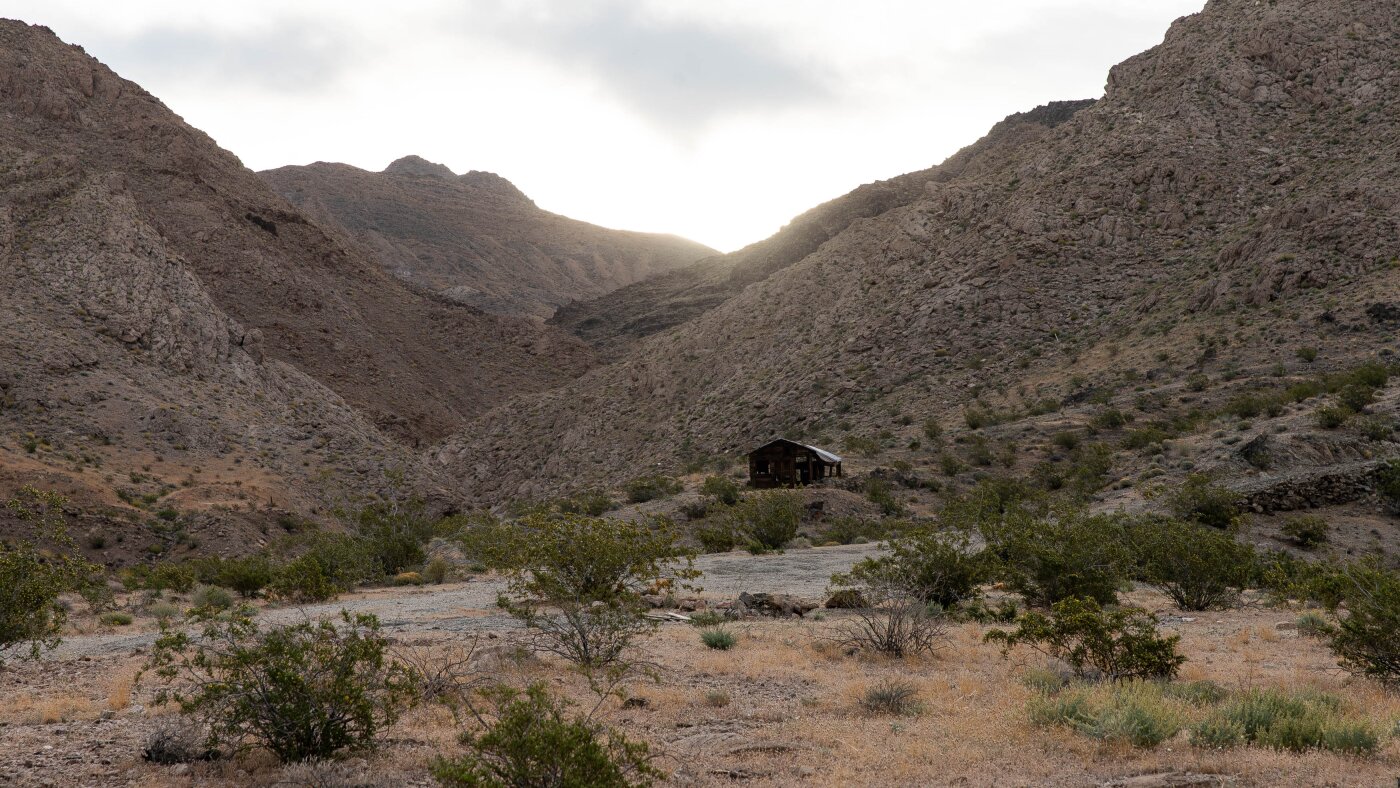





This is the remains of an abandoned mine in the Nopah Range near Death Valley, California on Sunday March 22, 2026. Krystal Ramirez for NPR hide caption
toggle caption Krystal Ramirez for NPRFor more than 15 years, botanist Naomi Fraga of the California Botanic Garden has been trying to collect seeds from the rare Death Valley sage, for safekeeping in a vault of native California seeds. Each time, she's come home empty handed. But this year, with the desert in the midst of a big bloom, she's trying again.
"It's a little bit of a gamble," she says. "But, you know, the plant's having a really good year. I feel hopeful."

A bee pollinates a Death Valley Sage in the Nopah Range near Death Valley, California . Krystal Ramirez for NPR hide caption
toggle caption Krystal Ramirez for NPR
Naomi Fraga examines the flowers of the Death Valley Sage. Krystal Ramirez for NPR hide caption
toggle caption Krystal Ramirez for NPR
This is the view of the large basin surrounding the town of Tecopa, California as seen from the Nopah Range. Krystal Ramirez for NPR hide caption
toggle caption Krystal Ramirez for NPR
Naomi Fraga points out native flora. Krystal Ramirez for NPR hide caption
toggle caption Krystal Ramirez for NPR
Left photo, this is the fuzzy bud of the Death Valley Sage, with a tiny seed beneath it. Right photo, native plants grow in the rocks at the Nopah Range near Death Valley, California. Krystal Ramirez for NPR hide caption
toggle caption Krystal Ramirez for NPR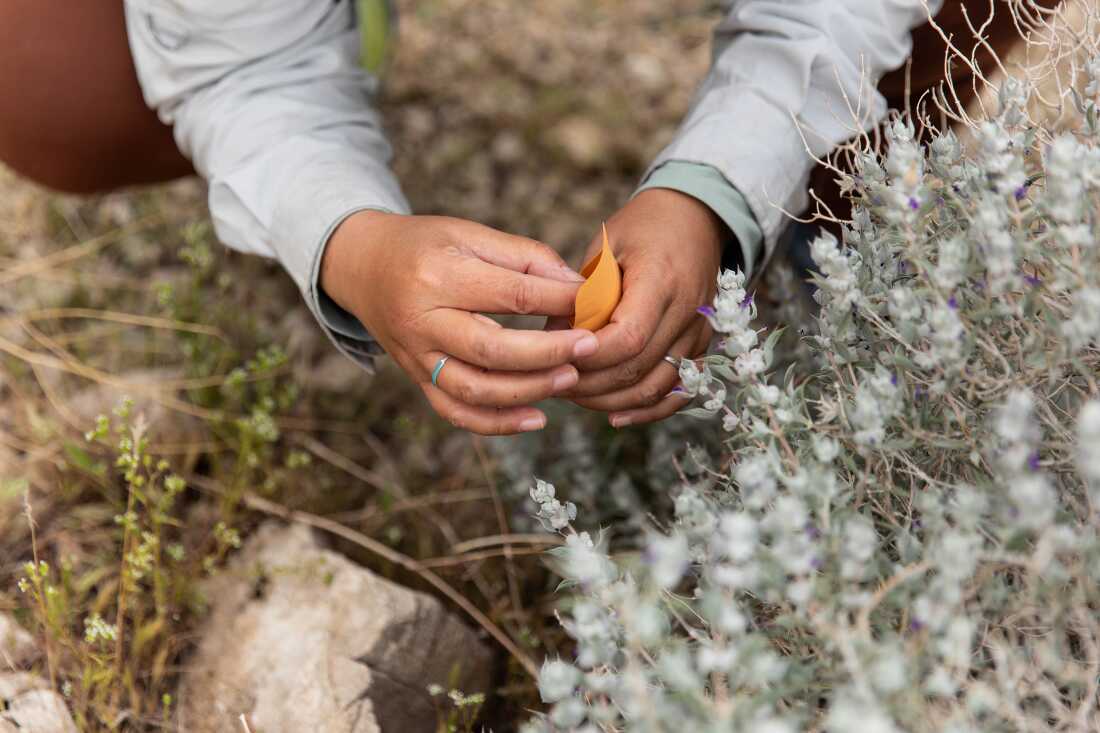
Naomi Fraga packs a Death Valley Sage seed and bud in a coin envelope. Krystal Ramirez for NPR hide caption
toggle caption Krystal Ramirez for NPR
Naomi Fraga says for the first time since 2009, she found the Death Valley sage seeds. Soon, she says, she'll return with a team to make the first big harvest. Krystal Ramirez for NPR hide caption
toggle caption Krystal Ramirez for NPRThe plant has silvery-green pointy leaves, fuzzy buds and striking deep purple flowers. But it is challenging to study and to sample. Fraga says she often has to hike or scramble up mountainsides, or drive on backroads to find it. Very little is known about the plant's pollinator. And in exceptionally dry years, the Death Valley sage doesn't flower at all – meaning no seeds either.
The sage's habitat is mostly protected, within the boundaries of Death Valley National Park. But climate change doesn't respect park boundaries – and could push these plants that are already living on the brink into even more existential peril.
"You can imagine that if conditions were to get more difficult with a changing climate, it's going to be harder and harder to collect seed," Fraga says.
In late March, Fraga headed into the foothills of the Nopah Range, near an abandoned mine, to check on one of the largest populations she knows of. And for the first time since 2009, she found the seeds. Soon, she says, she'll return with a team to attempt the first big harvest of Death Valley sage seeds.

Death Valley is home to many different species including the Sphinx moth caterpillar at the Nopah Range near Death Valley, California.
Krystal Ramirez for NPR
hide caption

The varieties of plant species here are: top left photo, Beavertail Cactus (Opuntia basilaris); top right photo, Brittlebush (Encelia Farinosa); middle left photo, Creosote Bush (Larrea tridentata); middle right photo, Desert Globemallow (Sphaeralcea ambigua); bottom left photo, Pebble Pincushion (Chaenactis Carphoclinia);bottom right photo, Brittlebush (Encelia Fanosa). Krystal Ramirez for NPR hide caption
toggle caption Krystal Ramirez for NPR
Graduate student Mia Manfredi, left, walks the area surrounding the remains of an abandoned mine on the Nopah Range near Death Valley, California. Krystal Ramirez for NPR hide caption
toggle caption Krystal Ramirez for NPR
Comments (0)