
Remember me




4.30am
Kaipara, New ZealandJames Brady, farmerWe’ve got a small dairy farm, north of Auckland. We milk 200 cows and have a small amount of beef cattle and young stock.
We start about 4.30am in the morning – checking cows, feeding, milking and then we do it again in the afternoon. Most of the day is spent tending to stock, moving animals, and we’re busy renewing pastures at the moment.
Diesel is our main fuel – we run two tractors and machinery. We have quad bikes that run on petrol. Each month we use 900 litres of diesel and 200–300 litres of petrol. We’ve just used up last month’s diesel and we’ve been paying about NZ$1.85 a litre ($1; £0.80). Diesel is up $1.03 per litre and petrol up 33c per litre. That means an increase of $1,252 a month, or $15,024 a year.
It’s not just our own fuel supply – it’s the contractors that come into do work, and fertiliser has gone up 40%. It all has huge flow-on effects to our costs.
As a farmer, you have nobody to pass that cost on to. That might mean we’re not investing in the farm, or we have to put off, or delay, maintenance costs. We’re trying to run as efficiently as we can – we’re not just using equipment and burning fuel for the sake of it. But we’re a bit stuck – the cows still need to be fed, we still need to harvest the feed. It’s all essential activity.”
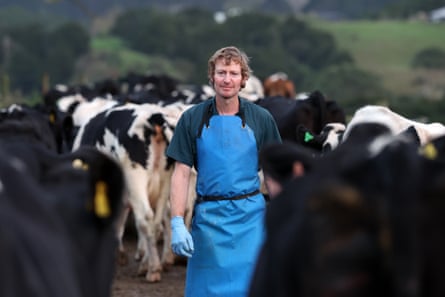 James Brady prepares the cows for milking on his 150-hectare dairy farm where he and his wife, Nicola, milk 200 cows, while feeling the impact of rising fuel costs. Photograph: Fiona Goodall/The Guardian
10:00am
Port Vila, VanuatuDaniel Thomas, 47, bus driverThe threat of higher fuel prices is making people in Port Vila nervous. The government says fuel prices will increase soon and like many people here, I’m worried I won’t make enough to cover all my expenses.
I drive my bus from 6am to 9pm through the streets of Port Vila. I make about A$120 a day ($82; £62) and I’m buying fuel every few days. When prices increase, I could be taking home as little as A$70 a day, and that might not be enough to cover loan repayments and other expenses. With temperatures up around 30C in Port Vila, our buses must run with air-conditioning, chewing up even more fuel.
In Vanuatu, lots of drivers have loans on their vehicles and they don’t know how they will pay the bank every month once fuel gets more expensive. The only option will be to hike fares, and that won’t go down well with passengers in Port Vila. It’s putting drivers in a tough position but without raising fares we won’t be able to survive.
 Daniel Thomas, a bus driver in Port Vila, Vanuatu, says drivers might have to raise fares. Photograph: Antoine Malsungai
10.30am
Sejong, South KoreaKim Hooin, 55, public service workerMy morning starts the same way it always has: alarm at 6:20am in my apartment in Cheongju. But the journey to work has changed. Since 25 March, when the government imposed mandatory vehicle restrictions on public sector workers, I’ve been taking the bus every day. The vehicle five-day system means I can’t drive one day a week based on my licence plate number. Even on days I could drive, I choose not to. Fuel prices have risen so much. I leave home 15 minutes earlier to catch the 7:10am bus to Sejong, the administrative capital 130km south of Seoul.
I listen to music or watch YouTube during the 40-minute commute. Before the restrictions, I drove my own car in 25 minutes. It takes longer now, but I arrive early for work anyway, so there’s no real inconvenience.
I work at a government agency and my job involves managing and driving three vehicles and planning daily transport for officials. We follow the five-day rules strictly and only use vehicles when absolutely necessary, prioritising electric cars. When I arrive at the office at 7:50am, I plug in the government EVs, inspect everything’s OK, and prepare the driving schedule.
The government’s 12-point energy-saving campaign also calls for shorter showers, charging phones during the day, and doing laundry on weekends. At home, I no longer fill the bathtub. It’s not just about showers, it means saving water, so I take light showers instead. I do my washing on weekends anyway. For phone charging, I try to do it during the day, but because of work I need to charge it anytime, day or night.
I think this energy campaign isn’t just about those specific actions. It’s the message of overcoming difficulties together. The measures feel manageable, and Korean people have always had a strong spirit of frugality. We’ve overcome crises before. We endured the 1997 IMF crisis, the 2013 blackout risks, Covid, of course. If the government does its part and citizens cooperate, we can get through this too.
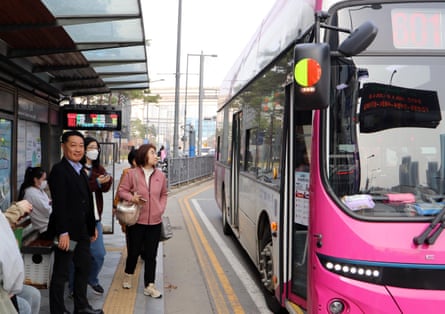 Kim Hooin commutes by bus in Sejong, South Korea.
 12pm
Surin province, ThailandTeerayut Ruenrerng, owner of a mobile grocery truckAt about midday, I return home from my morning selling session. I’ll pass three gas stations on the way and stop at each one. Sometimes I can get fuel, sometimes I can’t. Sometimes they will only give me 300 baht or 500 baht (US$9.15 to US$15.25) worth. At lunchtime I take a break, and sleep for about an hour. I start work at midnight.
If I’m able to fill up a full tank, I can relax because I know I don’t need to search for gas for at least three days and it’s guaranteed I can go out and sell. But if I can’t find any, I start to get stressed and panic about what I’ll do if I can’t get fuel.
It’s very hard to find diesel, and everything has become more expensive. [The war] has impacted the whole system. It has probably affected my profits by up to 20%.
At the market [where I buy my produce] the prices have gone up, and things I’ve ordered sometimes don’t arrive. Say I ordered 10kg of chicken, only 5kg will arrive. It’s hard for me to plan. Even the plastic bags I use to package my goods have gone up in price.
I sell pork, chicken, seafood, fish and processed meat. We also sell vegetables and fruits as well as sauces and condiments. I sell these at about four villages in the morning and four villages in the evening.
I have had to raise some of my prices, even though I didn’t want to, because right now I cannot bear the cost.
We are not only facing the impact of the Iran war, but things have been more difficult ever since the conflict between Cambodia and Thailand. If we don’t have any support, we probably will not last long and we will have to stop doing what we are doing.
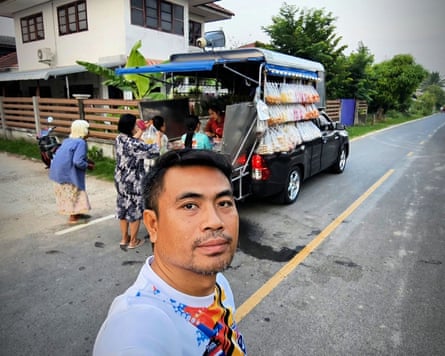 Teerayut Ruenrerng has found it very hard to find diesel and food prices have gone up at the market.
3pm
Kita Senju, TokyoKoichi Matsumoto, sento bathhouse ownerMy grandfather opened Takara-yu (treasure water) bathhouse in the 1930s. Then my father took over, and I’ve run it with my younger brother for the past 35 years, so we’re the third generation. The building is the same and the interior has hardly changed, so it’s also a popular location for TV dramas.
In the old days, when no one had baths at home, hundreds, and sometimes thousands, of people bathed here every day. It’s hard to imagine now. Our customers are mainly older local people who come on foot or by bicycle.
Most bathhouses use oil to heat their water, but five years ago we switched to gas. Either way, heating costs have soared in recent years, and I expect gas prices to start rising again soon if the war in Iran continues.
We and other sento are struggling on several fronts. Fewer people go in for communal bathing these days, the owners are getting old and their ageing facilities cost more to maintain.
The bathing fee (¥550 [$3.45; £2.60] for adults) is set by the Tokyo metropolitan government, so I couldn’t increase admission, even if I wanted to. In any case, fewer people would come, so things even themselves out in the end.
The fallout from the energy crisis hasn’t reached us yet, but I expect gas prices to rise soon. We receive subsidies from the metropolitan government, but it’s still going to be a struggle.
If fuel costs rise and the footfall stays the same, I’ll have to start thinking seriously about the future, not least because I’ll be 76 soon. Some sento are reinventing themselves by offering food and drink and entertainment, but it’s very different for most of the others. They’ll weigh up the pros and cons and a lot will decide they have no choice but to close.
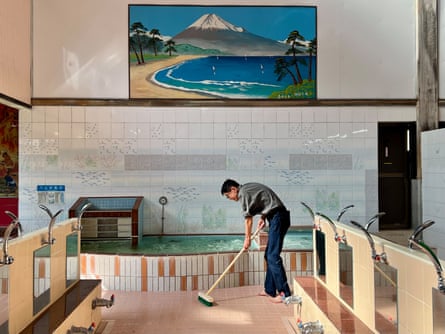 Koichi Matsumoto scrubs the floor of his bathhouse in north-east Tokyo. Photograph: Justin McCurry/The Guardian
4pm
Bondi, SydneyBelinda Morgan, interior designerWe’re pretty scared to be honest. That’s probably the only word to use. I don’t regularly watch the news as a daily habit, but I’m checking every day what’s happening with Iran because it’s something that affects the entire world.
I work in interior design, and the minute these things start to escalate, it’s the construction industry that gets hit. So work goes very quiet for [my husband] Matt as well. It’s frightening, because you don’t know how long it’s going to go on for.
I just started looking for jobs, because I don’t know whether people are even going to want to spend money on renovating right now, or are going to want a designer. I’m pretty much throwing everything at it, which I think is part of the panic setting in.
I’m applying for jobs, like remote jobs with AI, because there’s lots of those kinds of jobs happening at the moment. And I’ve been looking at doing extra marketing [for my business], so spending more money on advertising, hoping I can capture some of those few people out there who are still renovating and want a designer.
We’re trying to cut costs in the family. We’re trying to conserve everything, money, fuel, just not be wasteful.
We are looking at things like, do we drive tomorrow to the swimming lessons, or do we put them on hold until things start to pick up? Normally, we wouldn’t even think about not getting in the car. Generally, I’m thinking “do I need to make this trip?” a lot of the time.
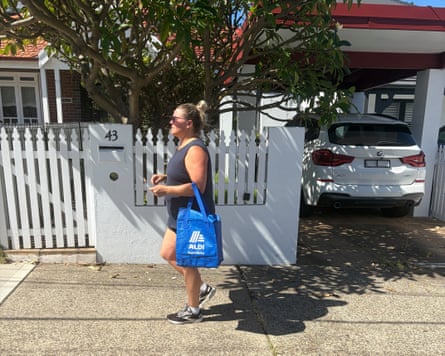 Belinda Morgan, an interior designer in Bondi, fears people will be cutting back on renovating properties. Photograph: Belinda Morgan
7pm
Delhi: Rajesh SinghWorker at an Amazon warehouseAs I get ready for work, my eyes keep returning to the gas stove. I last ate yesterday afternoon, some lentils with chapatis. It has been more than a day. I am very hungry, but there is only enough gas left for four or five meals. I hold back, saving it for worse days. There are a couple of cucumbers and tomatoes. I will cut them, add salt, and eat that, and save one more day.
Even the dhaba (roadside eatery) is no longer what it was. A chapati that cost 10 rupees (10 cents; 8p) is now 12; a plate of dal and sabzi, once 70, is now 160.
I have worked at this Amazon warehouse for five years, unloading packages and earning about 12,000 rupees ($128; £97) a month. The shifts are a minimum 10 hours long, with barely any rest. I was managing, just about. My family back home in Uttar Pradesh did not believe me when I said I had nothing to send. To them, a big company meant a steady income.
Since the second week of March, everything has changed for the worse. A kilogram of gas that cost about 100 rupees is now close to 400. The rent for the room I share has gone up from 4,500 to 5,200 rupees. I had to borrow money from a friend to get through the month.
For two weeks now, I have been eating just one meal a day, mostly a banana with two pieces of bread. The heat is rising, and at work I often feel dizzy, about to collapse. Many co-workers have left and gone back home. Others are preparing to leave. I will wait two more weeks. If nothing improves, I will go back to my family, if I can.”
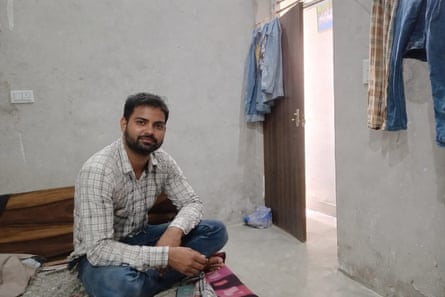 Rajesh Singh has rationed himself to one meal a day for the last two weeks. Photograph: Supplied
10.30pm
BeijingCui Xinming, 37, taxi driverAs soon as I heard that the price of fuel was going to increase on 24 March, I rushed to the petrol station. There were loads of cars queueing to get gas. As someone who drives for up to 12 hours a day, a full tank normally lasts me between two to two-and-a-half days.
I’m a bit concerned that the war between Iran and the US could have an impact on China, but it’s not really something I should be worrying about, because the government will regulate it. For example, this fuel increase was only about 50% of what it should have been to ease the burden on ordinary people. Still, I’m not happy that oil prices are high. I’m only willing to talk to the Guardian because you’re British. I wouldn’t talk to you if you were American, because it’s the US that’s keeping oil prices high.
China will never face a big energy crisis. It has very large oil reserves. And it doesn’t rely only on Iran. It also imports a lot of oil from Russia. We’ve been expanding our partnerships.
Anyway, our country is relying more and more on clean energy. We’re no longer dependent on oil. The government started planning for this years ago. My car still runs on petrol, but in a while these vehicles will disappear. In Beijing, soon there won’t be any petrol taxis left, they’ll all be electric vehicles.
I’ve considered making the switch myself. But more likely I’ll probably quit this job in about a year, it’s just too tiring. I want to go and be a wanderer, just driving wherever the road takes me, maybe becoming a content creator, or travelling around by bike.
Additional reseach by Lillian Yang and Yu-chen Li
Comments (0)