
Remember me




The latest: Iran still has the critical Strait of Hormuz effectively locked down, and oil prices have resumed climbing.
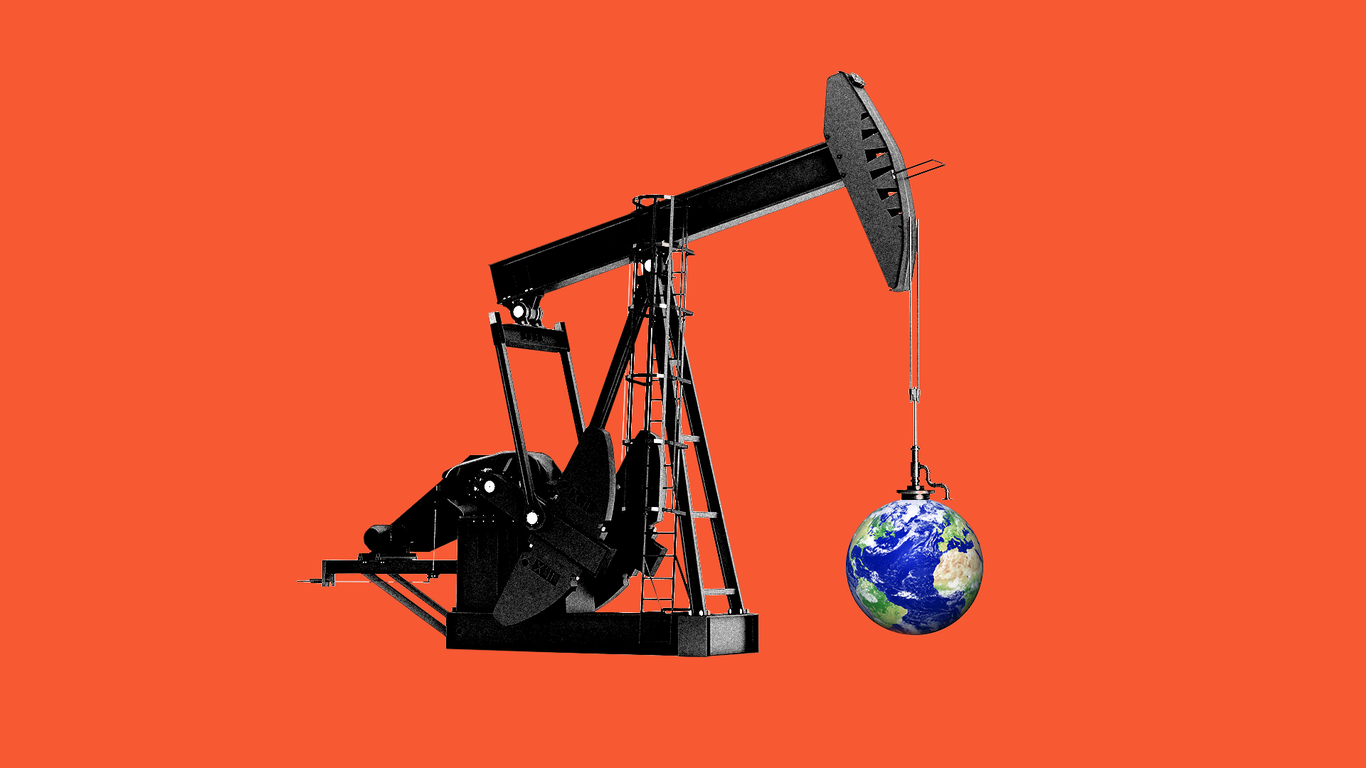
The price of oil is now about 50% higher than before the war began.And prices in the physical market for oil are at record highs as countries and companies compete for increasingly scarce barrels.The big picture: This is "the mother of all supply chain disruptions," Dan Yergin, author of "The Prize: The Epic Quest for Oil, Money and Power" and vice chairman of S&P Global, tells Axios.

 Data: Baringa; Chart: Amy Harder/Axios
Flashback: Such shocks in the past have led to permanent changes in the global economy, and there's little reason to think this one would be different.
The pandemic drove a push among countries to reshore manufacturing. The Ukraine war forced European countries to reduce dependence on Russian natural gas. The 1970s oil crisis got Americans to actually drive small cars.Between the lines: Energy shocks can also shift global power. The Suez crisis — another disruption in a key Middle East waterway — is seen as the moment when the U.K. lost its standing as a global superpower.
Critics wonder if the U.S. is at a similar moment.Reality check: The conflict isn't yet over, and it's still too early to write its ending, much less know the long-term consequences.
Zoom out: The last time a nation or nations effectively wielded oil as a weapon was in 1973, when the Arab members of OPEC blocked exports to the U.S., driving up prices by something like 2,000% over the next decade.
Countries learned the hard way then that the oil market is global, and, like it or not, pain or pressure in one part of the world redounds on everyone.Instead of setting up a future where countries battled over barrels, cooperation was the lesson."Multinational, international cooperation is preferable to individual action," Yergin says.What to watch: The world is learning a different lesson now, former national security advisers from the Obama and George W. Bush administrations, contend in Foreign Affairs.
"In today's fragmented, conflict-prone world, many may draw the opposite conclusion," write Jason Bordoff, former NSC energy adviser in the Obama administration, and Meghan O'Sullivan, an adviser under former President Bush.The bottom line: Iran now realizes that it can wield the Strait of Hormuz as a new weapon, creating a huge rupture in a critical connection for global oil.
The market may now be changed forever.
Comments (0)