
Remember me

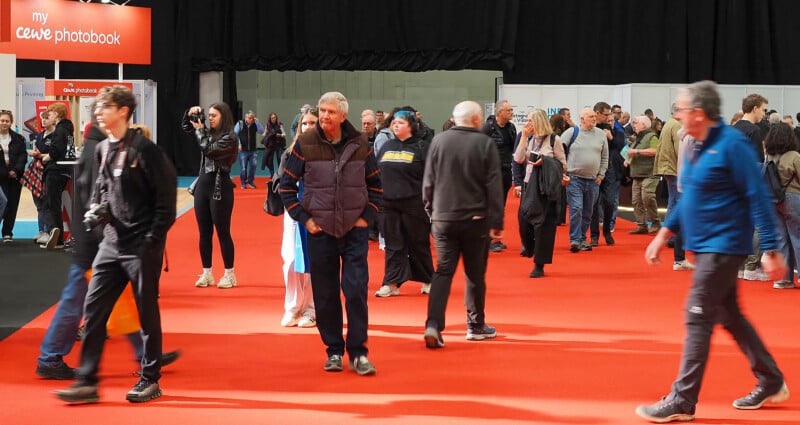
Whether you are an exhibitor or a visitor at a Camera trade fair, there are important things you should know before you go.
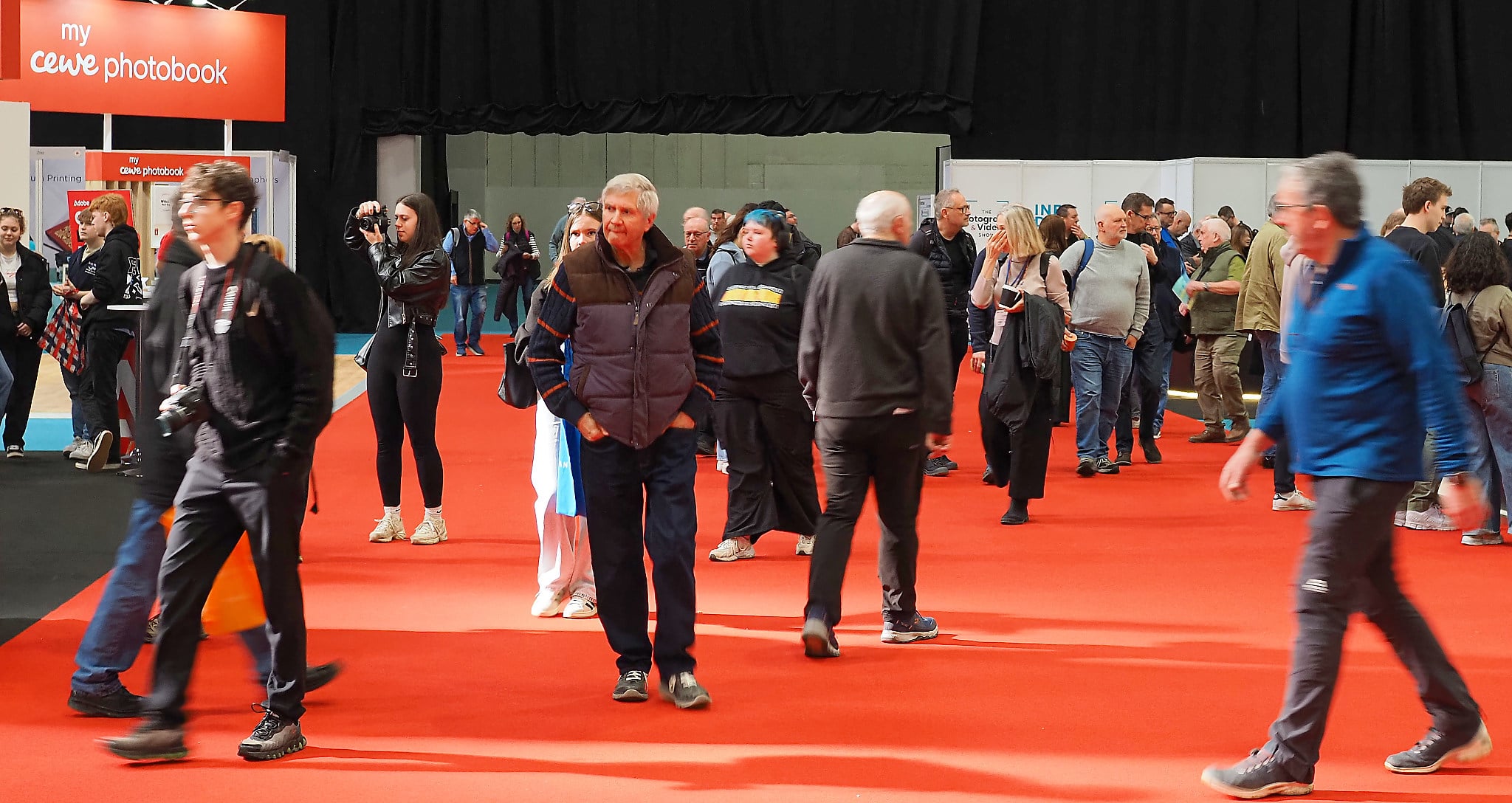
I am typing this after returning from the Photography and Video Show in Birmingham, England. Spanning 440 acres, the National Exhibition Centre (NEC), where it is held, is the UK’s largest exhibition venue. There are a few things I have observed that will be useful to both exhibitors and visitors.
1. Be Prepared to be DrainedCamera trade fairs are busy and noisy places, the very opposite of the environments many photographers prefer. However, although you may feel totally drained of energy after just a few hours there, they are worth exploring. If you are driving there, consider an overnight stay in a hotel. Alternatively, the centers are often served by air and rail services, which are worth considering.
2. Do Your Research FirstIf you are considering buying something at the show, research the products beforehand. Reading through the list of exhibitors and getting in touch with them in advance can yield better personal service, especially if you can get a named point of contact. However, do look around when you are there and be prepared to change your mind. I met one person who was disappointed with their purchase after seeing something better a bit later.
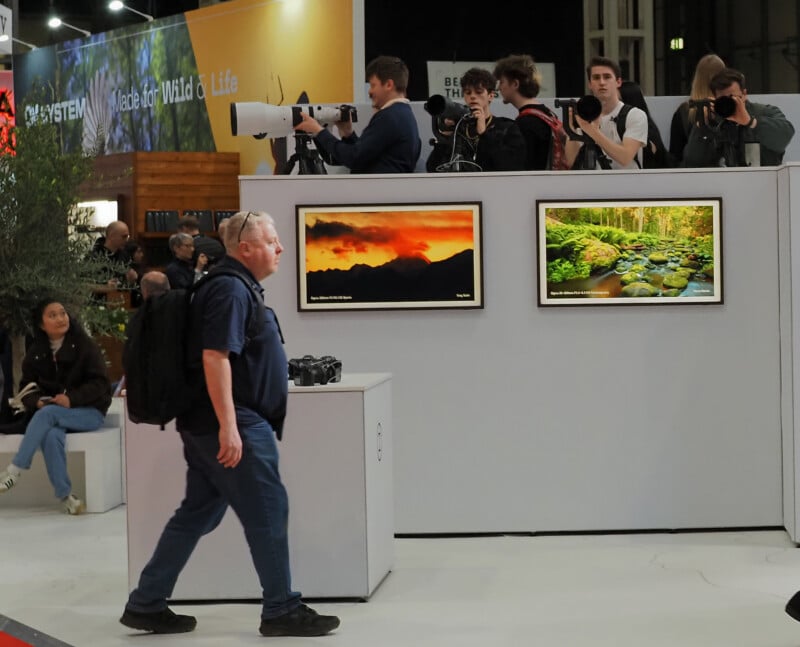
I had a feeling of déjà vu during my visit, despite my last visit to that show being back in 2021. There really was not much difference. The layout was the same, and many of the stands didn’t seem to have been updated. For me, it was worth a visit this year, not least because all the gear manufacturers were displaying their latest models, which are always interesting to see.
However, much of what was on display this year was very similar to what I saw on my last visit in 2021. If cameras were unwieldy and uncomfortable to hold five years ago, then their latest iterations are still cumbersome today. Meanwhile, the cheap, plasticky paraphernalia manufacturers continued to produce similarly low-quality rubbish, while the top brands did the same with their new gear. There were, of course, some good, high-quality products, too.
Will there be many differences next year? Apart from different speakers, probably not.
It’s very easy to wander around, be overwhelmed by all the noise, and be drawn solely to the biggest displays. However, seeing the boringly similar gear from the big brands should not be the only reason to attend. After all, you can pick up those $5000 cameras in your camera shop (if you are lucky enough to have one near you) and handle the low-end, entry-level models in your local supermarket.
I found the most interesting stalls to visit were those run by small businesses. They often had innovative products that set them apart from the big-brand names.
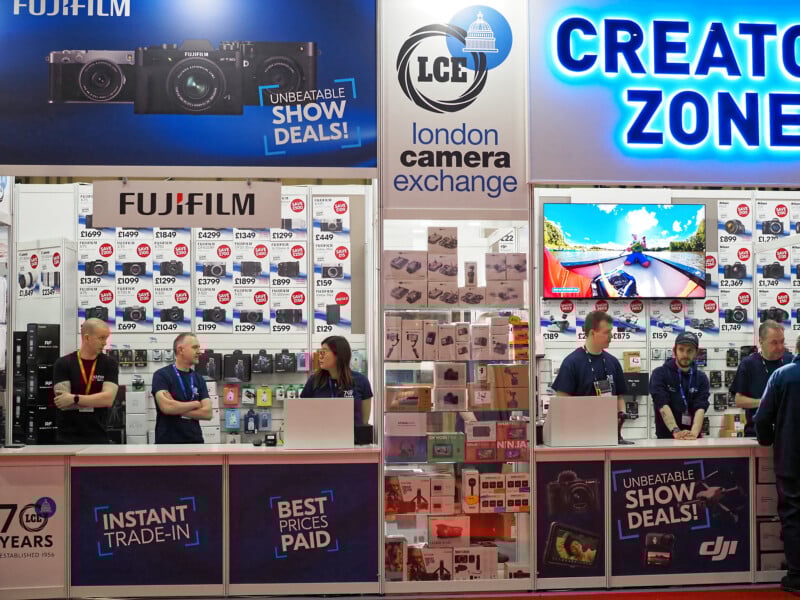
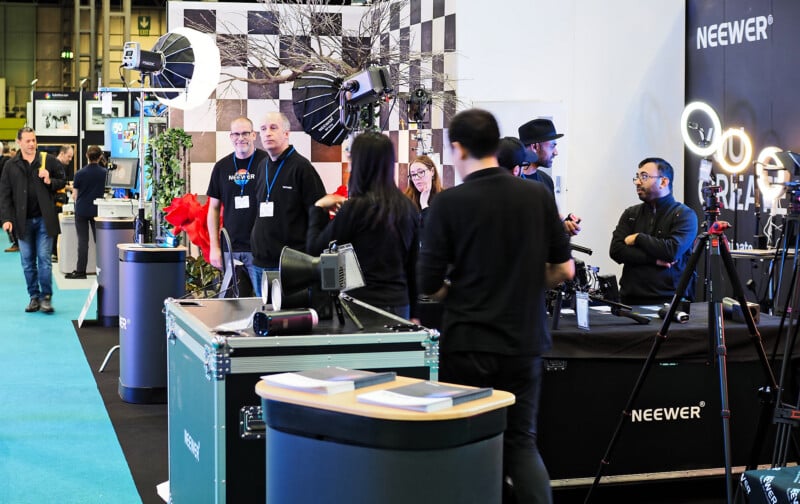
One big difference between this and my last visit was the greater number of Chinese companies in attendance.
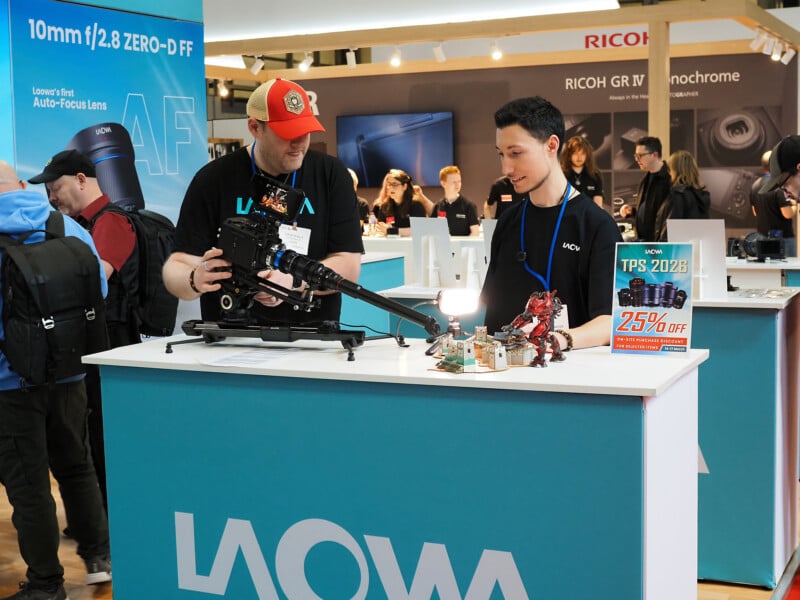
There were some good-quality, long-standing, and familiar Chinese brands in attendance. I perused the Godox, Viltrox, Neewer, Benro, TTArtisan, Laowa, and Insta360 stands there five years ago, and those were the same again this time. However, from Accsoon to Xencelabs, Yololiv, and Zitay, nearly the entire alphabet is now covered by representations from less well-known companies either based in China or with their parent companies there. That list is growing.
Moreover, some major camera brands have manufacturing bases in China.
I hasten to add that there is no judgment here. It’s just a comment on the industry’s changing landscape. Companies in China are producing high-quality gear at relatively low cost and successfully promoting it, which benefits consumers.
If you are heading to one of these events to get your hands on certain gear, you may be disappointed.
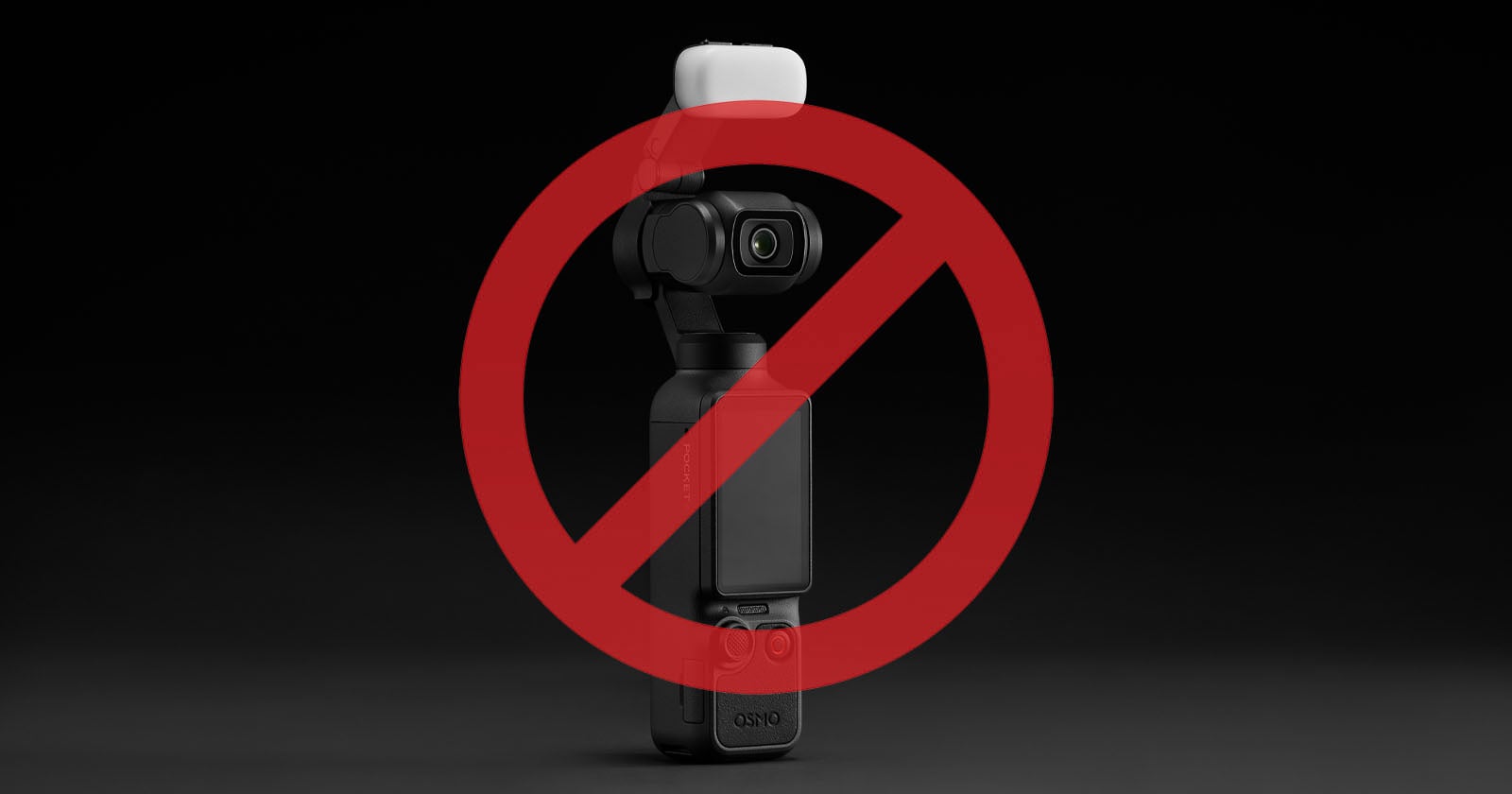
A few of the big Chinese companies were conspicuous by their absence: DJI, 7Artisans, K&F Concept, and SmallRig. But, then again, Leica and DxO were not there either. Maybe, they had all overcome their FOMO and realized that their resources were better placed promoting their wares elsewhere.
However, if your favorite brand is attending, send them a message on social media and post a picture of their stand while you are there. They will be grateful for the extra publicity.
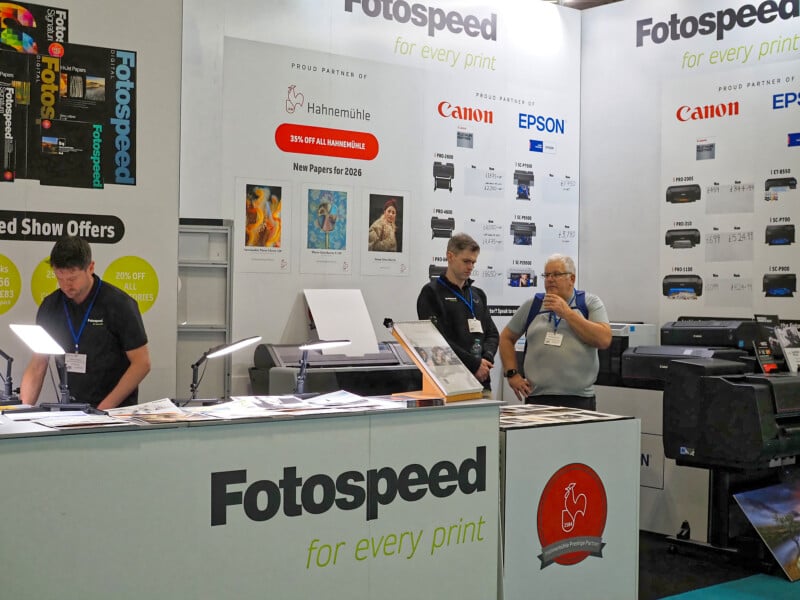 I bought my printer from them, and since then, all my paper has been Fotospeed. I was pleased to discover that the people behind the email conversations I had with them were equally as friendly and helpful in real life. 7. The Varying Attitudes of Exhibitors
 There were vast differences among the exhibitors’ attitudes. I found that nearly all the small businesses and camera makers were eager to engage with the public. Meanwhile, some of the biggest brands were just the opposite.
I hung around the big stands, picked up their gear, and even made eye contact with their staff, but they made no effort to come speak with me. Similarly, some accessory brands were represented not by their own employees but by their local distributors. Those, too, seemed less eager to promote the goods entrusted to them to promote.
Was that lack of enthusiasm due to boredom with the event? As I hinted at earlier, attending these exhibitions every year is a bit like Groundhog Day. Perhaps some of those who turn up every year struggle to realize a passion for the event. Speaking with a photographer friend in the States, she said she had experienced the same at Imaging USA, but with different brands.
That wasn’t the same with every product, though. I stood back and watched some of the stands. I was pleased that those I usually deal with were eager to talk and extol the virtues of their products with a smile. If they had been as dismissive as some other brands had been, then my enthusiasm for them would have waned. But their friendly, positive approach means that I will still happily work with them in the future.
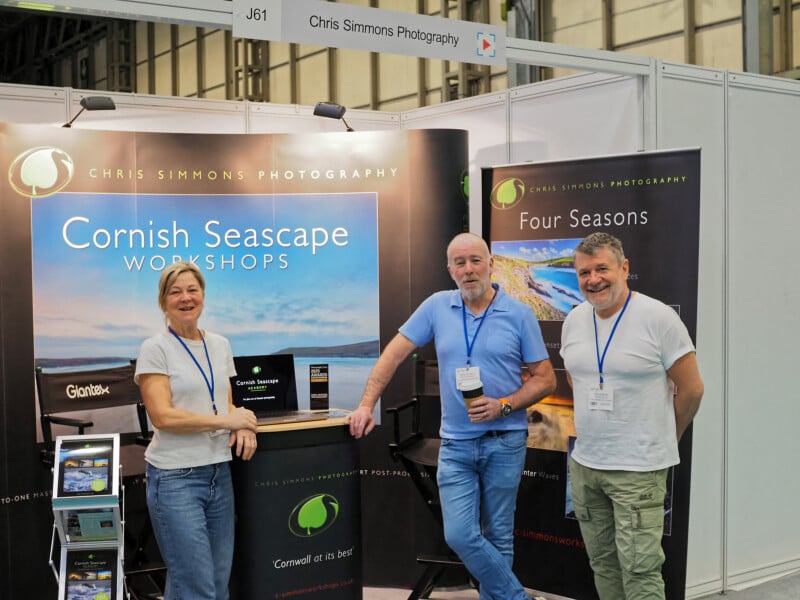 A booth run for Chris Simmons, who runs popular workshops at the other end of the UK from me. Their approachability on the stand reflected well on them, and their engagement with passing clients is a good sign that the courses will be excellent.
There are lessons for the exhibitors to learn. Nevertheless, I can sympathize with all those who manned the stalls. I have done that at large trade conventions, and it is very difficult for introverts like me to connect with so many people. But that is no excuse for those who lacked enthusiasm for their products, even when I tried to speak with them.
8. Suitable ClothingThere was a large difference between the outside and indoor temperatures. Consequently, the clothing I wore for the chilly early-spring air when I walked the mile or more from the hotel to the event was not suitable for the event; I was roasting throughout the day.
Comfortable footwear is essential. I used my running shoes, and my feet didn’t suffer at all. An exhibitor who was staying at the same hotel had been wearing brogues all day and was in agony.
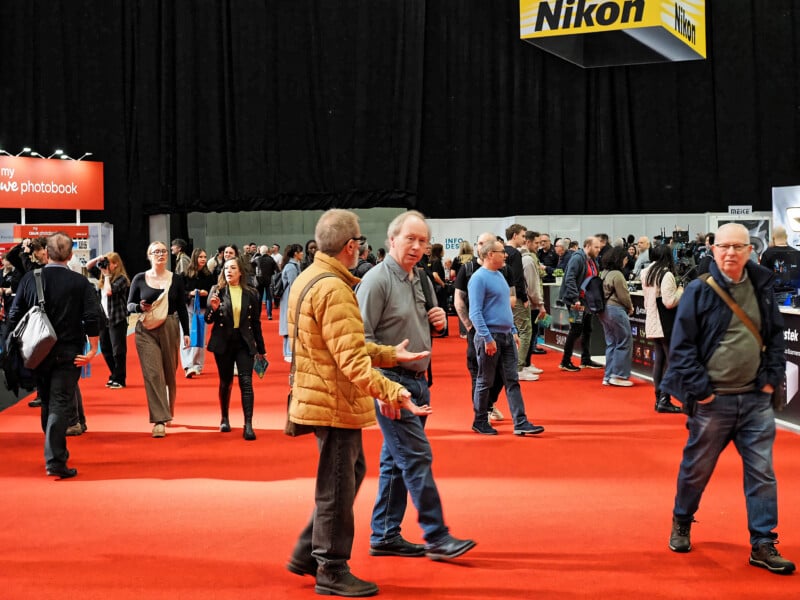
I walked the couple of miles from the hotel to the event on the first day. However, on my second day there, I checked out of the hotel and drove to the car park nearest Hall 5, where the show was being held. Parking was very expensive; nine times more than parking in the town where I live. It would have been better for me to leave my car at the hotel and catch a taxi to the hall.
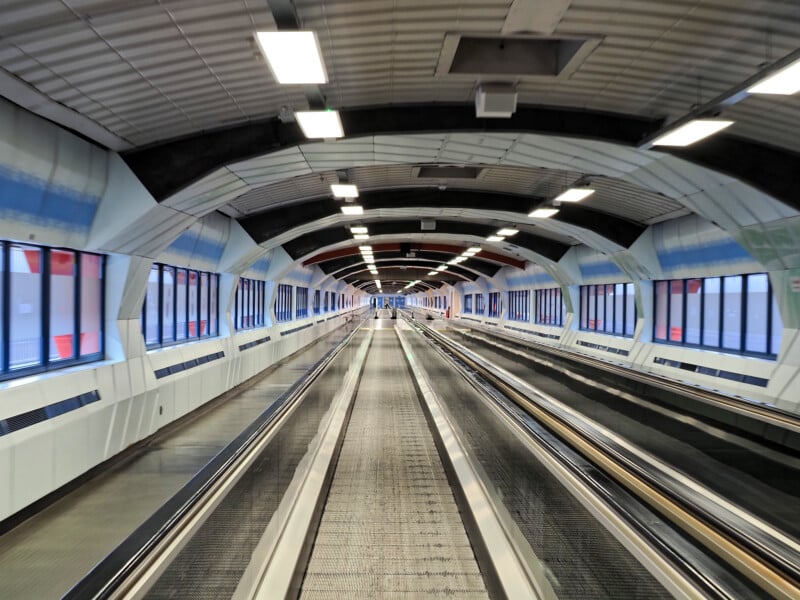 Walking to the event was made a little easier by using the travelators between the halls. 10. Take a bag
 Almost immediately on arrival, I was bombarded with things to carry. I made the mistake of not taking a small backpack with me, which would have been ideal for collecting all the detritus that was thrust in my direction, as well as for putting my too-warm jacket in. The program was essential, and the free copy of a camera magazine and the lens cloths that were thrust into my hand as I walked past one stall were useful.
11. Food and DrinkAs I was staying in a hotel, it wasn’t practical to take a packed lunch with me. So, I had to rely on the fast-food stalls. Because the vendors had a captive audience, the food was expensive and not of very high quality.
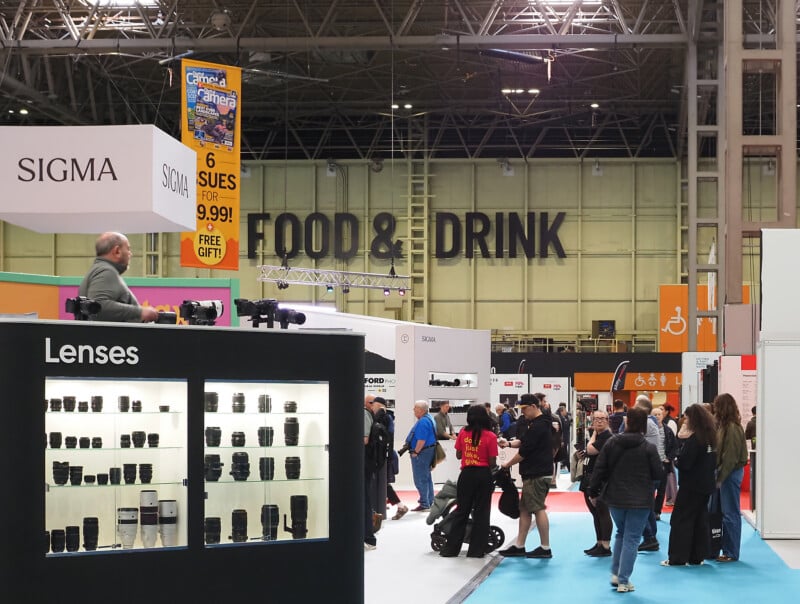
It is worthwhile to look at the list of exhibitors and jot down those you want to see. Programs usually have a map showing where the stands were.
Even so, many people said it was hard to find some of the businesses because the stands were poorly numbered. For example, some of the stands grouped under the letter C were at the opposite end of the hall from others, separated in the middle by the D’s. Furthermore, many exhibitors did not display their stand numbers, making it even more difficult for visitors.
13. The Talks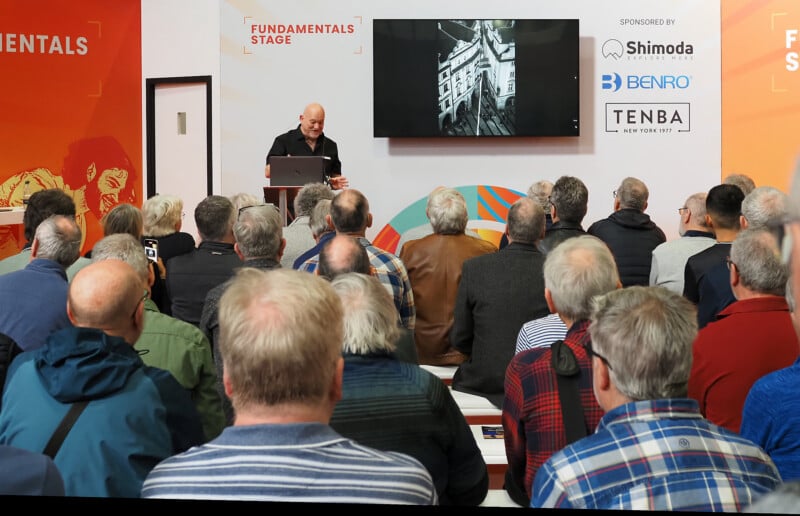
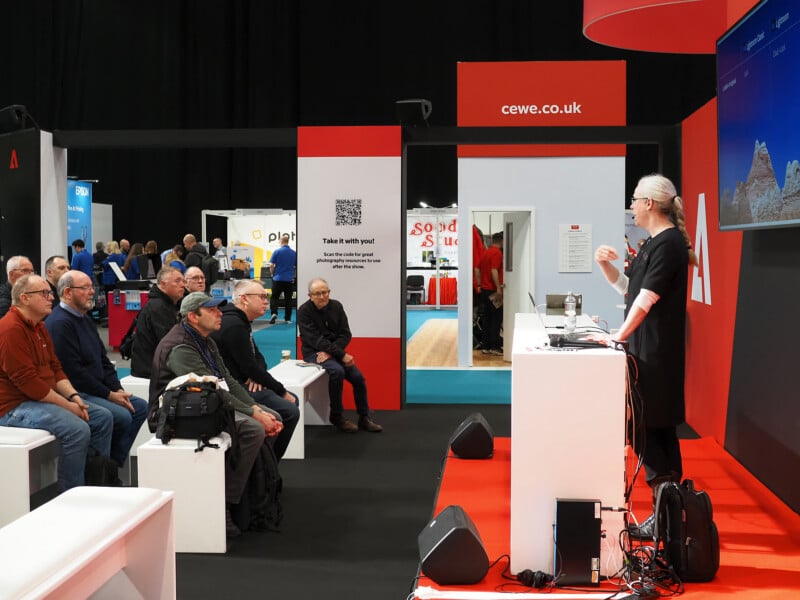
There are dozens of talks by different photographers at these events. It’s worth booking the premium ones in advance. It was worth listening to some of the free talks; one or two were inspiring and offered useful information.
The talks I choose to attend are by specialist photographers.
I guess most landscape photographers will go to talks by other landscape photographers, while those whose main genre is wildlife will listen to wildlife experts. However, I visit those whose specialisms are different from mine. For me, those have the most interesting content because they are so different from what I do. Not only do I enjoy learning new things, but I also sometimes find ideas that could be transferable to what I do.
14. Visit the Camera Stands in the AfternoonIn the mornings, everyone will rush to the camera brand stands. Use that opportunity to visit some of the other stands that will be less hectic. Afternoons are less busy than mornings, and the last day of the show is usually the quietest.
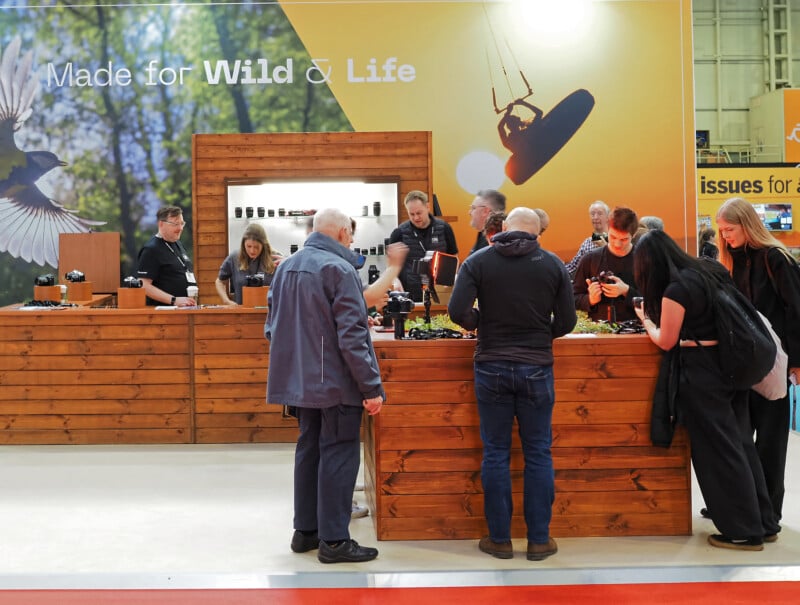 Early in the show, you could not get close to the camera brand stands. However, on the last day it was much easier to get your hands of the cameras. 15. Charitable Organizations
 There will probably be several charities vying for your attention. Be prepared for a hard sell. Those who exhibit at the shows are probably tackling issues that photographers are particularly interested in. For example, I had a long conversation with someone from an excellent charity that helps protect Orangutans in Borneo.
Before you agree to part with your money, it’s worth checking which ones align with your values and deciding whether to subscribe to any of them before you visit their stands.
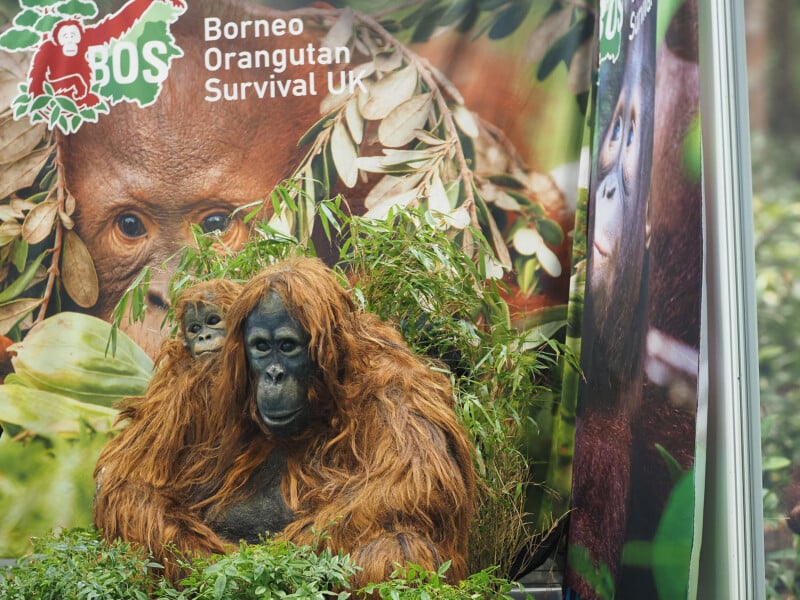 Borneo Orangutan Survival is an international charity that is seeking funds to protect these creatures. Deforestation is reducing the population, and adults are being shot so the young can be taken for the illegal trade in animals. It was one of many chairtable organizations exhibiting at the show. 16. Carry Your Camera
 Take a camera with you. There are often opportunities to photograph models, use studio lights, and try lenses. If you are dithering whether to buy a particular lens, it’s always worth putting it on your camera and checking its balance, how fast it focuses, the quality of the bokeh, and how sharp the images are.
17. Set a BudgetThere are some good deals to be had, and it’s worth thinking about what you should buy beforehand. Even if you have set your heart on a particular camera, flash, tripod, or whatever has grabbed your attention, walk around the other manufacturers’ stands and see what they are offering.
It is worth monitoring prices before you go, as some deals are not as good as they first appear.
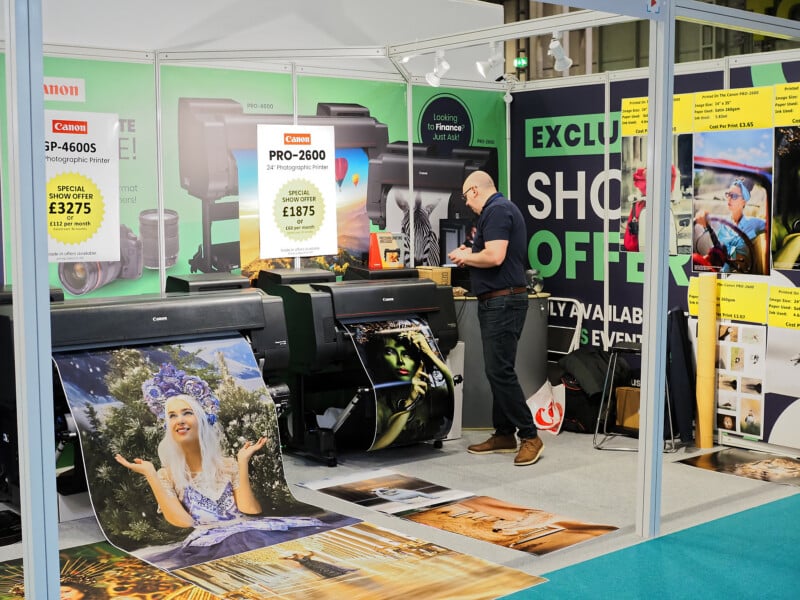
These are usually good-natured events. After all, most photographers are friendly folk. Striking up conversations with people you find standing near you can be an enlightening experience.
Comments (0)