
Remember me









 The excavation site of hte bunker. Image credits: English Heritage.
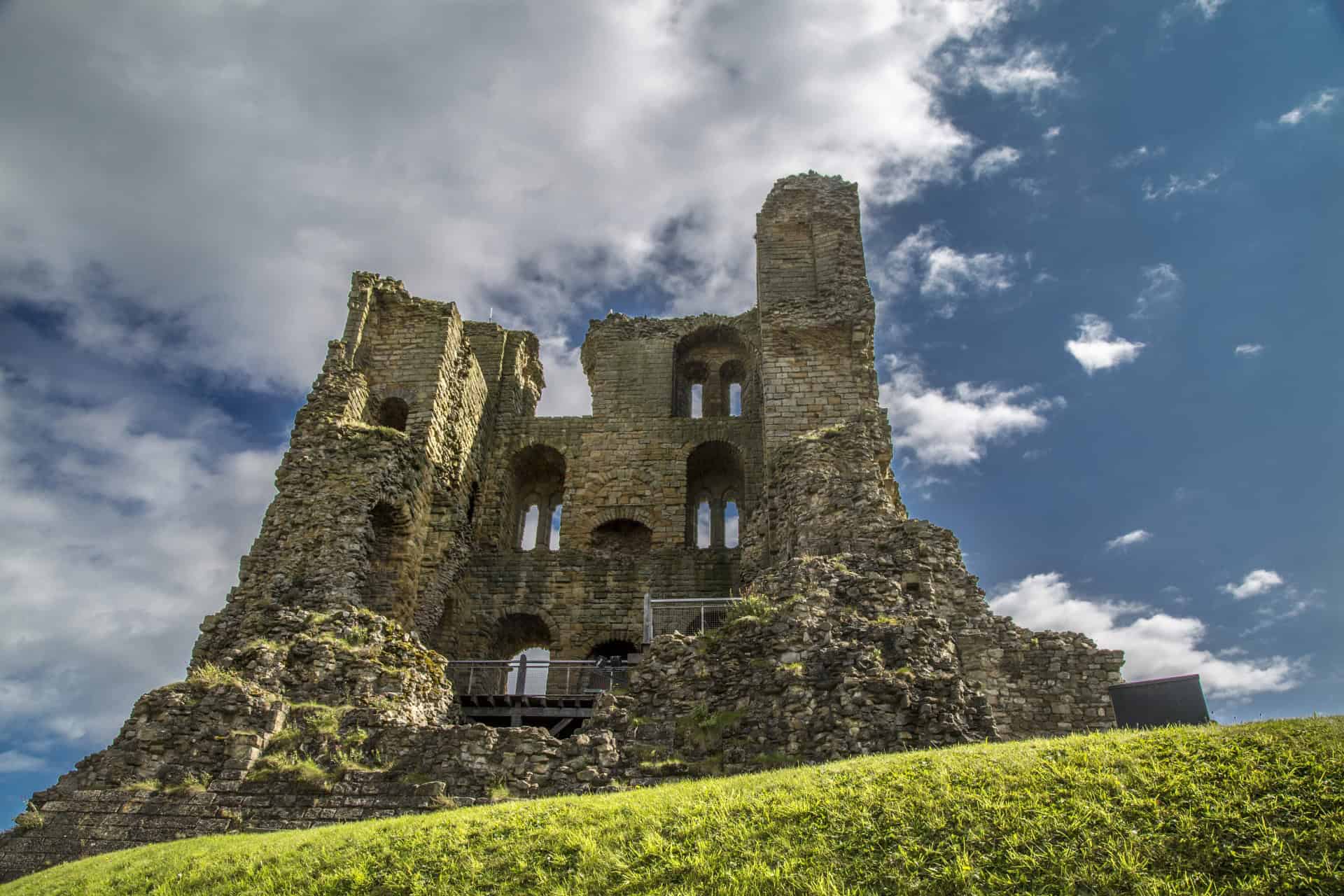
Scarborough Castle is a picturesque medieval royal fortress. It offers scenic views today and in its heyday, would have been a formidable defensive site. Archaeologists have been studying it for years, uncovering an Iron Age settlement, a Roman station, as well as a Scandinavian settlement. The Anglo-Saxons also built a chapel that’s still visible, and there’s even an Icelandic poem about it.
But the new find is a completely different beast: a Cold War-era bunker whose location was apparently just forgotten by everyone.
Cold War LegacyDuring the height of the Cold War, many countries invested in bunker building. They feared a potential nuclear war, and rightfully so, given how close we came to it several times. Albania famously built enough bunkers for most of its population, while Switzerland built the Sonnenberg tunnel, which had enough room for 20,000 people. The UK also had 1,500 Cold War bunkers, including the local oddities, as is the case with Scarborough castle.
The bunker was commissioned by officials from the Royal Observer Corps in 1963. However, the bunker was sealed off in 1968 and its precise location was simply forgotten.
 Some of the bricks still had the stamp noting where they were produced. Image credits: English Heritage.
English Heritage, the NGO that manages historic sites like Scarborough Castle, knew it was somewhere in the area, but didn’t know exactly where. So, they surveyed the area using ground-penetrating radar and uncovered its location. Then, after a couple of days of digging, they managed to explore it.
The archaeologists note that this was a “brick and works” bunker, meaning the shape of the structure was built in brick first, and then concrete was poured. Several bricks even have visible stamps noting where they were manufactured.
The main access shaft was capped in concrete and the bunker was flooded almost to the ceiling. However, this waterlogged environment actually preserved some of the features, including the wooden door and a clean coat of paint, English Heritage notes.
Flooded But FabulousThe ventilation shaft was broken, so archaeologists just excavated it completely. Then, after they emptied the debris, they introduced a flexible CCTV camera, which is how they saw that the bunker was flooded, but also found that some internal structures and fittings survive.
×
Thank you! One more thing...Please check your inbox and confirm your subscription.
 CCTV camera showing the extent of the flooding. Image credits: English Heritage.
The bunkers were barebones, featuring bunk beds where up to 60 staff could sleep, basic communications systems, and a sewage ejector unit. They had an air-filtering system and a water supply reserve that lasted just 30 days. They had no heating, as Royal Observer Corps volunteer Tony Metcalf remembered: “There was no heating at the posts, it was just a concrete shed that you’re sat in, and after five or six hours. It got pretty cold in there.”
 Interior of a bunker with similar specifications. Image credits: © Mick Garrett (CC BY 2.0).
All Royal Observatory Corps bunkers were designed in a pretty similar fashion, and they were surprisingly common.
“Wherever you lived in Britain, you were probably no more than a few miles from an ROC post — yet few people knew they existed,” Kevin Booth, head of collections at English Heritage, said in a statement. “It seems strange to have a Cold War bunker built inside Scarborough Castle, but in many ways, it is a perfect location: this headland has been an observation post for thousands of years, from a Bronze Age settlement to a Roman signal station, medieval castle, World War I gun battery and, here, a 1960s concrete bunker watching for Armageddon.”
A New Legacy for an Old Site Scarborough castle. Image in public domain.
For now, there’s no good way to clean up the bunker and open it up to the public, but it adds a new dimension to an already impressive site.
Scarborough Castle (or rather, what’s left of it) is still a popular site today. It’s unclear if the bunker will ever be visitable, but as English Heritage points out, it’s remarkable to bring its story back into the public mind after 58 years buried.
Scarborough Castle now has an Iron Age, a Roman, a Scandinavian, an Anglo-Saxon, and a Cold War legacy. That’s quite a history.


Comments (0)