
Remember me







Paraguay has launched the “Paraguay Investor Pass,” a new residency-by-investment instrument that grants foreign investors direct access to permanent residency through one of three investment channels. The announcement, made today during an official mission to Brazil, comes the same week Argentina’s Minister of Economy confirmed that his government has been working on a golden visa of its own for more than a year.
Minister of Industry and Commerce Marco Riquelme and National Director of Migration Jorge Kronawetter jointly presented the program. Under the new instrument, investors can qualify for permanent residency, bypassing the temporary residency stage entirely, through one of the following routes: A $150,000 investment in tourism projects, or a $200,000 investment in either the stock market or the real estate sector.
A faster lane, with tax sweetenersThe Investor Pass represents a structural upgrade to Paraguay’s existing investor residency architecture. Until now, the country’s primary fast-track to permanent residency ran through the SUACE (Sistema Unificado de Apertura y Cierre de Empresas) program, which requires that applicants establish a company and commit to investing at least $70,000 over ten years.
That program survived the November 2025 overhaul of Paraguay’s migration law, which eliminated the country’s popular $5,000 deposit-based route to permanent residency.
The new Investor Pass raises the capital threshold further but diversifies qualifying asset classes beyond business formation, adding tourism, equities, and real estate. Riquelme framed the program as a response to investor demand for flexibility.

“Many wanted to establish residency first and then develop their projects. Today we are enabling that possibility, linking residency to investments that also boost key sectors such as tourism, finance, and the real estate market,” he said.
The minister also flagged a tax incentive bundled into the program: A reduced dividend tax rate of 8% for residents, down from 15%. Processing will be largely electronic, with physical presence in Paraguay required only for the issuance of the national identity card (cédula).
“The system is simple, transparent, and offers ongoing support,” Riquelme added, noting that the Ministry of Industry and Commerce (MIC), through SUACE, and the Immigration Department will guide investors throughout the process.
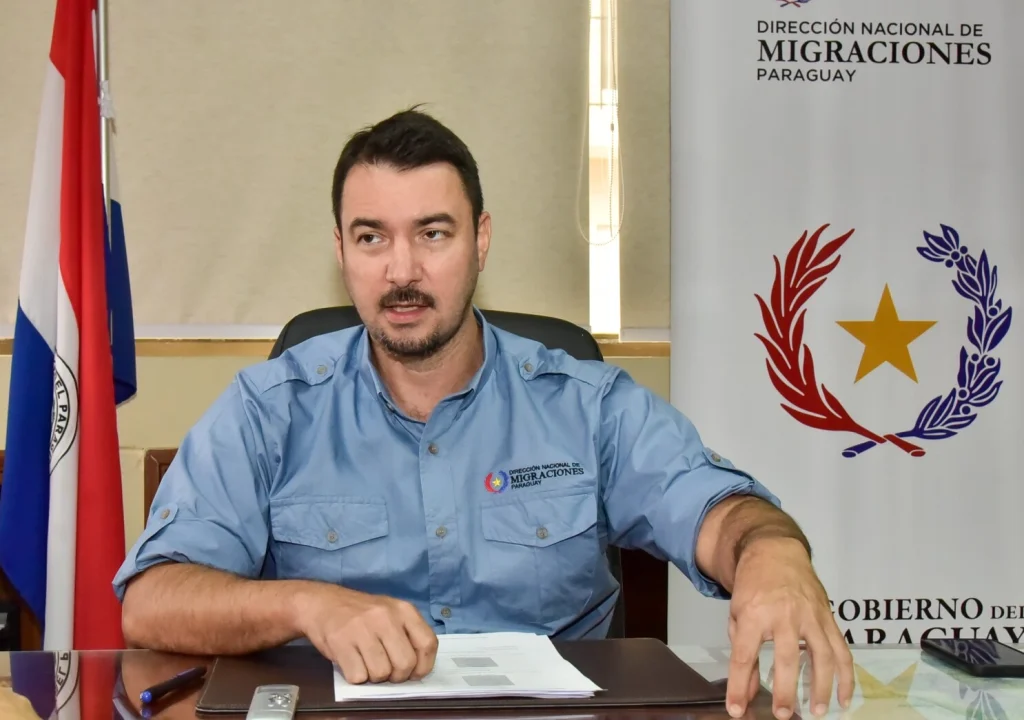 Jorge Kronawetter
Residency demand is surging
Jorge Kronawetter
Residency demand is surging
Kronawetter offered numbers that illustrate the pace at which Paraguay is growing as a residency destination. Official data show that applications went from 28,000 in 2024 to more than 47,000 in 2025, with a projection of 80,000 for 2026. Brazilians represent the majority of applicants.
A near-tripling of residency demand in two years is extraordinary by any standard, and it predates the Investor Pass. The new program is designed to channel a portion of that inflow toward higher-value, sector-specific investment.

Kronawetter described the legal basis as a “special law” that permits direct permanent residency grants to investors, eliminating the prior requirement of holding temporary residency. “We are aiming to attract individuals who are truly committed to the country, simplifying procedures through a single window that integrates immigration, tax, and identification processes,” he said.
Operationally, the Investor Pass expands the categories of the existing MIC-issued investor certificate, which previously covered only traditional productive investment. Tourism, stock market, and real estate options are now included alongside the original business-formation route.
Market reactionPhilippe May, CEO of EC Holdings, a Singapore-headquartered investment migration firm that has offered Paraguay as a destination since its founding, welcomed the development.
“EC Holdings has been working with Paraguay since its inception and we are delighted to see our friends there making the right move,” May told IMI. “This is exactly what tax-conscious HNWI need after the collapse of the golden visa programs in the Latin-European countries Spain and Portugal.”
May positioned Paraguay within a short list of Latin American contenders. “For HNWI it’s between Paraguay, Panama, and Uruguay now when it comes to PR,” he said, adding that Paraguay compares favorably even to the United States EB-5 program on taxes, cost of living, community safety, and availability of agricultural land.
On Europe, May was more blunt. “Legacy destinations like Portugal and Spain officially prefer illegal immigration of undocumented asylum seekers over high-roller investors,” he said. “They have ruined their golden visa programs, and it’s only a matter of time until the attention of the wealthy in Asia shifts from Latin Europe to Latin America.”
The reference to Spain and Portugal reflects real program closures. Spain formally ended its golden visa in April 2025, while Portugal eliminated real estate as a qualifying investment category in 2023 and has progressively tightened its remaining golden visa routes.
May also pointed to structural advantages he sees underpinning Paraguay’s competitiveness: The country’s landmass exceeds that of both Germany and Japan, it is self-sufficient in food and energy production, the residency-to-citizenship period is only three years, and there are no capital export restrictions. He cited the guaraní’s relative stability and the country’s political continuity, noting that the Colorado Party has held power for decades.
David Lincoln, Founder and CEO of Lincoln Global Partners, offered an even more bullish assessment.
“$200K into property in a booming real estate market, in exchange for direct permanent residency in the Southern Cone is fair value. Arguably undervalued for what you get on the ground,” he told IMI. “Prices will rocket. Early movers win.”
He characterized the Investor Pass as the product the market has been waiting for. “Paraguay has been Latin America’s most talked-about residency hack for the last 12 months,” he said. “The demand was already here before today’s announcement. Today, the investment migration industry finally gets a program to get behind.”
On the existing pathways, Lincoln was less complimentary. “The previous (still existing) residency programs don’t match the reality on the ground,” he said. “A $70K investment into an active company for PR, temporary residency for showing up: Too easy on one side, hard to assess economic impact and no real product on the other.”
The temporary residency pathway, Lincoln expects, will be phased out over time in favor of the new instrument.
For Lincoln, the Investor Pass is one data point in a broader repricing. “Moody’s investment grade. BVPASA on Nasdaq infrastructure. Peña’s industrial mandate. And now a direct-to-PR investor route,” he said. “Paraguay is repricing itself in real time.”
Both claims hold up. Paraguay secured investment-grade ratings from Moody’s (July 2024) and S&P (December 2025), and the Asunción Stock Exchange (BVA, formerly BVPASA) has been operating on a Nasdaq-powered trading platform since January 2026.
Where the Investor Pass sits in the marketParaguay’s new program occupies an unusual position. At $150,000 to $200,000, it falls well above the SUACE’s $70,000 threshold but well below the entry points for most European golden visas. Greece’s program, the most affordable remaining EU option, starts at €250,000 and reaches €800,000 in major urban zones.
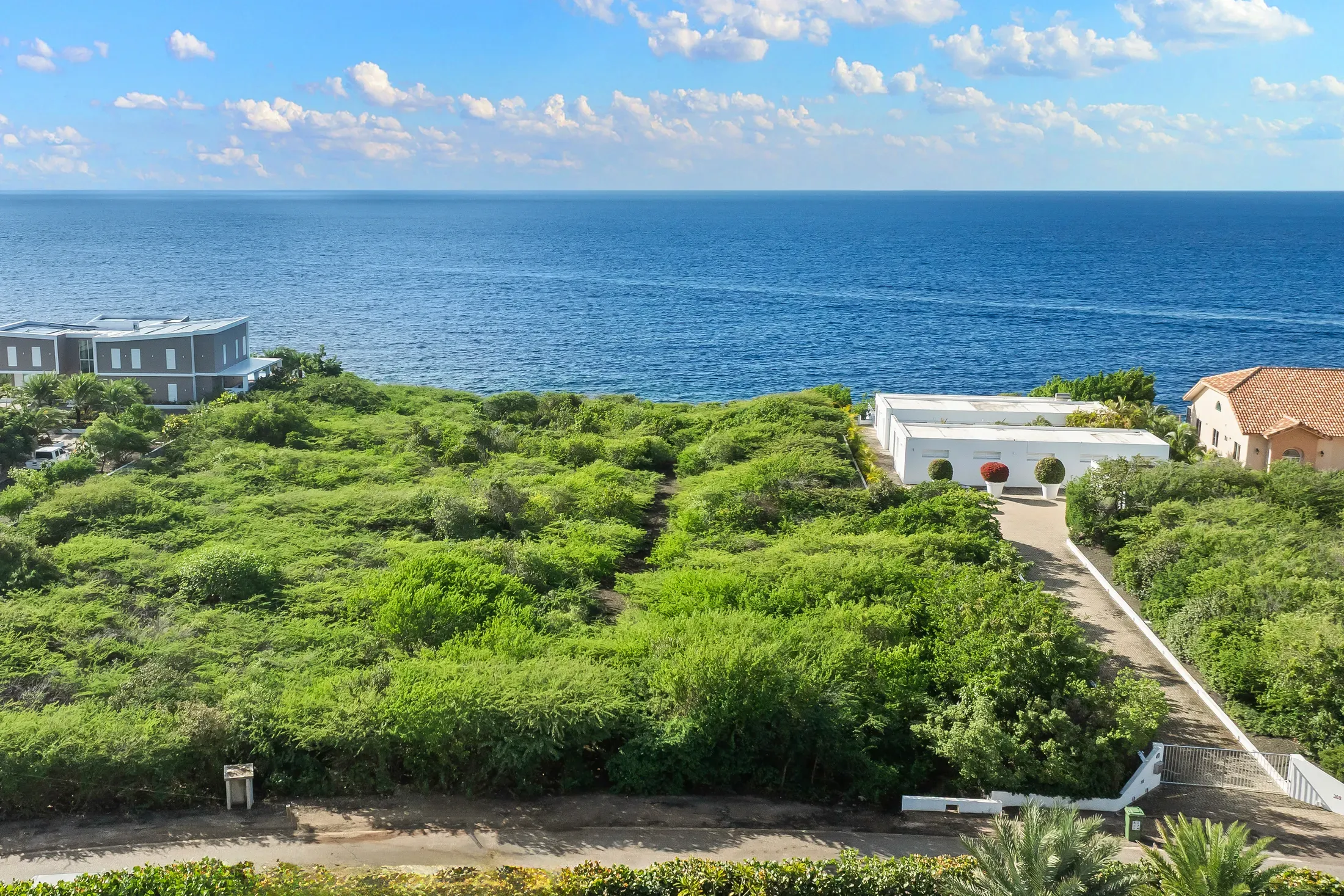
Bence Zákonyi, PR Executive at Discus Holdings, put the price point in local terms. “To understand what $200,000 means in Paraguay, consider this: An exceptional family mansion of 1,200 square meters on Calle Montevideo, 25 meters from the main street of Asunción, built in 1920, costs exactly that,” he told IMI. “The real estate market is exploding. People who knew Paraguay before simply do not recognize it.”
On applicant demographics, he noted that while Brazilians dominate current volumes, Paraguay has traditionally attracted Europeans as well, “particularly from Germany and the Netherlands.”
He described the territorial tax system as the program’s central draw. “Foreign-source income is simply exempt. Combined with the affordable cost of living and real estate prices, it is a combination very few jurisdictions can match.”
In practice, the country applies a territorial tax system with a 10% flat rate on domestic-source income and no tax on foreign-source income. Citizenship eligibility arrives after three years of permanent residency, with no requirement to renounce existing nationality.
The Investor Pass also sits within Mercosur, one of the world’s most permissive supranational settlement blocs. Paraguayan permanent residents gain settlement rights across member states, including Brazil, Argentina, Uruguay, Bolivia, Colombia, Chile, Ecuador, and Peru.
Argentina: Golden visa confirmed in the worksAcross the border, Argentina’s Minister of Economy, Luis Caputo, confirmed this week that the government has been developing a golden visa for more than a year. The confirmation came in a social media exchange on X with Congressman Juan Ignacio Fernández, who had posted about the need for Argentina to create an investor visa to compete for global capital.
“We’ve been working on this for over a year,” Caputo wrote in a repost of Fernández’s message. “The global interest, as you rightly say, is enormous.”
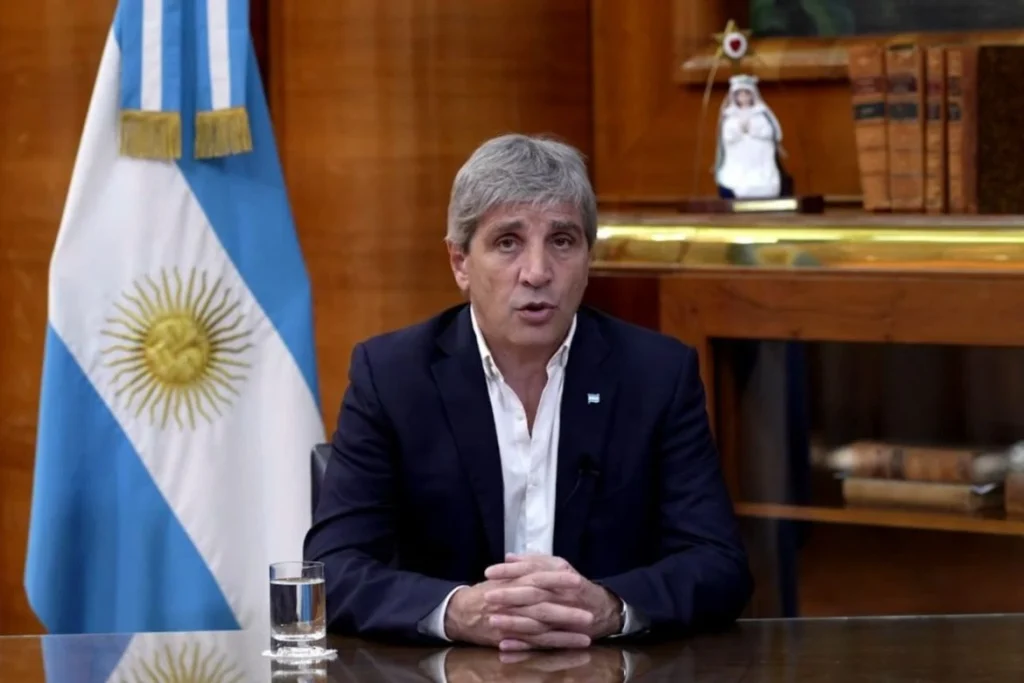 Luis Caputo
Argentine media reports describe the initiative as granting residency, with a pathway to citizenship, to foreigners who invest approximately $500,000. Whether this refers to a distinct residency-track product or to the broader investor immigration architecture that includes Argentina’s citizenship by investment (CBI) program (formalized through Decree 524/2025 in July 2025) is not yet clear.
The CBI program’s own timeline has been complicated by the recent cancellation of its master agent tender following challenges from two losing bidders.
Comments (0)