
Remember me

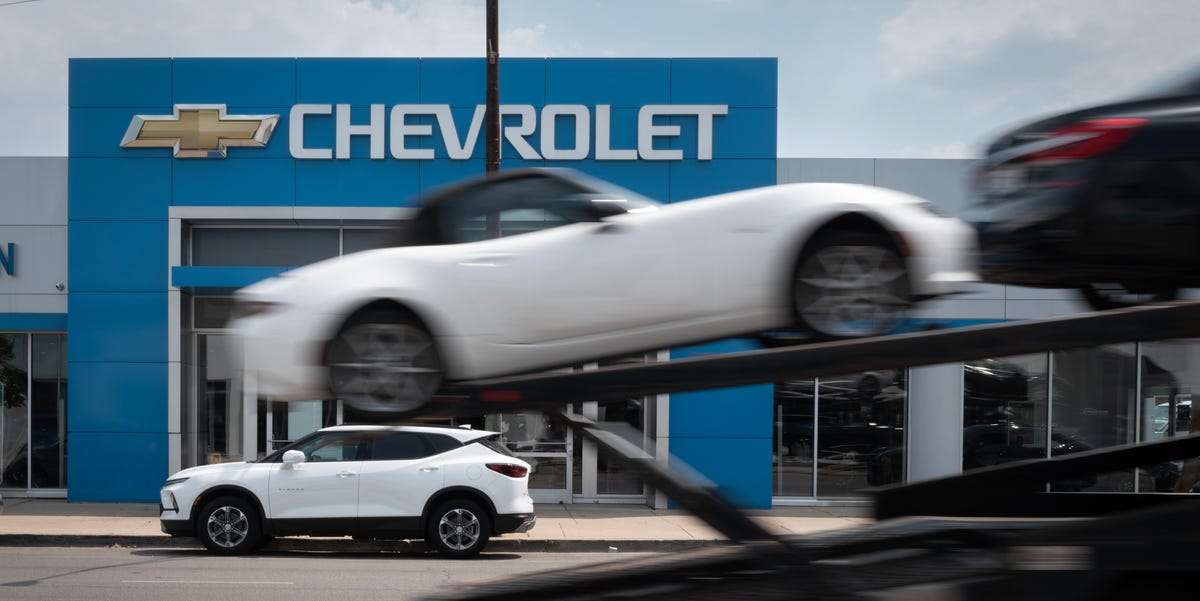

The rise of Chinese auto market exports has been both rapid and impactful all around the globe. And while these machines are still effectively banned from sales in the United States by way of tariffs, regulations, and limitations on Chinese technology, our closest neighbors in both Mexico and Canada have already reached deals with brands like BYD, JAC, Chery, and MG Motors to import cars. With President Donald Trump gearing up for a meeting with the People’s Republic of China’s President Xi Jinping in May, there’s concern inside Congress that Trump will make such a deal himself.
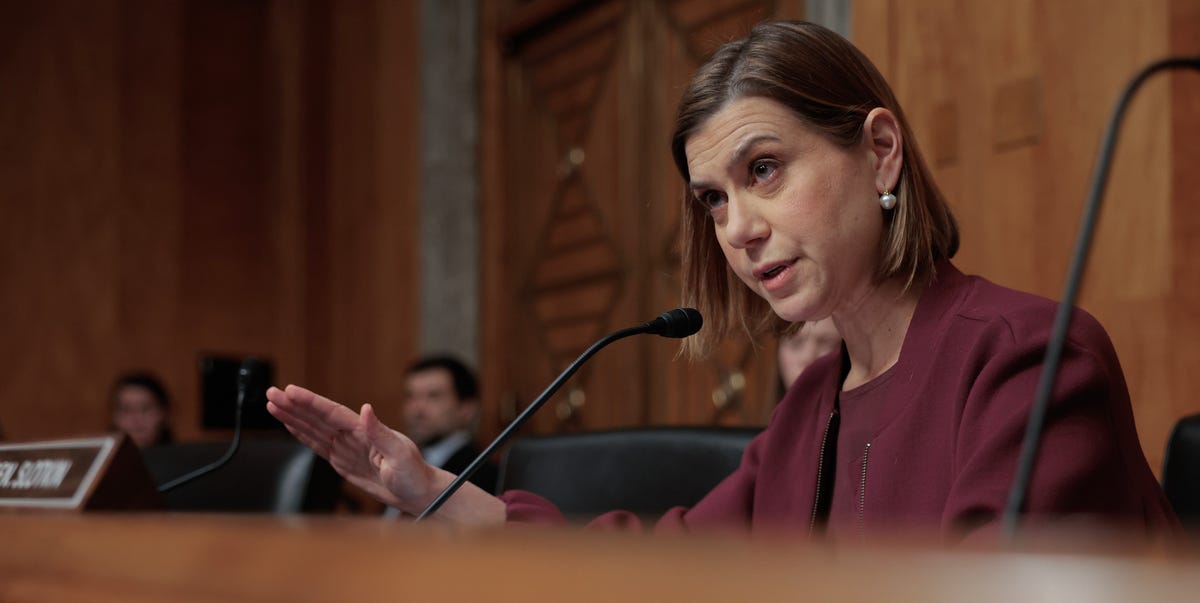
The president ruffled quite a few feathers back in January during his appearance at the Detroit Economic Club when he suggested that he’d “love” to see Chinese car companies bring some facilities to Michigan in particular and the States in general, specifically highlighting the potential for job creation in the process. For Senator Elissa Slotkin (D-MI), that sentiment set off alarm bells. Slotkin is no stranger to the questions surrounding Chinese automakers in America; her first piece of legislation as a new senator, The Connected Vehicle National Security Review Act, specifically outlined the potential national security risks associated with Chinese automakers, as well as economic risks to our own automotive industry.
“I think it's an issue of economic security and national security," Slotkin told Road & Track. "You don't have to be a deep expert to understand that the Chinese Communist Party heavily subsidizes their industry, so they have a whole strategy of basically stealing our intellectual property—making stuff like cars and drones off of stuff that we've invented, and then heavily subsidizing them so that they undercut and kill the industry that they enter. They have a long history of doing that with drones, [and] the solar industry is ninety percent Chinese because of this very strategy."
 Spencer Platt//Getty Images
Senator Elissa Slotkin.
Trump's remarks, she pointed out, came after the Canadian government had decided to begin importing Chinese vehicles, bringing them just across the border from her own state. "So when I see that the Canadians are going to let them in, when I see the President of the United States starting to talk about it in Detroit—it certainly got my attention, and the attention of a lot of people in Washington."
Slotkin’s background as a former analyst at the Central Intelligence Agency is paramount to her stance on the risks involved here. Data collection in particular is top of mind for the senator, especially since modern vehicles employ complex camera suites, lidar systems, and geolocation services. And while Chinese automakers already operate research and development facilities in the States that could provide them some ability to capture data, Slotkin believes a fleet of cars in citizens' driveways is a whole other ballgame.
“R&D is going to be very different than bringing in a subsidized vehicle that's going to undersell all American vehicles, and in the meantime, hoover up a ton of video—full-motion video on military bases, [of] our critical infrastructure, our bridges, our tunnels, our electrical grid,” said Slotkin. “It's going to be very different than lidar, and mapping technology of our cities and our critical sites."
"I have concerns, also, about the theft of intellectual property going on across our universities, our institutions. Obviously, [Chinese automakers] are here in the United States because they're interested in being in the middle of our cutting edge: Palo Alto, Silicon Valley. But that's very different than bringing in a fleet of vehicles that is going to start hoovering up Americans' data and information, and underselling every auto we have.”

VCG//Getty Images
Senator Tammy Baldwin (D-WI), who co-authored a recent letter to the president alongside Slotkin and Senator Chuck Schumer (D-NY) about this very issue, shares many of Slotkin’s concerns as it relates to data collection, as well as China’s subsidization of its auto industry putting undue stress on American automakers.
“After years of China cheating, I’m committed to leveling the playing field for American companies and workers who just want a fair shot to compete in a growing EV industry,” Baldwin said in a statement to R&T. “As China continues to undercut American companies and open the door to surveillance, we need to do more to protect our national and economic security. For decades, American car companies have been at the forefront of automotive innovation, providing safe and affordable cars to families nationwide—and given a fair shot, there’s no reason that legacy can’t continue.”
 Chip Somodevilla//Getty Images
U.S. senator Tammy Baldwin (left) with actor and director LeVar Burton.
While Slotkin’s 2025 legislation is still under deliberation, she and Baldwin aren’t alone in Congress when it comes to their concerns. A number of senators from across the aisle have shown interest in limiting China’s access to the U.S. auto market, to varying degrees. Slotkin herself says she is hopeful that a bipartisan effort led by auto-producing parts of the country will continue to gain support, even in states without a direct connection to the industry.
“I have no pride in authorship,” said Slotkin. “I'm just interested in the issue. And so if we can get something done on a bipartisan basis, I would be thrilled. We're still working out the details."
But next month's tête-à-tête between Trump and his Chinese counterpart, President Xi Jinping, is looming on her mind. "We're all looking at this impending meeting between President Trump and Xi Jinping on May 14. We don't know what the president's plan is, but in my experience, he tests the waters with his public statements. So he's talking on January 14 about making deals with Chinese auto companies, and he's meeting Xi Jinping, and [Trump] thinks he's the big dealmaker."
 Andrew Harnik//Getty Images
U.S. president Donald Trump (left) and Chinese president Xi Jinping.
"Well, I'm very interested in what is on the table—what is going to be shared, given away, what is going to be pressured out of the Chinese. I am very interested in understanding what the president's actual approach to China is. It is hard to gauge. One day, he can be very hawkish and talk about them as a military adversary. The next day, he's cozying up to them, and giving them all kinds of exceptions on these tariffs. There's more tariffs on Canada right now than there are in China.”
Trump's scheduled meeting with meet Xi in Beijing is specifically aimed at easing the strained economic relations between the two countries since the president’s return to office. Xi is expected to then visit Washington D.C. later this, as part of a reciprocal visit. That’s all to say that Congress doesn’t have much time to be proactive about this situation.
“We're trying to get ahead of it, and make sure that the president doesn't give away the farm,” added Slotkin.

SOPA Images//Getty Images
Born and raised in Metro Detroit, associate editor Lucas Bell has spent his entire life surrounded by the automotive industry. He may daily drive an aging Mustang, but his Porsche 944 and NB Miata both take up most of his free time.