Construction sector 'resilient' as costs rise
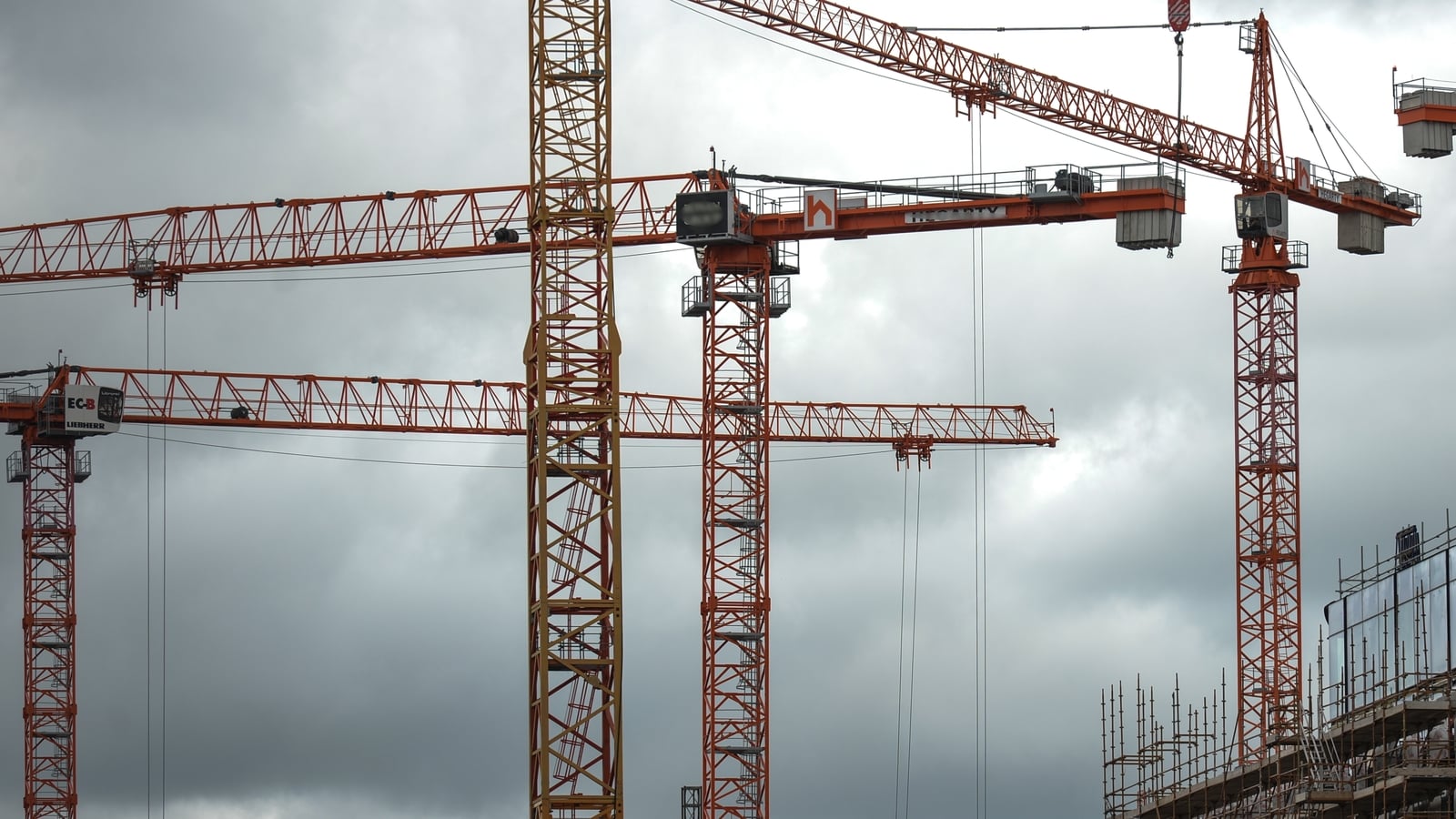
Builders are reporting "daily notifications" from suppliers about price increases in building materials, according to the Construction Industry Federation.
Speaking on RTÉ's Morning Ireland ahead of the House Building Summit in Dublin, the group's Director of Housing and Planning said that the cost of concrete insulation and plastic pipes have been particularly affected by the macroeconomic factors.
The CIF is holding a House Building Summit at Croke Park, bringing together house builders, property developers, government and policy makers to examine the housing situation and ways to scale up delivery.
The Government aims to deliver 300,000 new homes by 2030, but supply continues to lag behind demand.
House prices are at record levels. The national index of prices is now 25% above its highest level at the peak of the property boom in April 2007 and up 179% from the low point after the crash in early 2013.
Asked whether he expects house prices to go even higher due to the Middle East disruption, Mr O'Connell said "a very difficult question to answer at this moment in time."
"Most builders will tell you at the moment that the market is very sensitive to any price changes."
He praised recent measures introduced by the Government in the last 18 months, including record investment in water infrastructure and reform of the planning system.
As part of the current budget, the construction sector benefits from reduced level of VAT at 9% on completed apartments and enhanced corporation tax deduction for certain developments.
The country's largest builders and members of the CIF Glenveagh Properties and Cairn Homes both increased their operating profits last year to €125m and €168.6m respectively due to "exceptional" levels of demand.
Asked whether the construction sector is already adequately supported by the Government, the CIF's Director of Housing said the "SME sector and the civil engineering sector are using an awful lot of diesel".
He welcomed the cut in excise duty as "a temporary measure to get us over what will hopefully be a temporary spike in fuel costs that are driving construction cost inflation at the moment."
"We are a very resilient industry. We got through COVID, Brexit, the war in Ukraine, and other spikes, and I'm sure we'll get through this as well," Mr O'Connell said.






Comments (0)