
Remember me



This guide covers the eight active residency by investment programs in Africa, ordered by entry threshold from $50,000 to $1 million. Sierra Leone is excluded because its primary capital-based migration offering leads directly to citizenship rather than residency.
Africa rarely enters investment migration conversations, which typically revolve around the Caribbean, Europe, and the Gulf. Eight countries on the continent nonetheless run active programs that offer foreign investors residency in exchange for real estate, business capital, or passive wealth.
Not every program delivers the same thing. Four of the eight grant immediate permanent residency (PR) upon approval. Egypt issues a renewable permit only, with no path to PR or citizenship. Zambia’s Investor’s Permit becomes convertible to PR only after three years of holding it.
Seychelles requires five years of prior presence in country before its $1 million PR becomes possible, and Nigeria classifies its investor visas as permanent residence but the permits function as multi-year renewable documents tied to the underlying investment. Thresholds alone do not tell you what you are buying.
Entries below cover each program’s investment options, citizenship timeline, physical presence rules, and the trade-offs headline pricing tends to obscure.
 1. Egypt Residence by Investment ($50,000)
Egypt offers the continent’s lowest entry point at $50,000, with a structural caveat most readers overlook: The program confers no path to PR or citizenship. Permits run one to five years and renew indefinitely as long as the investment stays in place.
Applicants qualify through real estate ($50,000 for a one-year permit, $100,000 for three years, $200,000 for five years) or a bank deposit with a state-owned bank ($50,000 for one year or $100,000 for three years). No physical presence is required.
The Egypt Residence by Investment program suits investors looking for legal long-stay status in Egypt, not those seeking a stepping stone to citizenship. For a citizenship route, Egypt runs a separate citizenship by investment program starting at $250,000.
 2. Cape Verde Green Card (€80,000)
The Cape Verde Green Card grants PR upon approval for a real estate investment of €80,000 (approximately $86,300) in municipalities with below-average GDP, rising to €120,000 ($129,500) for areas above the national average. Processing takes about one month.

Green Card holders can apply for citizenship after five years of habitual residency. The program includes personal income tax exemptions for retirees on income not generated in Cape Verde, along with reduced property taxes. Family members qualify as dependents.
The Cape Verdean passport grants visa-free access to 68 destinations. Cape Verde is a member of the ECOWAS supranational settlement bloc, which grants its citizens rights of free movement, residence, and establishment across all 15 member states. It also operates under a Portuguese-derived legal framework and participates in CPLP (Community of Portuguese Language Countries) agreements, which confer preferential mobility and residency arrangements with Portugal once investors obtain citizenship.
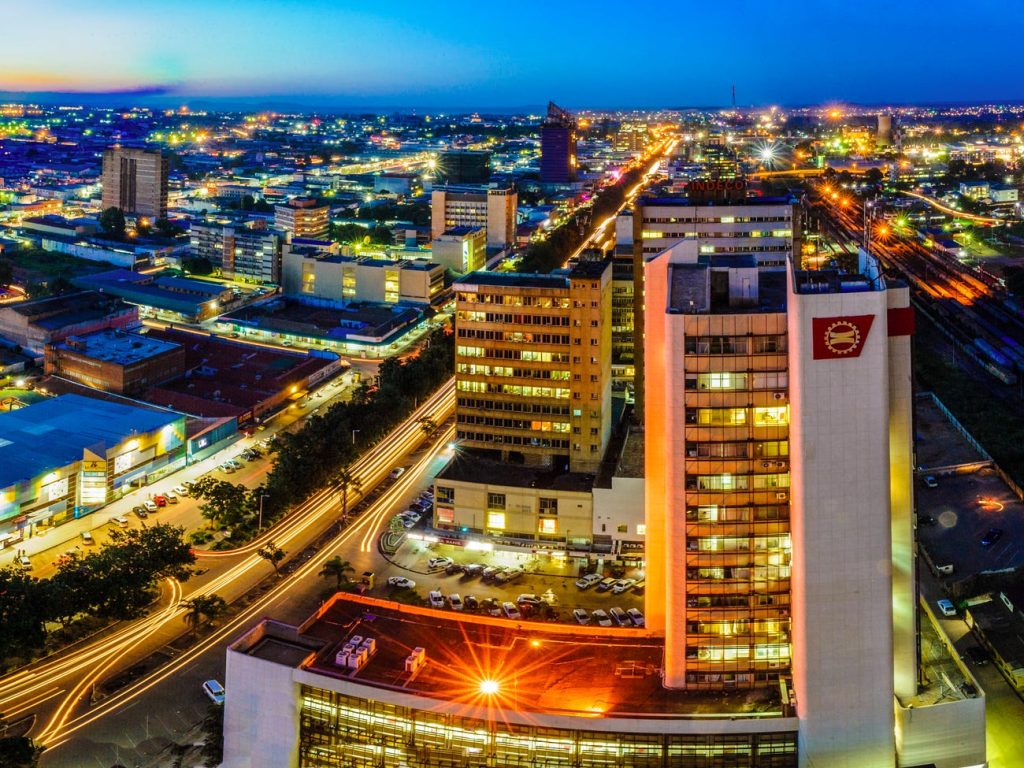
3. Zambia Investor’s Permit ($150,000)Zambia’s Investor Permit Program requires that applicants invest at least $150,000 in an existing business or $250,000 in a new one. The permit is renewable and tied to the underlying investment. Processing runs about four months.
Investors can qualify for PR after three years of tax residency, and citizenship after ten.
Zambia does not belong to a freedom-of-movement bloc equivalent to ECOWAS or the EAC, which limits the regional reach of the permit. Applicants must provide proof of investment through bank statements, Zambia Revenue Authority documentation, and certificates of incorporation, along with an investment license from the Zambia Development Agency where applicable.
 4. Nigeria Investor Visa Series ($250,000 and up)
Under Nigeria’s 2020 Visa Policy, investor residence visas scale across five tiers based on capital committed:
N3A (small-scale enterprise): $250,000 to $500,000, three-year renewable residence permit N3B (medium-scale): $500,000 to $1 million, four-year permit N3C (large-scale): $1 million to $10 million, six-year permit N3D (ultra-large): $10 million and above, eight-year permit N3E (oil, gas, and power sector): $100 million imported and retained as investor capital, ten-year permitCapital must enter Nigeria and remain invested in the country. Applicants provide documentary proof of investment, a police report from each country of residence over the prior five years, and a business plan. Dependents qualify under corresponding N6A through N6D categories, with validity tied to the principal holder’s permit.
Nigeria is a founding member of ECOWAS, the supranational settlement bloc whose treaty grants member-state citizens rights of free movement, residence, and establishment across all 15 member states. This regional reach meaningfully expands the value of Nigerian citizenship for investors eventually pursuing naturalization, though the 15-year timeline is a significant constraint.
Nigeria classifies its investor visas as permanent residence visas, but the permits function as multi-year renewable documents tied to the underlying investment. Naturalization requires 15 years of continuous lawful residence under general Nigerian law.
5. Mauritius Permanent Residency (Real Estate) ($375,000)The Mauritius Permanent Residency Permit grants PR for a $375,000 investment in an approved real estate project, including the Integrated Resort Scheme, Real Estate Scheme, Property Development Scheme, Smart City Scheme, Invest Hotel Scheme, and Ground + 2 Apartment Scheme. The initial permit runs 10 years, with eligibility for a 20-year Permanent Residence Permit after investors meet the required contribution benchmarks.
On paper, investors can qualify for naturalization after six years of continuous residency, and Commonwealth citizens after five. In practice, Mauritius rarely grants naturalization to investor-pathway applicants, and investors should treat the citizenship component as aspirational rather than bankable. The PR itself is the durable benefit. Those committing at least $500,000 qualify for a two-year fast-track naturalization route, though stricter physical presence rules apply. Government fees run $1,735 for the main applicant and $1,160 per dependent.
Mauritius also runs an Active Investor Visa starting at $35,000 for entrepreneurs willing to operate a business locally, with PR eligibility after three years subject to revenue thresholds. The Mauritian passport offers visa-free access to the Schengen area, the United Kingdom, and several other prime destinations, making Mauritian PR one of the more valuable African routes on offer for investors planning eventual naturalization.
6. Rwanda Investor Visa ($500,000)The Rwanda Investor Visa grants PR through one of two routes: A $500,000 luxury property purchase or a $1 million investment in a registered project in approved sectors, including energy, manufacturing, tourism, ICT, health, education, and agro-processing.
Successful applicants receive immediate PR that extends to spouses and children. Investors can naturalize after five years of maintained residency.
Rwanda’s passport currently grants visa-free access to 73 destinations, so the mobility upside is limited compared to Mauritian or Seychellois citizenship. The government has floated a standalone citizenship by investment program several times over the past decade without formal launch, and the investor visa remains the principal capital-based route available today.
7. South Africa Financially Independent Permit (R12 million)The Financially Independent Permit grants immediate PR to applicants who can demonstrate a net worth of at least R12 million (approximately $650,000). Applicants pay a one-time government fee of R120,000 (around $6,500) on approval. South Africa also offers a separate Retired Person Permit at a much lower threshold, based on monthly pension income rather than net worth, for investors whose profile fits retirement rather than capital deployment.
Holders receive full residence rights with no work or business restrictions. The permit carries no physical presence requirement beyond entering South Africa at least once every three years. On paper, processing runs 12 to 48 months depending on Department of Home Affairs workload.
In practice, FIP applications frequently stall for years in administrative backlogs, and investors should plan for timelines that extend well beyond published ranges. Several immigration law firms have documented applications sitting without adjudication for three or more years without clear recourse.
Investors can naturalize after five years of PR. The South African passport provides visa-free access to around 100 destinations. Because the program tests net worth rather than requiring a capital transfer, it functions closer to an independent means visa than a conventional residency by investment route. No part of the R12 million needs to be moved to South Africa, which appeals to investors wary of tying up capital in a volatile currency.
 8. Seychelles Permanent Residence ($1 million)
The Seychelles Permanent Residence Program requires a $1 million business investment, but with a critical pre-condition: The applicant must have resided in Seychelles for at least five years on a Gainful Occupation Permit or Dependent Permit, and demonstrate at least five years of business association or affiliation, before the PR application becomes eligible.
After PR is granted, citizenship eligibility follows roughly five years later, for a total of around 11 years from initial arrival. The Seychellois passport offers visa-free access to 156 destinations, making it the strongest travel document among African programs covered in this guide.
The program’s pricing and pre-residency requirement have drawn criticism from industry observers, with IMI’s prior analysis describing Seychelles as “a Tier-2 citizenship priced as though it were on the top shelf.” Investors seeking a cleaner path to a similarly-strong passport typically turn to European residency programs or Caribbean citizenship by investment routes instead.
What’s Coming NextTwo programs sit in the pipeline but have not yet launched.
Mozambique’s government announced in November 2025 that it will soon introduce a tiered investor visa program, with five-year permits starting at $500,000 and ten-year permits at $5 million or more. President Daniel Chapo presented the measures at the inaugural Mozambique Tourism Summit in Vilanculos.
Officials have stated the application process will be largely digitized, though no formal launch date has been confirmed. The $500,000 entry threshold would place Mozambique’s program among the more expensive golden visa offerings globally.
Namibia has a Desert Visa Programme under review in Cabinet, contingent on passage of a pending Migration Control Bill. Investors currently access Namibian residency through existing Investment Visa provisions under the Foreign Investment Act, including via the President’s Links Estate development in Walvis Bay (minimum $316,000).
No formalized golden visa program has been enacted as of this writing.Several other African countries have discussed residency reforms or standalone citizenship by investment programs over the past decade, including Kenya, Botswana, and Nigeria. Most remain in the proposed or legislative phase, and a companion guide covers Africa’s active and proposed citizenship by investment programs. For a wider continental view that tracks both residency and citizenship routes, IMI’s Africa RCBI overview updates as programs evolve.
Comments (0)