'There is a mutual loathing between Keir Starmer and Peter Mandelson'
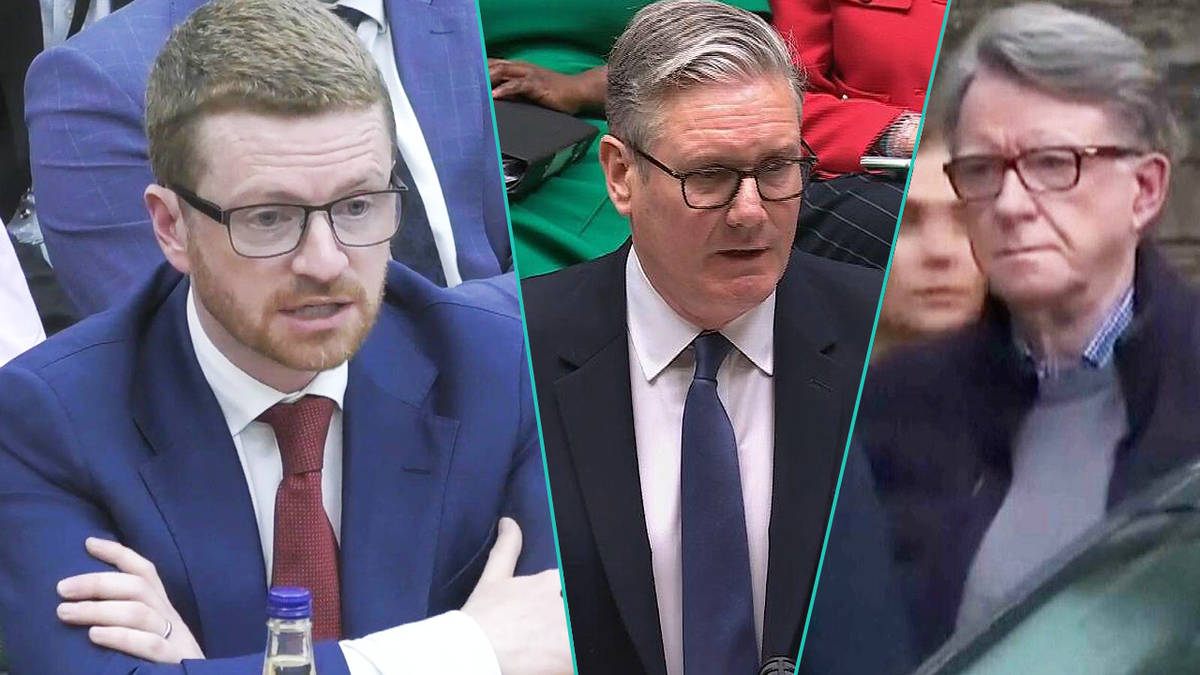
What’s the story?Olly Robbins. Phillip Barton. Morgan McSweeney. 2026 has been a big year for the boys in the backrooms of British politics.All three civil servants who have given evidence to a parliamentary committee investigating the appointment of Peter Mandelson in 2025 to the role of UK ambassador to the US, despite him having failed security vetting – and his well-known links to convicted sex-trafficker Jeffrey Epstein.Today (28 April 2026) was the turn of Barton and, perhaps more importantly, McSweeney, who lost his role as Keir Starmer’s chief of staff over the part he played in landing Mandelson the ambassador job.But while recent focus has been on the men pulling the strings, Lewis Goodall believes it is ultimately Keir Starmer who is on trial.“When you strip all of this away, this story is about something really constitutionally important – which is whether the Prime Minister tells the House of Commons the truth,” he says.“If he doesn't do so, he must correct it as quickly as possible.”MPs will vote on whether Starmer should face a Privileges Committee to determine whether he deliberately misled Parliament – the same process which forced Boris Johnson out of a job over parties inside 10 Downing Street during the Covid-19 pandemic.“The thing about PartyGate was that in no way could Conservative MPs vote against the investigation, whereas this story, frankly, does not have that same salience, and Labour whips feel that they can instruct MPs,” Lewis says.
What we learned from McSweeney’s testimonyOn the surface – honestly not much. It was remarkable how much a once-senior political operator had forgotten, or could not recall when quizzed by Emily Thornberry at today’s hearing.Starmer and Mandelson hate each otherMandelson and McSweeney have long been known to have had a close friendship. But through recent testimony, it has become clear that was never the case with Starmer and Mandelson.Jon Sopel says we now know this was very difficult for Mandelson, who was seeking a place in Starmer’s government.“There is a mutual loathing between Starmer and Mandelson, and I think it predates Mandelson's appointment, the subsequent sacking and the subsequent grief that it has caused,” says Jon Sopel.“Starmer wanted to keep Mandelson at arm's length, and Mandelson was forever trying to be part of the inner circle of his Labour government.“He kept on trying to ingratiate himself in that inner circle, and his attempts were being rebuffed.”McSweeney was forced into the spotlightMcSweeney has long been considered a driving force of the Labour Party – but most people in the UK wouldn’t know his face, or voice, until today.“He is an absolutely central figure within Labour politics, but until today, he has barely ever been seen or on camera or given an interview or anything,” says Lewis Goodall.Lewis adds that, as dogs tend to look like their owners, he believes special advisors end up looking like their ministers.“You can see in his appearance and performance today how he would be associated with Keir Starmer,” says Lewis.“He, likewise, is a quite gentle, mild mannered guy who is not someone who hogs the limelight.“You can still see, is deeply loyal to his former master, because he has done nothing today that in any way undermines anything that Keir Starmer has previously said.”All this could have been stopped in December 2024The failed vetting this whole story has been hooked around took place in January 2025, but an earlier vetting in December 2024 also flagged Mandelson’s suitability for the role – and could have been acted on.“The propriety and ethics committee said he was high risk, so they'd all seen the diligence that came back in December warning that this guy is a risk,” says Emily Maitlis.“It is entirely possible for both McSweeney and Starmer to have withdrawn things then and there in December before any appointment had been announced.“They didn't. They went ahead. They announced it, and then started the vetting process.”
Why all this mattersThis story, Lewis says, is about more than whether Peter Mandelson should have been given a key government job in 2025 despite everything that was known, and suspected, about him at that point.He believes the parliamentary hearings being held with top civil servants, and the vote on whether Keir Starmer faces a privileges committee, says something important, and positive, about the state of British politics.“This says something good about British democracy and the House of Commons, that this is being taken seriously,” Lewis says.“If you want evidence for why that's important, just look across the Atlantic and see what happens when the currency of truth in politics is so devalued that you can no longer, under any circumstances, believe what the leader of the country is saying.”