
Remember me







A week after Minister Riquelme and National Director of Migration Jorge Kronawetter stood in front of cameras in Brazil to launch the Paraguay Investor Pass, the Ministry of Industry and Commerce published the regulation that operationalizes it. The fine print is now in and it is more generous than the announcement suggested.
Resolution N° 0283, signed by Minister Marco Riquelme on 21 April 2026, formally abrogates Resolution 1052/2025 and rebuilds the framework for the Constancia de Inversionista Extranjero (CIE), the administrative instrument that now grants foreign investors direct access to permanent residency via the Dirección Nacional de Migraciones, bypassing the temporary residency stage entirely.
In my commentary on IMI’s coverage of the Paraguay Investor Pass launch, I stated that $200K for direct permanent residency in the Southern Cone was “fair value, arguably undervalued for what you get on the ground.” Now the fine print is out, I am even more bullish on the offering.
The case I made in IMI for the Southern Cone as investment migration’s next great theatre just got its first concrete piece of supporting legislation.
Here is what actually changed, and what the market should be paying attention to.
 Three additional tracks, codified alongside the existing SUACE route
The Investor Pass is not a replacement for Paraguay’s existing investor residency framework. It is an expansion of it.
The $70,000 SUACE productive investment route already existed. What Resolution 0283/2026 does is codify three additional qualifying tracks alongside it (tourism, real estate, and financial instruments), and bring all four under a unified CIE framework that grants direct access to permanent residency.
The four tracks, as codified:
Productive investment (existing route): USD 70,000 minimum, business plan required, must generate at least five formal jobs. Financial instruments: USD 200,000 minimum, minimum two-year hold, no business plan, no job creation, annual reporting obligation. Real estate: USD 200,000 minimum, no business plan, no job creation, two documentation pathways (registered transfer deed, or notarized private contract with at least 30% of declared investment value paid); personal or family-use property explicitly excluded. Tourism: USD 150,000 minimum, business plan required, semestral progress reporting.One tightening on the existing productive route deserves flagging, because it is subtle and commercially material. Article 3 of Annex I now defines inversión narrowly, listing what qualifies (real estate, machinery, equipment, specialized tools, activity-linked vehicles, industrial and technological equipment, operating furniture, civil works, and technical installations).
Rent, salaries, utilities, and recurring administrative costs are explicitly not covered.

For investors, this means the requirement cannot be met by simply running a business or covering expenses; it must be satisfied through tangible, traceable capital deployment into productive assets. The lower-cost residency by investment pathway requires a genuinely active business.
 Real estate: a second documentation pathway, with at least 30% paid
The single most commercially significant innovation in the regulation sits in Article 6.1 of Annex I, which sets out two alternative documentation pathways for real estate investments:
A fully registered public transfer deed (escritura pública traslativa de dominio debidamente inscripta), which presumes the investment has been fully paid; or A notarized private purchase-sale contract, where, under pathway (b), the amount actually paid at the point of CIE application must be at least 30% of the declared total investment value.On a $200,000 real estate investment, an applicant can file for the CIE under pathway (b) once $60,000 has been paid, provided the balance is documented as an economic commitment. Article 1, letter h confirms that investments either fully executed or in the process of execution both qualify before residency is granted, so long as the commitment is documentarily demonstrable.
This appears not to be a loophole but a structural design choice. Paraguay is explicitly designing the Investor Pass to channel capital into pre-construction and off-plan real estate, where staged payments are the norm. In Paraguay, developers typically require 10–20% upfront, with the balance financed directly through the developer over construction periods of up to 36 months.
The 30% threshold under pathway (b) sits modestly above what the local market already asks for. Measured against international comparables, it is a different category of product entirely.
Almost every other investor residency program globally, Greece, Portugal, Panama, the Caribbean CBI menu, requires the full investment to be funded before residency issues. Paraguay is the outlier: under pathway (b), pay the 30%, file the application, finance the rest over the construction period.
Financial instruments: $200K, two years, no operational obligationsThe two-year minimum hold, absence of a business plan requirement, and absence of any job-creation obligation make the $200K financial instruments route a purely passive option in the CIE framework.
The documentation requirement is narrow: a certificate issued by an entity authorized by the Superintendencia de Valores of the Banco Central del Paraguay, dated no more than 180 days before application, stating the investment value and evidencing a minimum two-year term.
Recent investments may qualify: the 180-day documentation windowA detail in Articles 5 and 6 of Annex I carries significant practical implications. The supporting documentation for both the real estate and financial instruments tracks must be dated no more than 180 days (roughly six months) before the application date.
The regulation does not expressly characterize this as retroactive eligibility, but the documentary cut-off is what it is.
The same generosity extends to anyone with a file already submitted under the prior framework. Article 6 of the body of Resolution 0283 allows applications filed under 1052/2025 and still pending expedition to be processed under the new regime, where it is more favorable to the applicant. No withdrawal, no refile, just an opt-in to the better product.
Paraguay is not gate-keeping retroactively. The country is recognizing and crediting capital that has already been deployed in good faith, rather than restarting the clock. That is a confidence signal for everyone weighing future commitments.
Tourism remains underpricedAt USD 150,000 with a business plan and a semestral reporting obligation, the tourism track is the lowest capital-linked route outside the productive investment channel. That price point sits well below what Paraguay’s underlying tourism asset base justifies.
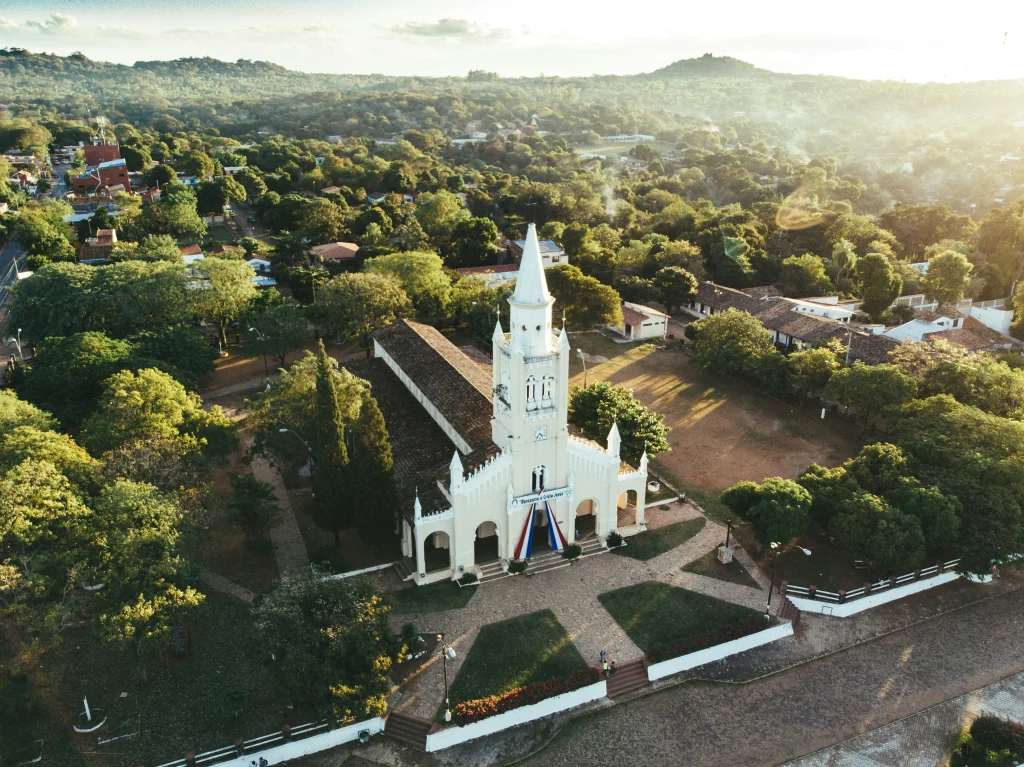
Paraguay borders Iguazu Falls, holds UNESCO-listed Jesuit mission sites around Encarnación, and sits at the edge of the Pantanal. Asunción itself is in an urban revival cycle, and cross-border flow from Brazil is substantial and growing.
What the country has not yet built is the developed accommodation, hospitality, and leisure product that monetizes those assets at scale. The $150K threshold rewards investors willing to move on tourism products before the market is saturated, not after.
The five-day CIE clock: one step, front-loaded certaintyArticle 4 commits SUACE to issue the CIE within five business days of receiving a complete file, pausing the clock if clarifications are needed and resuming once everything is in order. The five-day timeline existed before, but Resolution 0283 sharpens it with clearer “business day” wording and a defined pause-and-resume mechanism.
That said, the five days apply only to the investment certificate (CIE), not the residency itself. Permanent residency is handled separately by the migration authority and takes longer.
In practice, the benefit is early certainty rather than overall speed. You find out within days whether your investment qualifies, then move on to the immigration step with that question settled. Residency card issuance generally ranges between three and six months.
Once granted, residency follows Paraguay’s standard rule: one visit every three years to keep it active, with no minimum stay in between.
Source-of-funds declaration: AML compliance codified in the CIE frameworkArticle 2.5 of Annex I requires investors to sign a sworn declaration confirming the legal origin and traceability of their funds, in line with Paraguay’s anti-money laundering rules.
These requirements already exist under national law, but Resolution 0283 brings them directly into the CIE process, alongside SUACE’s technical review. In practice, this adds a clear integrity check at the entry point, aligning Paraguay with the broader shift toward stronger due diligence in investment migration programs.
What the regulation tells you about the target marketTwo details in Article 7 of Annex I, both carried over from 1052/2025, reveal who Paraguay has been courting and continues to court under the new framework.
Portuguese-language documents issued in Brazil are exempt from translation. No other language or jurisdiction gets this carve-out. All other foreign documents must be apostilled or legalized via the Paraguayan consular chain.
The Brazilian exemption is seemingly preserved deliberately. Brazilians already represent the majority of Paraguayan residency applicants in a market that has grown rapidly, and the regulation keeps the procedural bridge to that market in place even as it restructures everything else around it. Files without proper legalization will not be processed.
What’s not in the regulation, and what to watchThe Resolution is silent on several points that matter commercially.
No minimum stay requirement is mentioned for retention of permanent residency or the three-year citizenship timeline. Paraguay’s general immigration law governs this, but the CIE does not tighten it. No family inclusion framework is specified either; spouses and dependents presumably follow the standard DNM family reunification path, though confirmation from DNM would be welcome.
The product the market has been waiting forThe demand for Paraguay predates the Investor Pass. What was missing, and is now delivered, is a regulatory product sophisticated enough to absorb serious capital and operationally sharp enough to compete with anything in the region.
Most investors I’ve met who were interested in Paraguay over the last year asked specifically for real estate as their qualifying asset. Until 21 April, that was not an option. Now it is. Demand-side fit is rarely this clean.
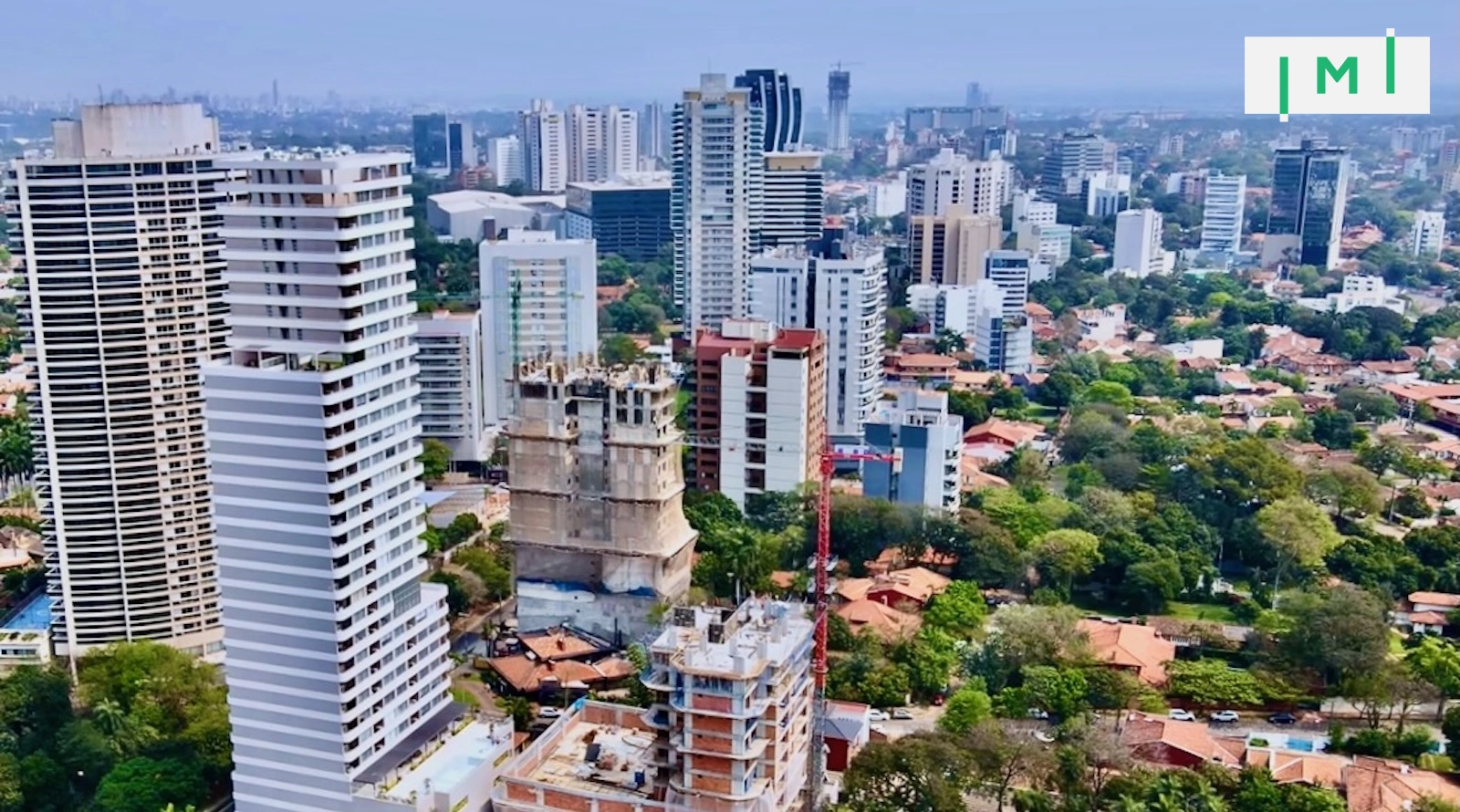
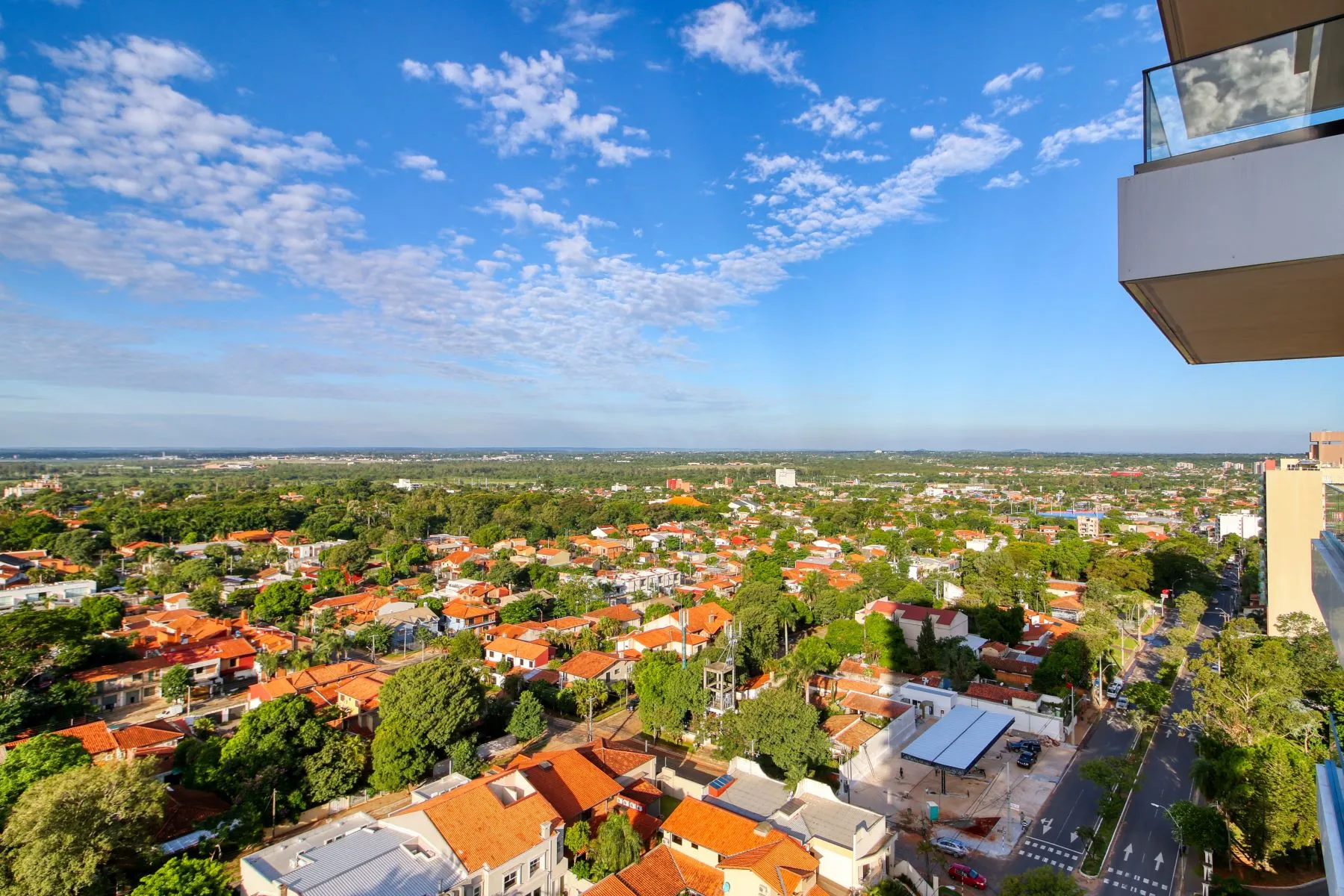
The timing aligns with a real estate market that has been quietly compounding. Asunción is in the middle of a genuine urban revival, with new towers reshaping the skyline and a downtown that bears no resemblance to what it was when I arrived to apply for my own Paraguayan residency five years ago.
Cross-border Brazilian capital has been pricing in regional repositioning for some time. Dollar-denominated value remains exceptional against regional comparables: prime Asunción real estate still trades at discounts to equivalent product in Montevideo, São Paulo, and Buenos Aires.
The Investor Pass arrives into a real estate market that is not just open to international buyers, but actively rewarding them for arriving early.
Latin America’s golden visa line-upSet against the regional alternatives, the Paraguay Investor Pass is competitively priced and structurally more flexible than what is already a fantastic line-up of underrated programs across Latin America:
Program Min. investment Residency granted Naturalization Effective stay required Paraguay Investor Pass (real estate) USD 200,000 (30% paid to file under pathway b) Direct permanent 3 years One visit every three years for PR; no more than three months outside the country per year recommended for citizenship Panama Qualified Investor Visa USD 300,000 Direct permanent 5 years One visit every two years for PR Panama Friendly Nations Visa USD 200,000 2-year provisional, then permanent 5 years from PR One visit every two years for PR Dominican Republic Investor Visa USD 200,000 Direct permanent (1-year card, then 4-year renewals) 6 months from PR None codified Brazil Golden Visa (VIPER) BRL 700,000 (approximately USD 140,000) in North/Northeast real estate Direct permanent 4 years Substantial physical presence required for citizenship Costa Rica Inversionista USD 150,000 2-year temporary, then permanent after 3 years 7 years total One day per year for PR; 183+ days per year expected for citizenship Uruguay No fixed threshold (tax residency via economic means) Permanent residency obtainable through economic activity 3–5 years (depending on marital status) Substantial residence expected throughoutEach program in this lineup brings something distinctive. Uruguay’s permanent residency pathway, available through demonstrated economic activity rather than a fixed capital threshold, remains one of the most underrated routes in Latin America for clients with genuine economic substance to anchor in the country.
Panama and the Dominican Republic both offer interesting and well-structured pathways to citizenship that deserve serious consideration. Brazil’s VIPER pathway, anchored to its developing North/Northeast coastline, sits alongside as the lowest absolute capital threshold for direct permanent residency on the table.
Paraguay holds its own across all four columns. Where it pulls clearly ahead is on capital efficiency at the point of residency issuance: Every other program in the table requires the full investment to be deployed before residency issues.
The Investor Pass signals something larger than the sum of its articles. Paraguay is no longer asking to be included in the Plan B conversation; it is positioning itself as a regional leader in its own right. Whether Argentina’s equally anticipated CBI program will emerge as the flagship project of the Southern Cone is now an open and increasingly competitive question.
Comments (0)